Planning How to plan Vrindavan Holi from Delhi NCR is very different from planning a regular festival trip. Holi in Vrindavan and the wider Braj region is not a one-day event. It is a sequence of sacred celebrations spread across villages, temples, and specific dates that follow tradition rather than convenience. If you are travelling from Delhi NCR, good planning is not optional. It is the difference between a meaningful experience and complete confusion.
Highlights
ToggleThis guide is written from an on-ground, experience-based perspective to help first-time visitors, families, and serious travellers understand how to plan Vrindavan Holi from Delhi NCR in a practical and realistic way.
Book Now Your Mathura Vrindavan Tour Package.
Why Planning Vrindavan Holi from Delhi NCR Needs Special Attention
Vrindavan Holi attracts lakhs of devotees, photographers, and international travellers every year. Roads get restricted, temples operate on limited darshan timings, and accommodation sells out weeks in advance. Unlike city Holi parties, Braj Holi follows a strict calendar linked to Krishna’s life events.
When you plan Vrindavan Holi from Delhi NCR properly, you are not just booking transport and hotels. You are aligning yourself with the rhythm of Braj Bhoomi.
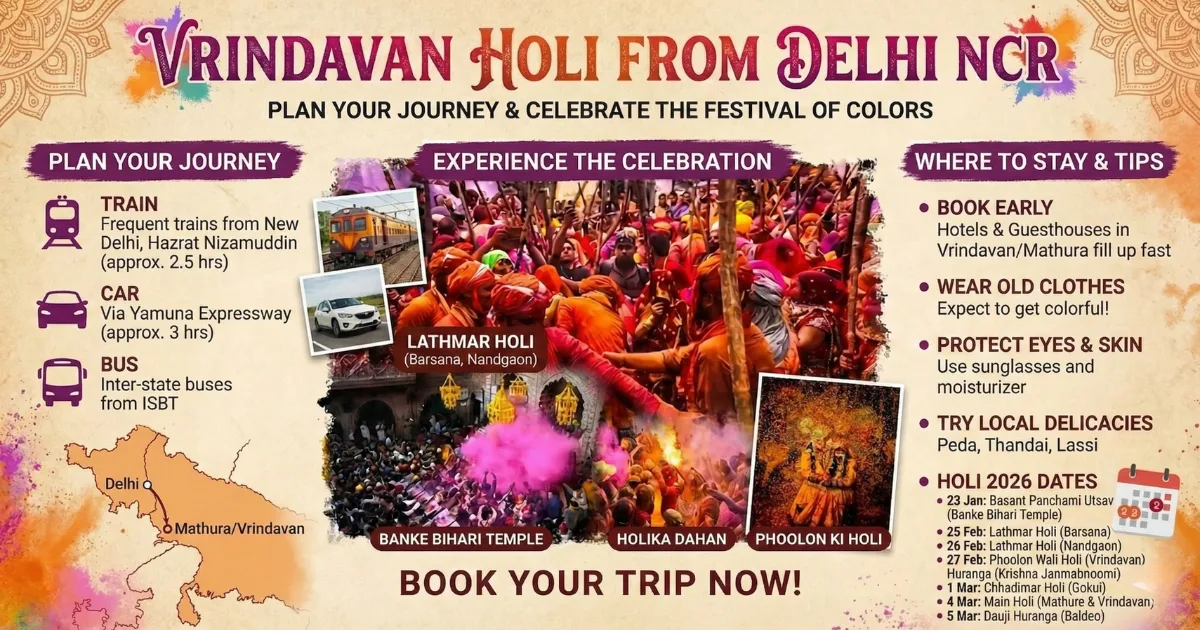
Holi 2026 Dates You Must Plan Around (Braj Calendar)
These are the key Holi dates for 2026 that travellers from Delhi NCR should plan their itinerary around:
- 23 January 2026 – Basant Panchami Utsav at Banke Bihari Temple
- 24 February 2026 – Phag Invitation at Nandgaon
- 24 February 2026 – Laddu Holi at Barsana
- 25 February 2026 – Lathmar Holi in Barsana
- 26 February 2026 – Lathmar Holi in Nandgaon
- 27 February 2026 – Phoolon Wali Holi in Vrindavan and Huranga at Krishna Janmabhoomi
- 1 March 2026 – Chhadimar Holi in Gokul
- 4 March 2026 – Main Holi in Mathura & Vrindavan
- 5 March 2026 – Dauji Huranga in Baldeo
If you want the complete Braj Holi experience, plan your travel window between 24 February and 5 March 2026.
How to Reach Vrindavan from Delhi NCR During Holi
When thinking about How to plan Vrindavan Holi from Delhi NCR, transport is your first real decision.
By Road
Delhi NCR to Vrindavan is around 160 km. On normal days it takes 3.5–4 hours, but during Holi week it can stretch to 6 hours due to diversions and police checks. Leaving before 5:00 AM is strongly advised.
By Train
Trains to Mathura Junction are reliable, but last-mile travel from Mathura to Vrindavan during Holi becomes difficult without pre-arranged transport.
Practical Advice
Self-driving during Holi is stressful. Most experienced travellers prefer pre-booked cars with local drivers who understand Braj routes and restrictions.
Where to Stay When Coming from Delhi NCR
Barsana, Nandgaon, and Gokul have extremely limited accommodation. Staying there during Holi is not practical.
Best options:
- Vrindavan (temple proximity, better crowd control)
- Mathura (wider hotel options, easier road access)
Hotels get booked early. If you are serious about How to plan Vrindavan Holi from Delhi NCR, accommodation should be booked at least 6–8 weeks in advance.
Day-by-Day Planning Strategy for Delhi NCR Travellers
Day 1: Arrive in Vrindavan early morning, settle in, evening temple visit
Day 2: Barsana Laddu Holi or Lathmar Holi (start before sunrise)
Day 3: Nandgaon Lathmar Holi
Day 4: Phoolon Wali Holi in Vrindavan temples
Day 5: Gokul or Mathura celebrations
Day 6: Main Holi in Vrindavan or Mathura
Day 7: Dauji Huranga at Baldeo
Trying to cover everything in 2–3 days from Delhi NCR is unrealistic and exhausting.
Explore All Our Tour Packages.
What to Wear and Carry
- Old white cotton clothes
- Comfortable walking shoes
- Light scarf or dupatta
- Waterproof phone pouch
- Minimal cash and valuables
Avoid synthetic colours. Temple Holi is respectful and devotional.
Is Vrindavan Holi Safe for Delhi NCR Travellers?
Yes, Holi in Vrindavan is safe when approached correctly.
Important safety notes:
- Morning hours are calmer than afternoons
- Stick to temple zones
- Avoid alcohol-based crowds
- Families and women travellers should avoid unstructured street play
Most safety issues arise when people underestimate the scale of crowds.
Why Many Delhi NCR Travellers Choose Guided Planning
First-time visitors often struggle with:
- Route confusion
- Missed temple timings
- Unsafe crowd zones
- Poor accommodation choices
This is why many travellers prefer planning support from experienced local operators like Mathura Vrindavan Tourism, who understand the exact flow of Braj Holi, temple access, and crowd behaviour. Their role is not celebration management, but logistics and local coordination.
For Delhi NCR travellers especially, having ground support makes the entire experience calmer and more meaningful.
Final Thoughts
Understanding How to plan Vrindavan Holi from Delhi NCR means respecting that this is not a party destination. It is a living tradition shaped by faith, discipline, and community rhythm. With the right dates, early travel, realistic pacing, and local awareness, Holi 2026 in Vrindavan can become a deeply memorable journey rather than a rushed checklist.
Plan early, travel light, and let Braj Bhoomi set the pace.
FAQs – How to Plan Vrindavan Holi from Delhi NCR
1. Is it possible to visit Vrindavan Holi from Delhi NCR on a day trip?
A single-day trip from Delhi NCR is possible only for limited events, but it is not ideal for experiencing real Braj Holi. Due to traffic restrictions, crowd pressure, and early morning temple rituals, at least a 6–7 day stay is recommended for a meaningful Holi experience.
2. What is the best time to travel from Delhi NCR to Vrindavan during Holi?
The best time to leave Delhi NCR is between 3:30 AM and 5:00 AM. Early departure helps avoid traffic diversions, police checkpoints, and overcrowding near temple areas, especially on Lathmar Holi and main Holi days.
3. Which Holi event in Vrindavan is best for first-time visitors?
For first-time visitors, Phoolon Wali Holi at Banke Bihari Temple and main Holi day celebrations in Vrindavan are the most suitable. These events are devotional, structured, and easier to manage compared to Barsana or Nandgaon Lathmar Holi.
4. Is Barsana Lathmar Holi safe for tourists coming from Delhi NCR?
Yes, Barsana Lathmar Holi is safe, but only if planned properly. The crowd is extremely dense, and movement is controlled. First-time travelers from Delhi NCR should visit Barsana with guided transport or organized planning rather than attempting it independently.
5. Where should I stay when planning Vrindavan Holi from Delhi NCR?
Staying in Vrindavan or Mathura is the best option. Barsana, Nandgaon, and Gokul have very limited accommodation. Hotels in Vrindavan near temple zones are more convenient during Holi week, but they must be booked well in advance.
6. What should I wear for Holi in Vrindavan and Mathura?
Wear old or white cotton clothes, comfortable footwear, and carry a scarf or dupatta. Avoid synthetic fabrics and expensive accessories. Temple Holi is devotional, so modest and practical clothing is preferred over party-style outfits.
7. Is Holi in Vrindavan suitable for families and senior citizens?
Yes, Holi in Vrindavan is suitable for families and senior citizens if they attend morning temple events and avoid peak afternoon crowds. Phoolon Wali Holi and temple-based celebrations are calmer and more comfortable for elderly visitors.
8. Are phones and cameras safe during Vrindavan Holi?
Phones and cameras should be kept in waterproof pouches. Photography is strictly prohibited inside major temples like Banke Bihari Temple. Carry minimal valuables, as crowded conditions increase the risk of damage or loss.
9. Do I need to book transport in advance from Delhi NCR for Holi?
Yes, advance booking is strongly advised. During Holi week, trains, cabs, and buses fill quickly, and last-minute options are unreliable. Pre-arranged transport with local drivers is the safest and least stressful option.
10. Why do Delhi NCR travelers prefer planned Holi tours for Vrindavan?
Many Delhi NCR travelers choose planned arrangements through local experts like Mathura Vrindavan Tourism because Holi involves complex timing, restricted routes, and crowd-sensitive locations. Local planning helps avoid missed events, unsafe zones, and unnecessary exhaustion, allowing visitors to focus on devotion and experience rather than logistics.