There’s something about Vrindavan mornings that feels different. The air is quieter, the temple bells sound softer, and even the crowd seems more patient. The first time I visited the Vaishno Devi temple here, I wasn’t expecting much beyond a replica shrine. But the moment I stepped into the cave-like path, it honestly felt like a mini pilgrimage within Vrindavan itself. If you’re planning your visit, understanding the Vaishno Devi Vrindavan Timing is the first thing you need to get right, because timing here quietly shapes your entire experience.
Highlights
ToggleVaishno Devi Vrindavan Timing – What You Should Know Before Visiting
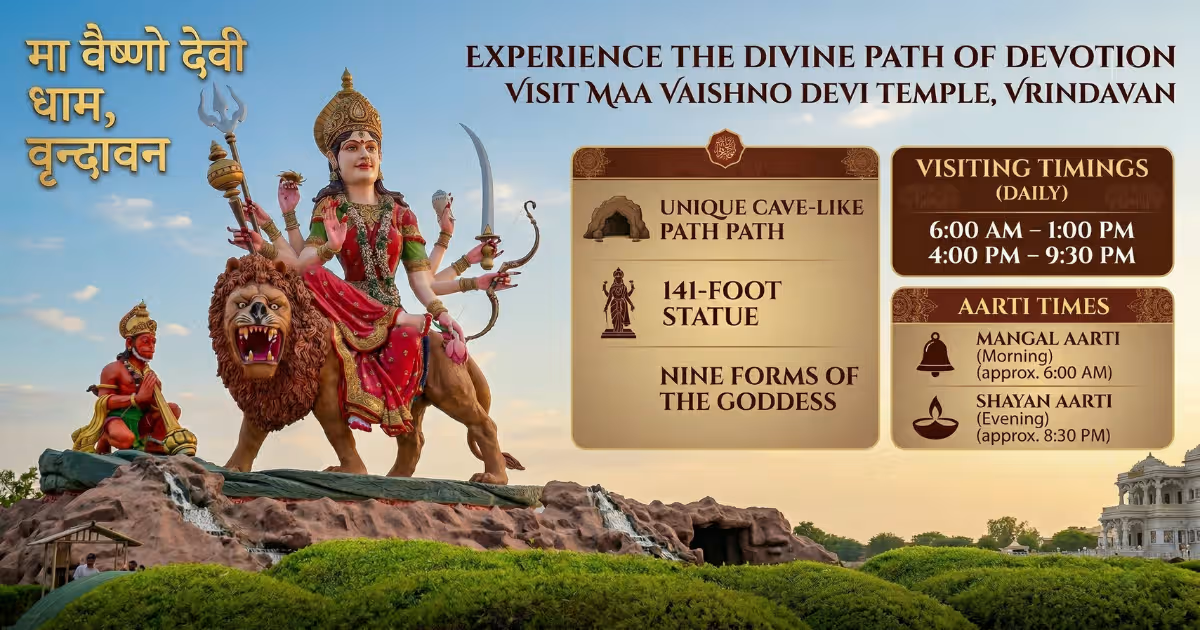
The Vaishno Devi Vrindavan Timing follows a split schedule, which is quite common in many temples across North India. The temple closes in the afternoon and reopens later in the evening.
Here’s the updated timing in a clear format:
| Darshan Session | Timing |
| Morning Darshan | 6:00 AM – 1:00 PM |
| Evening Darshan | 4:00 PM – 9:30 PM |
There is also an alternative timing followed occasionally:
| Alternate Timing | Timing |
| Morning | 5:00 AM – 12:00 PM |
| Evening | 4:00 PM – 9:00 PM |
From what I’ve personally observed, the 6:00 AM to 1:00 PM and 4:00 PM to 9:30 PM schedule is the most reliable for regular days. However, during peak seasons or festivals, these can stretch a little depending on the crowd.
Aarti Timing at Vaishno Devi Temple Vrindavan
If you want a more spiritual and less rushed experience, plan your visit around the aarti.
| Aarti Name | Timing |
| Mangal Aarti | Around 6:00 AM |
| Shayan Aarti | Around 8:00 PM – 9:00 PM |
The early morning aarti feels very calm. You won’t see heavy crowds, and the cave pathway is easier to walk through without stopping every few steps. Evening aarti, on the other hand, has a completely different energy. Lights, chants, and a more festive vibe.
Where Exactly is Vaishno Devi Temple in Vrindavan?
The temple is located on Chhatikara Road, quite close to Prem Mandir, which makes it easy to combine both in one visit.
- Area: Bhaktivedanta Swami Marg
- Nearby landmark: Prem Mandir
- Accessibility: Easily reachable by auto, e-rickshaw, or cab
If you’re already visiting Prem Mandir in the evening, it’s honestly a good idea to include this temple right before or after.
What Makes This Temple Different from Other Vrindavan Temples?
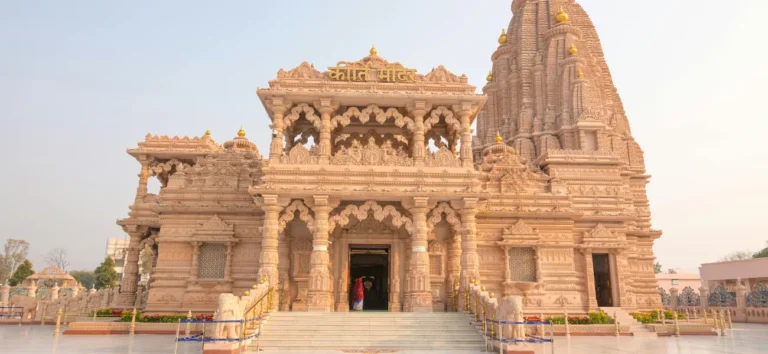
At first glance, it might feel like just another temple. But once you enter, you realize it’s designed very differently.
- There’s a cave-style pathway, inspired by the original Vaishno Devi shrine in Jammu
- The path is slightly narrow and immersive, which creates that pilgrimage-like feeling
- Inside, you’ll see nine forms of Goddess Durga beautifully depicted
- A massive 141-foot statue of Maa Vaishno Devi stands as the main highlight
What I noticed personally is that people don’t rush here as much as in Banke Bihari Temple. The flow is slow but steady, and that actually helps you absorb the experience better.
Best Time to Visit Based on Vaishno Devi Vrindavan Timing
Let’s be practical here. Timing alone isn’t enough. You need to understand the crowd behavior.
Morning Visit (Best for Peaceful Darshan)
- Arrive between 6:00 AM – 8:30 AM
- Minimal crowd
- Smooth cave entry
- Perfect for families and elderly visitors
Evening Visit (Best for Vibe and Lighting)
- Arrive after 6:30 PM
- Temple looks visually stunning
- Slight crowd, but manageable
- Combine with Prem Mandir light show
From my experience, if you want a calm and spiritual visit, go early in the morning. If you’re okay with a bit of crowd and want a more vibrant atmosphere, evening works well.
Crowd Pattern You Should Expect
Understanding crowd flow can actually save you a lot of time.
- Weekends: Slightly crowded, especially evenings
- Festivals: Heavy rush (especially Navratri)
- Winter months: Moderate crowd, pleasant weather
- Summer afternoons: Almost empty (but temple remains closed midday)
Navratri is when the temple feels completely different. Extended darshan hours, longer queues, and a very festive mood.
Entry Rules and Guidelines (Simple but Important)
- No entry fee
- Photography allowed in outer areas (avoid inside cave)
- Remove shoes before entering
- Follow queue discipline inside cave
- Carry water, especially in summer
One small thing I noticed: the cave path can feel a bit congested if you’re visiting during peak hours, so avoid carrying unnecessary bags.
Spiritual Experience – What You Actually Feel Inside
This is where things become a little personal.
Unlike some crowded temples where darshan feels rushed, here the cave experience slows you down. You walk through narrow paths, sometimes slightly bending, sometimes pausing. It’s almost symbolic, like a small journey before reaching the deity.
The final darshan area feels peaceful. No pushing, no loud chaos. Just a steady flow of devotees.
Nearby Places You Can Combine with Your Visit
If you’re planning smartly, you can cover multiple places in one trip:
- Prem Mandir – Evening light show is worth it
- ISKCON Temple Vrindavan – Calm and organized
- Banke Bihari Temple – Highly crowded but iconic
- Nidhivan – For a more mystical experience
Most of these are within 10–15 minutes distance, so planning becomes easy.
Local Guide Tip (From Real On-Ground Experience)
- Visit around 7:00 AM if you want almost no crowd
- Avoid entering the cave exactly during peak evening hours (7:30 PM–8:30 PM)
- Combine Prem Mandir + Vaishno Devi temple in the same evening
- Keep your visit light, don’t rush multiple temples in one go
Honestly, the biggest mistake people make is trying to cover everything in a hurry. Vrindavan doesn’t work like that.
Planning Support Partner
If you’re planning a Vrindavan trip and want everything aligned properly, from temple timings to travel routes, Mathura Vrindavan Tourism quietly simplifies the entire process. Instead of figuring out local transport, darshan timing, and temple combinations on your own, having someone who understands real on-ground flow makes the experience smoother. Especially during peak seasons like Navratri or long weekends, that planning support can actually save you hours of waiting.
Contact Mathura Vrindavan Tourism Today:
Call Us: +91 7300620809
WhatsApp Us: +91 7300620809
Visit Our Website: Mathura Vrindavan Tourism
Email: mathuravrindavantourism.com@gmail.com
How to Reach Vaishno Devi Temple Vrindavan
By Road
- Well connected via Mathura and Delhi
- Easily accessible through local autos and cabs
By Train
- Nearest railway station: Mathura Junction (approx. 12 km)
- From station, take auto or taxi
By Air
- Nearest airport: Delhi (approx. 150 km)
- From there, road travel to Vrindavan
Travel time from Mathura to Vrindavan is usually around 20–30 minutes depending on traffic.
FAQs – Vaishno Devi Vrindavan Timing
The temple opens from 6:00 AM to 1:00 PM and again from 4:00 PM to 9:30 PM on most days.
No, it remains closed in the afternoon between 1:00 PM and 4:00 PM.
Early morning between 6:00 AM and 8:30 AM is the best for peaceful darshan.
Yes, during Navratri and special occasions, timings may extend slightly due to heavy crowd.
On normal days, it takes around 20–40 minutes. During peak time, it can go up to 1–1.5 hours.
No, entry to the temple is completely free.
Yes, but the cave path might require slow walking. Morning visit is recommended.
Photography is allowed outside but usually restricted inside the cave area.
Yes, evenings are comparatively more crowded than mornings.
Yes, both are very close and can be easily covered in one visit.
Conclusion
Understanding the Vaishno Devi Vrindavan Timing is not just about knowing when the gates open, it’s about choosing the kind of experience you want. A quiet morning darshan feels completely different from a lively evening visit. If you plan it right, the temple doesn’t feel rushed or crowded, it feels personal. And honestly, that’s what most people are looking for when they come to Vrindavan.