If you ask anyone who has truly spent time in Braj, they’ll tell you one simple thing — festivals here don’t feel like events, they feel like moments you step into. You don’t just watch, you get pulled in without even realising.
Highlights
ToggleThe Festivals of Mathura Vrindavan are deeply connected to Lord Krishna’s life, but what makes them special is how naturally everything flows. No forced celebrations, no artificial setups. It’s all lived, felt, and passed on through generations.
One minute you’re walking through a quiet lane, and the next moment you’re surrounded by colors, chants, temple bells, and people smiling for no reason. That shift… that’s what stays with you.
Let’s go through these festivals the way a traveler actually experiences them on the ground.
Why Festivals of Mathura Vrindavan Feel Different From Anywhere Else
The first thing you notice is the timing. Festivals don’t follow strict schedules here.
One temple might start celebrations early morning, another might peak at midnight. Somewhere, bhajans are going on continuously, and somewhere else, people are just sitting quietly, soaking in the atmosphere.
And honestly, the biggest difference is the emotion. People here are not celebrating for fun or social media. There’s a sense of connection, like they are part of Krishna’s story itself.
You don’t feel like an outsider for long. Slowly, you just blend in.
Holi Festival in Mathura Vrindavan – Not Just Colors, It’s Pure Energy
If you’ve only seen Holi in cities, forget that version for a moment. Here, Holi feels completely different.
The Festivals of Mathura Vrindavan truly come alive during this time, and everything starts days before the actual Holi day.
What Actually Happens During Holi Here
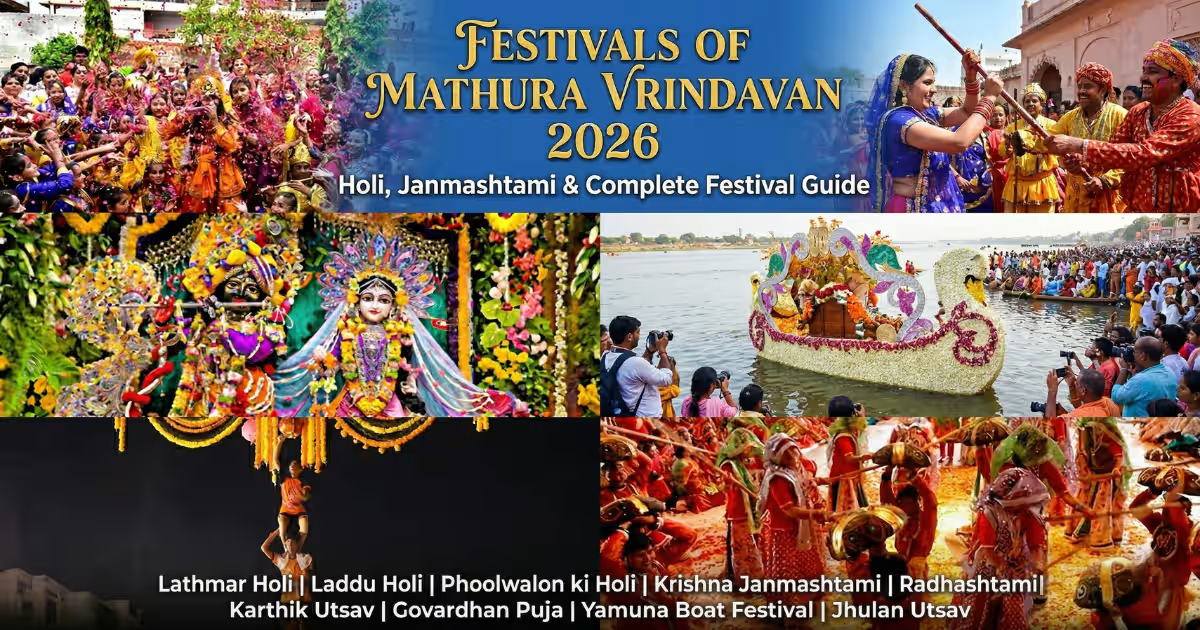
- Lathmar Holi (Barsana & Nandgaon)
This is probably the most talked-about one. Women playfully hit men with sticks, and men try to protect themselves. Sounds rough, but when you’re there, it feels more like a fun ritual than anything aggressive. - Laddu Holi (Barsana)
Priests throw laddoos into the crowd. People actually try to catch them. It gets chaotic, but in a very lighthearted way. - Phoolon Ki Holi (Vrindavan)
Flowers instead of colors. For a few minutes, petals fill the air, and the whole temple feels calm and beautiful. - Temple Holi in Vrindavan
Inside temples like Banke Bihari, colors are thrown in a way that feels overwhelming at first, but then you just go with it.
Real Crowd Note:
It gets extremely crowded. You’ll be pushed, colors will get into everything, and your plans will probably not go as expected. But somehow, that unpredictability becomes part of the experience.
Krishna Janmashtami – The Night That Feels Different
Janmashtami in Mathura is intense in a completely different way.
There’s no color chaos like Holi, but the energy builds slowly through the day and peaks at midnight.
What You’ll Actually Experience
- Long queues outside temples
- Continuous bhajans that don’t really stop
- Jhankis showing Krishna’s life scenes
- That exact midnight moment when everyone waits together
At places like Dwarkadheesh Temple, it becomes so crowded that even moving a few steps takes time.
On-Ground Feeling:
Even if you don’t get perfect darshan, just standing there at midnight, hearing chants and bells together… it stays with you.
Radhashtami – When Everything Slows Down
After the intensity of Holi and Janmashtami, Radhashtami feels softer.
It celebrates Radha Rani’s birth, and the mood shifts towards devotion rather than excitement.
What Feels Different Here
- More focus on rituals and prayers
- Flower decorations everywhere
- Less pushing crowds compared to Holi
- A calmer, more emotional atmosphere
Barsana feels especially alive during this time, but not in a chaotic way.
If you prefer a peaceful spiritual experience, this is honestly one of the best times to visit.
Jhulan Utsav – The Festival You Don’t Hear Much About
Jhulan Utsav happens during monsoon, and many people skip it because it’s not as famous.
But if you’ve ever seen it, you’ll probably remember it more than the bigger festivals.
What You Notice During Jhulan Utsav
- Beautifully decorated swings in temples
- Green surroundings because of monsoon
- Slower, peaceful temple visits
- Devotional songs instead of loud celebrations
It feels more personal, almost like a quiet celebration of love between Radha and Krishna.
Govardhan Puja – Walking with Faith
This is where you actually see devotion in action.
Govardhan Puja happens right after Diwali, and the main highlight is the Govardhan Parikrama, a 21 km walk around the hill.
What It Feels Like
- People walking barefoot for hours
- Families, elderly, kids — everyone participating
- Annakut offerings in temples (huge food displays)
- Continuous movement of pilgrims
It’s tiring, no doubt. But there’s something about walking along with thousands of people that gives a different kind of energy.
Karthik Utsav – The Quiet Side of Vrindavan
If Holi is loud and Janmashtami is intense, Karthik is calm.
This entire month feels slower, more reflective.
What Happens During Karthik
- Evening lamp lighting in temples
- Soft bhajans instead of loud celebrations
- Devotees staying for the full month
- Less tourist rush compared to Holi
If you just want to sit, observe, and feel the place without rush, this is probably the best time.
Yamuna Boat Festival – A Rare but Beautiful Experience
Not many people talk about this one, but if you happen to be around, it’s worth seeing.
Boats on the Yamuna are decorated with lights, and the reflection on water creates a completely different vibe.
It’s quiet, simple, and surprisingly beautiful.
Best Time to Experience Festivals of Mathura Vrindavan
| Festival | Month | Ground Experience |
| Holi | Feb–March | Extremely crowded, high energy |
| Janmashtami | Aug–Sept | Heavy rush, emotional peak |
| Radhashtami | Sept | Balanced crowd, devotional |
| Jhulan Utsav | July–Aug | Peaceful and scenic |
| Govardhan Puja | Oct–Nov | Pilgrim-heavy, intense |
| Karthik Utsav | Oct–Nov | Calm, spiritual |
Local Guide Tip (What People Usually Learn Late)
If you’re planning around the Festivals of Mathura Vrindavan, don’t overpack your itinerary.
One mistake many people make is trying to cover too many places in one day. It rarely works here, especially during festivals.
Keep buffer time. Roads get blocked, temple entries slow down, and sometimes you just end up staying longer at one place because it feels right.
Also, during Holi, protect your phone and valuables properly. Colors get everywhere, and water is involved too.
Planning Support Partner
If you don’t want to deal with confusion around routes, temple timings, or festival-specific crowd management, taking help from Mathura Vrindavan Tourism can actually make things smoother.
They usually help with planning darshan, transport, and proper festival flow, which saves a lot of time on the ground.
Contact Mathura Vrindavan Tourism Today:
Call Us: +91 7300620809
WhatsApp Us: +91 7300620809
Visit Our Website: Mathura Vrindavan Tourism
Email: mathuravrindavantourism.com@gmail.com
FAQs – Festivals of Mathura Vrindavan
Holi is the most famous and widely celebrated festival, especially in Barsana and Vrindavan.
Ideally 3 to 5 days to experience different types of Holi.
Yes, it is one of the most crowded festivals, especially at midnight.
Jhulan Utsav and Karthik Utsav are comparatively peaceful.
Yes, but it requires stamina as it’s a long walk.
Yes, but staying cautious in heavy crowds is important.
Banke Bihari Temple, Dwarkadheesh Temple, and Barsana temples are key.
Simple, old clothes and keep essentials protected.
Yes, prices usually increase due to demand.
Advance booking and local guidance help a lot.
Conclusion
The Festivals of Mathura Vrindavan are not something you finish and move on from. They stay somewhere in your memory, sometimes in small moments you didn’t even plan for.
It could be a sudden burst of colors during Holi, a quiet diya floating during Karthik, or just standing in a temple listening to bhajans without knowing how much time has passed.
And maybe that’s what makes this place special. Every visit feels new, even if you come back for the same festival again.