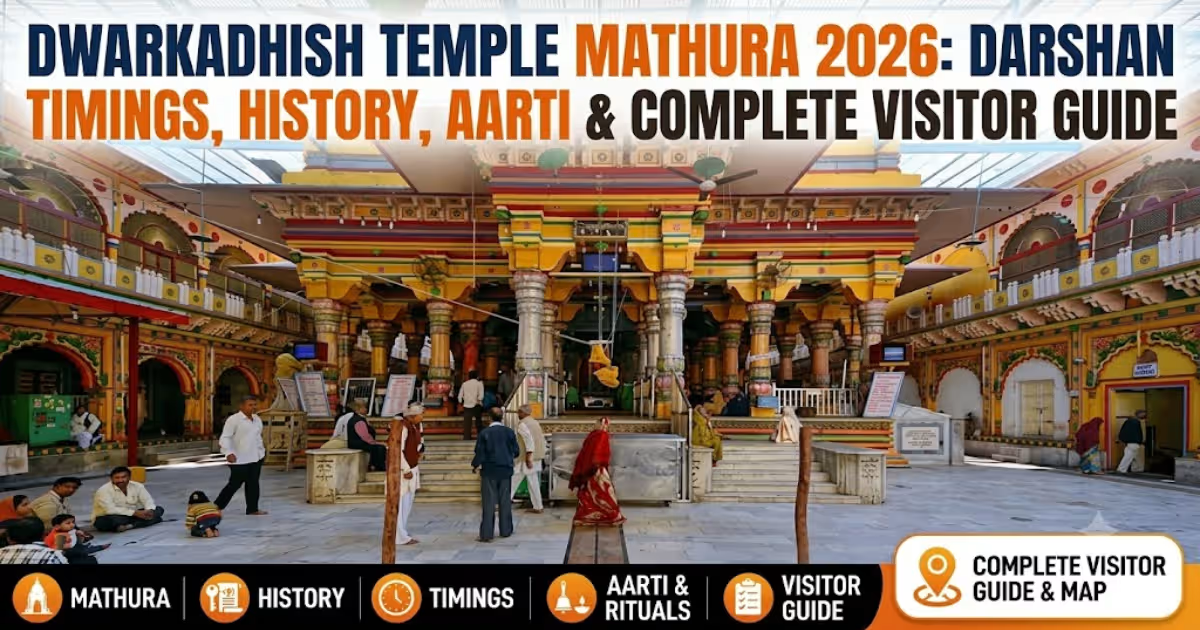
Dwarkadhish Temple Mathura darshan timings: Summer (April-October) 6:30 AM-10:30 AM and 4:00-7:00 PM. Winter (November-March) 6:30 AM-10:30 AM and 3:30-6:30 PM. Entry is free. Mangla Aarti at 6:30 AM daily. No VIP pass – equal access for all. Located in Chaubiya Para, 400 metres from Vishram Ghat, 3.5 km from Mathura Junction. Built in 1814 by Seth Gokul Das Parikh. Guided Mathura Vrindavan tours including Dwarkadhish with Experience My India from ₹1,999 per person. Call +91-7302265809.
Why Dwarkadhish Temple Is the Heart of Mathura’s Temple Circuit
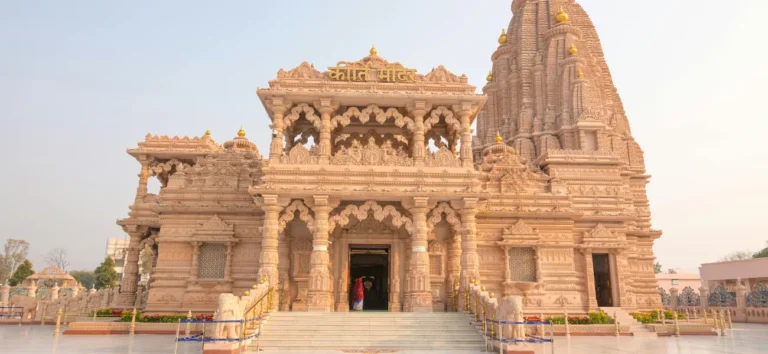
Of all the temples in Mathura – the second holiest city in Hinduism after Varanasi for Vaishnavas – Dwarkadhish Temple is the most visually distinctive and the most architecturally celebrated. Where Krishna Janmabhoomi carries the weight of the birthplace and Vishram Ghat carries the sanctity of the riverside, Dwarkadhish Temple carries the tradition of royal devotion: the worship of Lord Krishna in his kingly form as Dwarkadhish – the Lord of Dwarka.
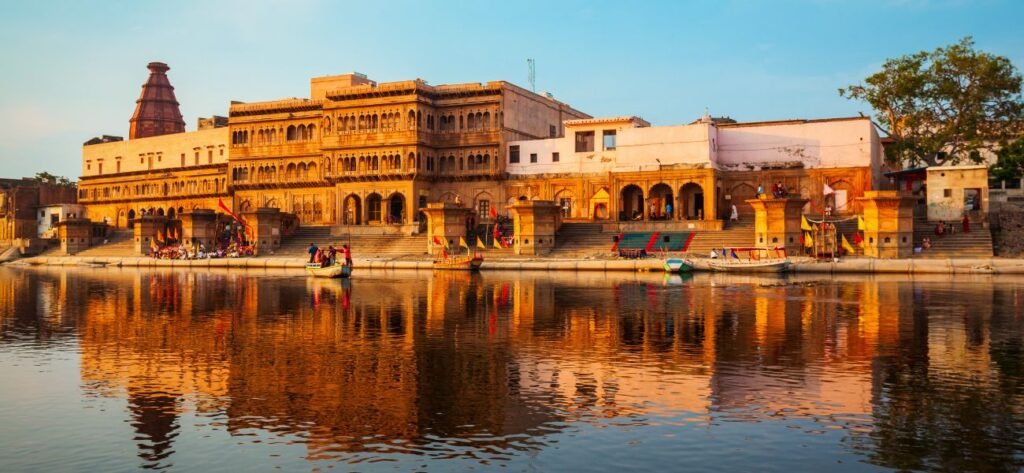
Built in 1814 during the height of the Maratha period, the temple is a rare surviving example of the Pushtimarg devotional tradition in full ceremonial expression – where each of the 6 daily Aartis follows a detailed liturgical script unchanged for over two centuries. The five rows of carved pillars in the open courtyard, the detailed paintings of Radha-Krishna Raas Leela on the inner walls and the scale of the Rajbhog Aarti (the grand mid-morning meal offering) make this temple an experience unlike any other in Braj Mandal.
I am Gurudutt, founder of Experience My India, born and raised in Braj Bhoomi and guiding pilgrims since 2018. I have attended the Dwarkadhish Mangla Aarti at 6:30 AM in December mist and the Rajbhog Aarti in full summer alongside 50,000+ pilgrim visits. In this guide you will find the complete 2026 Dwarkadhish Temple darshan and Aarti timings, its history and architecture, the Pushtimarg tradition, visitor rules, how to reach, nearby attractions and the ground-level realities that first-time visitors need. Call +91-7302265809 to plan with Experience My India. Tours from ₹1,999 per person.
Dwarkadhish Temple Mathura – Quick Overview
| Detail | Information |
| Deity | Lord Krishna as Dwarkadhish – Lord (Adhish) of Dwarka |
| Location | Chaubiya Para, Mathura, Uttar Pradesh |
| Distance from Vishram Ghat | 400 metres |
| Distance from Mathura Junction (MTJ) | 3.5 km |
| Distance from Krishna Janmabhoomi | 3.5 km |
| Summer timings (Apr-Oct) | 6:30 AM – 10:30 AM · 4:00 PM – 7:00 PM |
| Winter timings (Nov-Mar) | 6:30 AM – 10:30 AM · 3:30 PM – 6:30 PM |
| Entry fee | Free – no charges of any kind |
| VIP darshan | Does NOT exist – no paid priority access |
| Photography | Strictly banned inside the main courtyard |
| Mobile phones | Keep in pocket – security actively enforces photography ban |
| Aartis per day | 6 (Mangla, Shringar, Gwal, Rajbhog, Sandhya, Shayan) |
| Mangla Aarti | 6:30 AM daily (year-round) |
| Founded | 1814 CE |
| Founded by | Seth Gokul Das Parikh – royal treasurer of Gwalior State |
| Style | Rajasthani + Maratha – open courtyard with 5 rows of carved pillars |
| Worship tradition | Pushtimarg (founded by Vallabhacharya) |
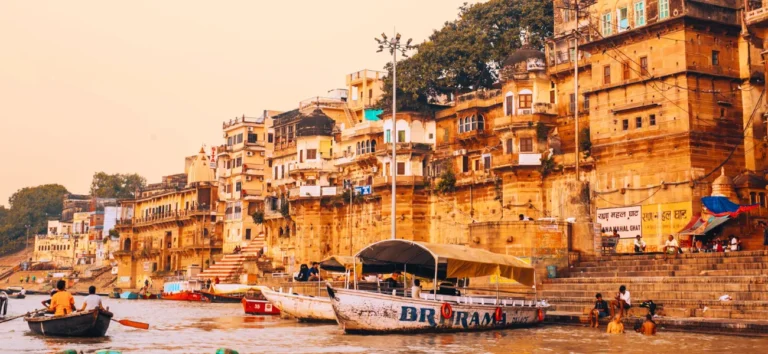
| Adjacent | Vishram Ghat – Lord Krishna’s resting place after defeating Kansa |
Experience My India includes Dwarkadhish Temple as a key stop on every Mathura Vrindavan 1-day tour – best visited at the 6:30-8:30 AM morning window.
Dwarkadhish Temple Darshan and Aarti Timings 2026
The temple follows a strict daily schedule under the Pushtimarg tradition – each Aarti marks a specific moment in Lord Krishna’s daily divine routine. The gates close completely for the afternoon rest period (Shayan / Vishram) and reopen for the evening session.
Complete Darshan and Aarti Schedule
| Aarti / Session | Timing | Significance |
| Mangla Aarti (First Aarti) | 6:30 AM | Lord Krishna’s awakening – the first offering of the day |
| Shringar Aarti (Second Aarti) | 7:30 AM – 8:00 AM | Lord’s dressing and adornment (Shringar) with the finest clothing and jewellery |
| Gwal Aarti (Third Aarti) | 9:30 AM – 10:00 AM | Lord Krishna going out to graze cows – traditional cowherding tribute |
| Rajbhog Aarti (Fourth Aarti – Grand) | 10:30 AM – 11:00 AM | Grand meal offering – most elaborate of the 6 Aartis; gates close after this |
| Afternoon rest (Vishram) | 11:00 AM – 3:30/4:00 PM | Temple completely closed – Lord at rest |
| Sandhya Aarti (Fifth Aarti) | Opens at 4:00 PM (Summer) / 3:30 PM (Winter) | Evening prayer as Lord returns from the pastures |
| Shayan Aarti (Sixth Aarti) | 7:30 PM – 9:00 PM (Summer) / 6:00-6:30 PM (Winter) | Lord being put to rest for the night – final daily ritual |
Seasonal Darshan Timings
| Season | Morning Opens | Morning Closes | Evening Opens | Evening Closes |
| Summer (April – October) | 6:30 AM | 10:30 AM | 4:00 PM | 7:00 PM |
| Winter (November – March) | 6:30 AM | 10:30 AM | 3:30 PM | 6:30 PM |
Key timing notes:
- The Mangla Aarti at 6:30 AM is the same year-round – this is the one consistent anchor across both seasons
- The winter evening opening is 30 minutes earlier (3:30 PM vs 4:00 PM) and closing is 30 minutes earlier (6:30 PM vs 7:00 PM)
- The Shayan Aarti (final Aarti) timing varies seasonally – confirm on the morning of your visit
- The temple closes completely between the Rajbhog Aarti (10:30-11:00 AM) and the evening opening – no entry during this period
Experience My India confirms the exact Aarti timings on the morning of every Mathura Vrindavan tour. Call +91-7302265809.
Dwarkadhish Temple History and Architecture
The Founder – Seth Gokul Das Parikh
Dwarkadhish Temple was built in 1814 CE by Seth Gokul Das Parikh – the royal treasurer of the Gwalior State under the Scindia (Maratha) dynasty. The construction was an act of grand personal devotion – Seth Parikh commissioned the temple to be built to the highest architectural and ritualistic standards of the Pushtimarg tradition that he followed.
Historical Timeline
| Period | Event |
| 1814 CE | Temple constructed by Seth Gokul Das Parikh, royal treasurer of Gwalior State |
| 19th century | Temple becomes one of the premier Pushtimarg temples in North India |
| Post-independence | Continued maintenance under the traditional Pushtimarg Goswami lineage |
| Present | Active temple receiving lakhs of pilgrims annually; Janmashtami brings 5 lakh+ to Mathura |
Architecture – What Makes Dwarkadhish Distinct
| Architectural Feature | Detail |
| Style | Rajasthani temple architecture with Maratha influence |
| Courtyard | Large open courtyard – the primary darshan and Aarti space |
| Pillars | Five rows of magnificently carved sandstone pillars – the temple’s most distinctive visual feature |
| Wall paintings | Intricate paintings throughout the inner walls depicting Lord Krishna’s birth (Janma) and Raas-Lila |
| Colour palette | Vivid pinks, yellows and golds – characteristic of Pushtimarg temple aesthetics |
| Deity | Main deity dressed in changing seasonal clothing and jewellery – Shringar is treated as a high art in Pushtimarg tradition |
What makes Dwarkadhish’s architecture significant: In Braj Mandal, most of the historically important temples are either 16th-century Mughal-era structures (Govind Devji in Vrindavan, Est. 1590) in red sandstone or pre-modern folk-temple styles. Dwarkadhish (1814) is a relatively “recent” temple in this context – but its Rajasthani-Maratha stylistic combination is unique in Mathura’s temple landscape and makes it the most photogenic major temple in the city.
Experience My India explains this architectural and historical context before every temple visit. Call +91-7302265809.
Book Your Mathura Vrindavan Tour Package
Dwarkadhish Temple – The Pushtimarg Tradition
To understand Dwarkadhish Temple fully, it helps to understand the Pushtimarg devotional tradition in which it operates.
Pushtimarg (Path of Grace) is a Vaishnava devotional philosophy founded by Acharya Vallabhacharya (1479-1531 CE) – the philosopher and saint who established the worship tradition of Lord Shrinathji (a form of Krishna) and whose teaching lineage maintains Dwarkadhish Temple to this day.
What Makes Pushtimarg Worship Different
| Aspect | Pushtimarg Practice |
| Deity relationship | Lord is treated as the devotee’s own child (Balak) – not a distant cosmic deity |
| Daily routine | Lord has a full royal daily schedule – waking, dressing, eating, resting, grazing, sleeping |
| Shringar | The dressing of the deity (Shringar) is a high art – different clothing sets for each season, festival and day of the week |
| Food offering (Bhog) | Elaborate food preparations are offered at specific times – the Rajbhog Aarti is the most elaborate offering |
| Seasonal decoration | The temple interior is redecorated seasonally and for every festival – each visit offers a different visual presentation of the deity |
| Hindola (Swing) | During Hindola (July-August), the deity is placed in an ornate swing – a practice Dwarkadhish is particularly famous for |
The Hindola (Swing) Festival: Dwarkadhish Temple is famous throughout Braj Mandal for the Hindola festival – a July-August celebration during which Lord Dwarkadhish is placed in a magnificently decorated swing (hindola) and gently swung as devotees sing devotional songs. Different decorative themes are presented each day of the festival period – flower hindola, fruit hindola, mirror hindola. This is one of the most visually distinct ritual practices available in any Mathura temple. Experience My India plans Hindola-specific visits – call +91-7302265809.
Dwarkadhish Temple Entry Fee and Visitor Rules
| Rule | Detail |
| Entry fee | ₹0 – completely free |
| VIP darshan | Does NOT exist – no paid priority access, no reserved viewing position |
| Photography | Strictly banned inside the main courtyard – guards actively enforce this |
| Mobile phones | Keep in pocket at all times inside the temple; security will require deletion of photos if caught |
| Dress code | Shoulders and knees covered – traditional Indian attire recommended |
| Footwear | Remove at designated stalls outside the main gate |
| Footwear storage | Free shoe storage available at the gate |
| Behaviour | Quiet and respectful – no loud talking, no rushed movement through the darshan area |
Photography enforcement note: Dwarkadhish Temple has one of the strictest photography policies of any major temple in Braj – specifically because the Pushtimarg tradition treats the deity’s Shringar (dressing and adornment) as a private devotional act, not a public spectacle. Guards have been known to stop visitors mid-darshan and require deletion of images if phones are raised. The correct practice is to keep the phone completely concealed inside a pocket – not just in hand, not held “at your side.” Experience My India briefs every pilgrim group on this before entry.
On VIP access offers: Any person near the temple gate or in the adjacent Vishram Ghat area offering faster entry, reserved Aarti position or “VIP darshan” for a fee is not affiliated with the temple’s actual management. Entry is free and equal for all pilgrims. Experience My India never arranges or recommends any paid priority access at this or any Braj temple. Call +91-7302265809.
How to Reach Dwarkadhish Temple Mathura
| From | Distance | Mode | Time | Notes |
| Mathura Junction (MTJ) station | 3.5 km | Auto-rickshaw / e-rickshaw | 12-20 minutes | Fare ₹40-₹70 |
| Krishna Janmabhoomi | 3.5 km | Auto-rickshaw | 10-20 minutes | Standard Mathura circuit |
| Vishram Ghat | 400 metres | Walking | 5-7 minutes | Easiest walking connection in Mathura |
| Delhi (Yamuna Expressway) | 155-165 km | Car | 2.5-3 hours | Exit at Mathura |
| Agra (NH-44) | 58 km | Car | 1 hour 10 minutes | Via Mathura from south |
| Vrindavan | 12 km | Car / auto-rickshaw | 25-40 minutes | Via Mathura-Vrindavan road |
Parking: Vehicle parking immediately near Dwarkadhish Temple is limited – the Chaubiya Para area lanes are narrow. The most practical approach: park at a distance (near Mathura Junction or Civil Lines area) and take an auto or e-rickshaw to the Vishram Ghat area. From Vishram Ghat, Dwarkadhish Temple is a 5-minute walk. Experience My India handles all Mathura parking logistics for tour groups. Call +91-7302265809.
Places to Visit Near Dwarkadhish Temple
| Place | Distance | Travel Time | Significance | Best Visit Time |
| Vishram Ghat | 400 metres | 5 minutes walk | Where Krishna rested after defeating Kansa; Yamuna Aarti 7:00 PM (S) / 6:00 PM (W) | Evening for Aarti; morning for river dip |
| Krishna Janmabhoomi | 3.5 km | 15 minutes auto | Birthplace of Lord Krishna; most sacred site in Mathura | 6:00-8:00 AM weekday opening |
| Gita Mandir | 3 km | 10-15 minutes | 700 Gita shlokas carved on red sandstone walls | 9:00 AM-12:00 PM or 3:30-9:00 PM |
| Kans Quila (Kansa’s Fort) | 2 km | 8-10 minutes | Mughal-era fort built on Kansa’s original fort site; Yamuna view from terrace | 9:00 AM-5:00 PM |
| Govind Nagar (ISKCON Mathura) | 4 km | 15-20 minutes | Well-organised ISKCON centre in Mathura – broader following and prasad | 5:00 AM-1:00 PM and 4:00-9:00 PM |
| Vrindavan (all temples) | 12 km | 25-40 minutes | Banke Bihari, Radha Raman, ISKCON Vrindavan, Prem Mandir | Banke Bihari from 7:45 AM (S) |
Recommended Mathura morning circuit (starting from Dwarkadhish): 6:30 AM – Dwarkadhish Mangla Aarti 7:30 AM – Dwarkadhish Shringar Aarti 8:30 AM – Vishram Ghat (5 minutes walk) 9:30 AM – Gita Mandir (10 minutes drive) 10:30 AM – Krishna Janmabhoomi (security deposit, darshan) 12:00 PM – Drive to Vrindavan (12 km) for afternoon circuit
Experience My India sequences this exact circuit on every Mathura Vrindavan 1-day tour. Call +91-7302265809.
Best Time to Visit Dwarkadhish Temple
| Visit Type | Best Window | Why |
| Most devotionally significant | Mangla Aarti – 6:30 AM | Lord’s awakening – the most intimate Aarti of the day |
| Best Shringar darshan | Shringar Aarti – 7:30-8:00 AM | Lord dressed in finest seasonal clothing – visually distinctive |
| Grand food offering | Rajbhog Aarti – 10:30 AM | Most elaborate Aarti; closes after this |
| Evening visit | Sandhya/Shayan – from 4:00 PM (Summer) / 3:30 PM (Winter) | Evening Aarti and Vishram Ghat Yamuna Aarti can be combined |
| Best for photographers | 6:30-8:30 AM on a weekday | Best morning light + manageable crowd |
| Hindola Festival | July-August | Deity placed in decorated swing daily – most visually distinctive of any Mathura temple festival |
Season-wise Recommendation
| Season | Visiting Conditions | Verdict |
| October – February | 8°C-25°C – pleasant queue-standing temperature; all Aartis on best schedule | ✅ Best season |
| March – May | Warming up – 6:30 AM Mangla Aarti is still comfortable; afternoon Aarti can be hot | ✅ Morning only |
| June – September (Monsoon) | Rain cools; Hindola festival running – best time for this specific festival | ✅ Hindola festival |
| Janmashtami (Aug 17, 2026) | 5 lakh+ pilgrims in Mathura; most sacred annual event | ✅ Book 3 months ahead |
Experience My India’s recommendation: October to February, 6:30 AM Mangla Aarti on a Tuesday-Thursday morning. This combination gives the lowest queue, most comfortable temperature and the most intimate Aarti experience at Dwarkadhish of any regular visiting window. Call +91-7302265809.
View Our 2 Days Mathura Vrindavan Tour Package
Dwarkadhish Temple Experience Summary – Quick Reference
| Aspect | Information |
| Summer timings | 6:30-10:30 AM · 4:00-7:00 PM |
| Winter timings | 6:30-10:30 AM · 3:30-6:30 PM |
| Mangla Aarti | 6:30 AM (year-round) |
| Shringar Aarti | 7:30-8:00 AM |
| Rajbhog Aarti | 10:30-11:00 AM |
| Shayan Aarti | 7:30-9:00 PM (Summer) / 6:00-6:30 PM (Winter) |
| Entry fee | ₹0 – Free |
| VIP pass | Does not exist |
| Photography | Strictly banned inside courtyard |
| Dress code | Shoulders and knees covered |
| Afternoon closure | 11:00 AM – 3:30/4:00 PM |
| Best Aarti to attend | Mangla (6:30 AM) or Shringar (7:30 AM) |
| Architectural highlight | 5 rows of carved sandstone pillars |
| Festival highlight | Hindola (swing festival) – July-August |
| Distance from Vishram Ghat | 400 metres walk |
| Distance from Mathura Junction | 3.5 km – auto ₹40-₹70 |
| EMI tour | From ₹1,999 per person · +91-7302265809 |
What Nobody Tells You About Dwarkadhish Temple
After guiding more than 50,000 pilgrims through Mathura’s temples since 2018, here is what I – Gurudutt, founder of Experience My India – share privately before every Dwarkadhish visit:
The photography ban is enforced with particular strictness – phones visible in hands, even without a raised camera, can attract security attention. This is not an exaggeration – Dwarkadhish Temple’s security actively watches for phones in hands within the main courtyard. The correct practice is to put the phone completely inside a pocket before the main gate and not remove it until exiting. Guards have been documented requiring on-the-spot deletion of images. Experience My India briefs every group on this before the temple gate, not after.
The Mangla Aarti at 6:30 AM is the single most intimate Aarti experience in all of Mathura’s temples. The crowd at 6:30 AM on a weekday is manageable – 50 to 200 people. The Shringar Aarti (7:30 AM) and Rajbhog Aarti (10:30 AM) draw significantly larger crowds – 500 to 2,000+ on weekends. If the purpose of your visit is devotional (not just visual), the Mangla Aarti is the correct target.
The afternoon closure is strict – no partial entry, no waiting inside. When the gates close after the Rajbhog Aarti (approximately 11:00 AM), the complex is cleared completely. Pilgrims who arrive slightly late and find the gate closed cannot wait inside – they must wait outside and return for the evening opening. Planning the Mathura circuit to reach Dwarkadhish before 10:00 AM on a weekday gives a comfortable Rajbhog Aarti window.
The Hindola (swing) festival in July-August is one of the most distinctive ritual experiences in all of Braj – and almost no travel guide mentions it. For 30+ days of the festival period, the deity is dressed and placed in an elaborately themed swing each day – a different decorative theme every single day (flower hindola, fruit hindola, silver hindola, gold hindola). Attending the Hindola at Dwarkadhish is a genuinely unique Mathura experience not replicated at any other Vrindavan or Mathura temple at the same scale. Experience My India specifically plans Hindola visits – call +91-7302265809.
The Yamuna Aarti at Vishram Ghat (400 metres away) runs at 7:00 PM in summer and 6:00 PM in winter – and it is the natural complement to the Dwarkadhish evening Shayan Aarti. The most complete Mathura evening sequence: Dwarkadhish Sandhya Aarti (4:00 PM) → Vishram Ghat Yamuna Aarti (7:00 PM / 6:00 PM) – both within 400 metres of each other. Experience My India plans this exact sequence for all evening Mathura tour groups.
Experience My India plans all Dwarkadhish Temple visits around these realities. WhatsApp +91-7302265809.
Know Before You Visit Dwarkadhish Temple
- Summer timings: 6:30-10:30 AM and 4:00-7:00 PM · Winter timings: 6:30-10:30 AM and 3:30-6:30 PM
- Entry is completely free – no ticket, no VIP pass, no donation required
- Photography is strictly banned inside the main courtyard – keep phone inside your pocket at all times; guards enforce this actively
- Afternoon closure is complete – no waiting inside after Rajbhog Aarti (11:00 AM)
- Dress code: shoulders and knees covered; footwear removed at the main gate
- Mangla Aarti at 6:30 AM is the most intimate Aarti – lowest crowd (50-200 on weekdays)
- Rajbhog Aarti at 10:30 AM draws the largest crowd – arrive by 10:00 AM to secure a clear position
- Hindola festival (July-August): deity placed in decorated swing daily – different theme each day
- Vishram Ghat Yamuna Aarti (400 metres away): 7:00 PM summer / 6:00 PM winter – combine with Dwarkadhish evening visit
- Janmashtami 2026 (August 17): book hotel 3 months ahead – Mathura receives 5 lakh+ pilgrims
- Experience My India sequences the Dwarkadhish Aarti into the correct morning Mathura circuit. Call +91-7302265809.
Frequently Asked Questions – Dwarkadhish Temple Mathura
Dwarkadhish Temple Mathura darshan timings: Summer (April-October) – 6:30 AM to 10:30 AM and 4:00 PM to 7:00 PM. Winter (November-March) – 6:30 AM to 10:30 AM and 3:30 PM to 6:30 PM. Entry is free. The temple closes completely between approximately 11:00 AM and 3:30-4:00 PM for the Lord’s rest period. Best darshan window is 6:30-8:30 AM on a weekday when the Mangla and Shringar Aartis run with a manageable crowd. Experience My India confirms exact timings on every tour morning – call +91-7302265809.
The Yamuna Aarti referred to near Dwarkadhish Temple is typically the Vishram Ghat Yamuna Aarti – held 400 metres from Dwarkadhish, at 7:00 PM in summer (April-October) and 6:00 PM in winter (November-March). The Dwarkadhish Temple’s own Shayan (final evening) Aarti takes place at 7:30-9:00 PM in summer and approximately 6:00-6:30 PM in winter. Experience My India sequences both the Dwarkadhish Aarti and the Vishram Ghat Yamuna Aarti in a single Mathura evening circuit – call +91-7302265809.
The first Aarti at Dwarkadhish Temple Mathura is the Mangla Aarti at 6:30 AM daily – year-round, both summer and winter. This is the awakening Aarti that marks the beginning of Lord Dwarkadhish’s daily divine routine. The Mangla Aarti at 6:30 AM on a weekday is attended by 50 to 200 devotees – the smallest and most intimate crowd of the entire day. The second Aarti (Shringar) follows at 7:30 AM. Experience My India positions tour groups at the 6:30 AM Mangla Aarti – call +91-7302265809.
The best time to visit Dwarkadhish Temple Mathura is between October and February – pleasant temperatures for standing in the courtyard for the Aarti. Within the day, the 6:30 AM Mangla Aarti on a Tuesday-Thursday morning offers the most intimate and least crowded experience. The 7:30 AM Shringar Aarti adds the visual experience of the deity dressed in seasonal clothing. Combining both Aartis in one 6:30-8:30 AM visit and then walking to Vishram Ghat (400 metres) gives the ideal Mathura morning. Experience My India plans this sequence – call +91-7302265809.
No – entry to Dwarkadhish Temple Mathura is completely free. There is no ticket, no mandatory donation, no VIP pass system and no charge for attending any of the 6 daily Aartis. Any person near the temple gate offering faster entry or special Aarti position for a fee is not affiliated with the temple’s management. Experience My India includes Dwarkadhish in all Mathura Vrindavan tour packages at no additional charge – call +91-7302265809.
Dwarkadhish Temple Mathura was built in 1814 CE by Seth Gokul Das Parikh – the royal treasurer of the Gwalior State under the Scindia (Maratha) dynasty. Seth Parikh was a follower of the Pushtimarg devotional tradition founded by Vallabhacharya and built the temple to the highest standards of Pushtimarg worship. The temple’s five rows of carved sandstone pillars and the elaborate seasonal Shringar tradition are direct expressions of this founding philosophy. Experience My India explains this history during every temple visit – call +91-7302265809.
Pushtimarg (Path of Grace) is a Vaishnava devotional philosophy founded by Acharya Vallabhacharya (1479-1531 CE) that treats Lord Krishna as a beloved child rather than a distant deity. At Dwarkadhish Temple, this means the deity has a full daily routine – waking (Mangla Aarti), dressing (Shringar Aarti), eating (Rajbhog Aarti), resting and sleeping (Shayan Aarti). The deity’s clothing, ornaments and food offerings change seasonally and for each festival. Experience My India explains this theological framework to every pilgrim – call +91-7302265809.
The Hindola (swing) festival at Dwarkadhish Temple runs for 30+ days in July-August, during which Lord Dwarkadhish is placed in an elaborately decorated swing each day. Each day features a different swing theme – flower hindola, fruit hindola, silver hindola, gold hindola, mirror hindola and many more – with the decorations changed daily by the temple’s priestly team. Dwarkadhish Temple’s Hindola is considered the grandest in Mathura. Experience My India plans Hindola-specific visits – call +91-7302265809.
Photography is strictly banned inside the main courtyard and darshan areas of Dwarkadhish Temple. Guards actively enforce this policy – mobile phones visible in hands inside the courtyard, even without the camera raised, can attract security intervention. Guards have been documented requiring immediate deletion of images. The correct practice: keep the phone completely inside a pocket before the main gate and do not remove it until outside. Experience My India briefs every pilgrim on this before entry – call +91-7302265809.
Within 5 km of Dwarkadhish Temple: Vishram Ghat (400 metres, Yamuna Aarti at 7:00 PM / 6:00 PM), Krishna Janmabhoomi (3.5 km), Gita Mandir (3 km, 700 Gita shlokas carved in red sandstone), Kans Quila (2 km, Mughal-era fort with Yamuna terrace view) and ISKCON Mathura (4 km). Vrindavan (Banke Bihari, Radha Raman, Prem Mandir) is 12 km. Experience My India covers the full circuit in every Mathura Vrindavan tour – call +91-7302265809.
The nearest railway station to Dwarkadhish Temple is Mathura Junction (MTJ) – approximately 3.5 km from the temple. Auto-rickshaws and e-rickshaws are available outside Mathura Junction station – fare ₹40-₹70 to Dwarkadhish Temple or the adjacent Vishram Ghat area. The journey takes 12-20 minutes. Mathura Cantt station (MCT) is slightly closer to some parts of the city but Mathura Junction has broader connectivity. Experience My India arranges station pickup for all tour groups – call +91-7302265809.
Yes. Experience My India includes Dwarkadhish Temple in all Mathura Vrindavan 1-day and longer tours – sequenced for the 6:30 AM Mangla Aarti, with photography briefing before entry, Shringar Aarti at 7:30 AM, then the complete Mathura circuit (Vishram Ghat, Krishna Janmabhoomi) and Vrindavan temples. Mathura Vrindavan 1-day tours from ₹1,999 per person. WhatsApp +91-7302265809 – itinerary in 30 minutes.
Recommended products
-
02 Days Mathura Vrindavan Tour
-
03 Days Mathura Vrindavan Tour
Original price was: ₹9,000.00.₹8,000.00Current price is: ₹8,000.00. -
04 Days Agra Mathura Vrindavan Tour
-
5 days Mathura Vrindavan package with Agra
🙏 Ready to Visit Dwarkadhish Temple Mathura with Experience My India?
WhatsApp us and receive your personalised Mathura Vrindavan itinerary within 30 minutes – Dwarkadhish Aarti timing for your visit date, temple Shringar briefing, Vishram Ghat Yamuna Aarti coordination, complete Mathura + Vrindavan circuit. Tours from ₹1,999 per person.
💬 WhatsApp +91-7302265809 – Book Now
Jai Shri Krishna 🙏