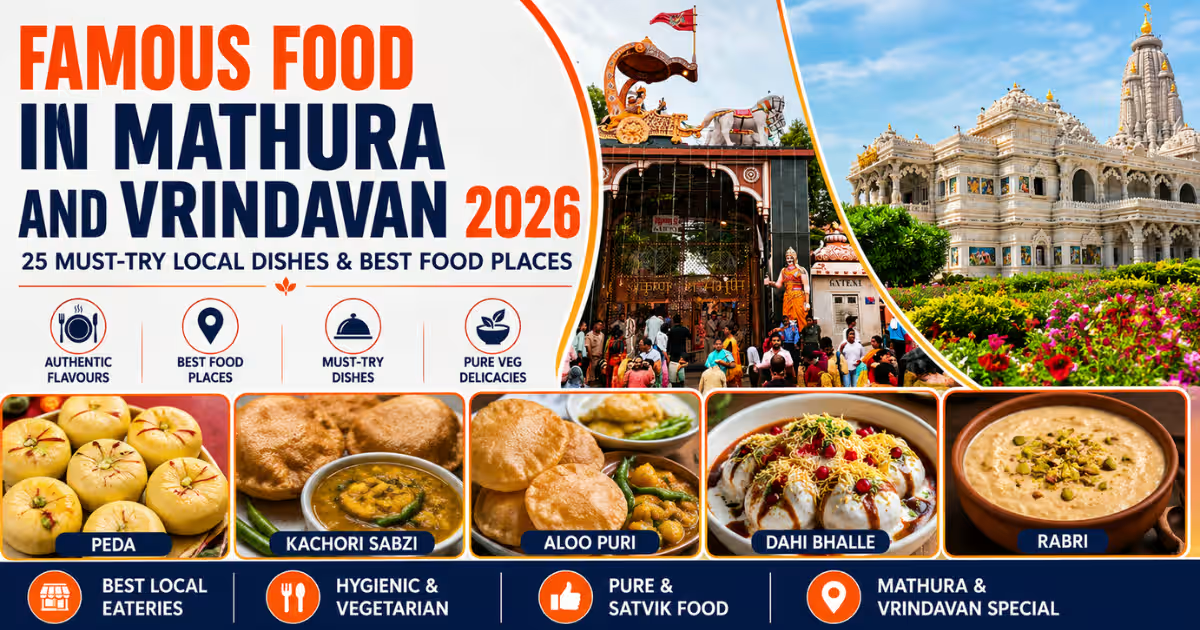
The most famous food in Mathura and Vrindavan includes Mathura Peda (GI-certified milk sweet, ₹400-₹600/kg), Kachori-Sabzi (spicy lentil breakfast, ₹40-₹80), Kulhad Lassi (thick yoghurt in earthen cups, ₹50-₹120), Khurchan (condensed milk dessert), Makkhan Mishri (fresh white butter with sugar – Lord Krishna’s prasad at Banke Bihari) and the Sattvic thali at ISKCON Govinda’s or Fogila Ashram (₹90-₹250). All food in Braj is purely vegetarian and Sattvic. Experience My India includes food walks in guided packages from ₹1,999. WhatsApp +91-7302265809.
A Food Culture Built Around the Temple, Not the Restaurant
Every meal in Mathura and Vrindavan is shaped by the same principle: food offered to Lord Krishna (prasad) defines what is considered worthy of eating. This means the entire culinary tradition of Braj is purely vegetarian, entirely free of meat, eggs and in most cases onion and garlic. This is not a restriction placed on tourists – it is simply how the local food culture has developed over centuries of temple devotion.
The result is a distinctive regional cuisine built around dairy (milk, ghee, yoghurt, condensed milk), lentils, wheat and seasonal vegetables – a category of cooking called Sattvic food, considered pure and conducive to devotion. Mathura Peda, Kulhad Lassi and Kachori-Sabzi did not emerge from culinary experimentation. They emerged from feeding pilgrims.
I am Gurudutt, born and raised in Braj Bhoomi and founder of Experience My India. Since 2018, our team has guided over 50,000 pilgrims through Mathura and Vrindavan – and a food recommendation from our guides is one of the most-requested aspects of every tour. This guide covers all 25 famous foods, where to find them, what they cost and which area of the city to explore for each category.
The Sattvic Food Tradition of Braj
Before the food guide, a brief context that makes every dish in this list more meaningful:
Sattvic food is food considered pure in the Vaishnav tradition – no meat, no eggs, no onion, no garlic. The reasoning: these foods are believed to stimulate aggression and passion (rajas and tamas), which are considered obstacles to devotion. In Braj – the land most closely associated with Lord Krishna’s life and teachings – the entire food culture follows this principle. Every temple, every dhaba, every sweet shop in Mathura and Vrindavan serves exclusively Sattvic vegetarian food.
Why this matters for visitors: You will not find onion, garlic, meat or eggs anywhere in the traditional food circuit of Mathura and Vrindavan. This is not a dietary restriction to navigate around – it is the local food culture to immerse in. The food is genuinely excellent within this tradition.
Signature Sweets (1-8)
1. Mathura Peda
The crowned jewel of Braj – a GI-tagged (Geographical Indication certified) sweet made from slow-cooked khoya (reduced milk solids) and sugar, caramelised to a characteristic brown with a slightly grainy texture. The GI tag means only Mathura-produced peda meets the authentic standard.
Best place: Brijwasi Sweets, Holi Gate, Mathura – one of the most established and trusted shops, with a visible preparation counter.
Price: ₹400-₹600 per kg; ₹50-₹100 per 100g
Buying tip: Always buy from shops displaying GI certification or with visible preparation counters. Pre-packaged boxes without visible production are less reliable for freshness.
2. Khurchan
A decadent layered condensed milk dessert – the caramelised skin of heating milk is skimmed and layered repeatedly, creating a textured, intensely flavoured sweet unlike anything available outside Mathura.
Best place: Brij Bhumi Misthan Bhandar, Chatta Bazar, Mathura
Price: ₹80-₹150 per serving
3. Rabdi
Thick, creamy condensed milk flavoured with cardamom and dry fruits – served at room temperature or slightly chilled. One of the staple post-darshan desserts at sweet shops near major temples.
Price: ₹60-₹120 per serving
4. Malai Ghevar
A disc-shaped latticed sweet from the Rajasthani tradition, soaked in sugar syrup and topped with thick rabdi – available in Mathura’s sweet market particularly during Teej and Raksha Bandhan season (July-August).
Price: ₹80-₹200 depending on size and topping
5. Makkhan Mishri
Fresh, unchurned white butter lightly sweetened with mishri (rock sugar) – the specific food most closely associated with Lord Krishna’s childhood food preference. At Banke Bihari Temple in Vrindavan, this is distributed as prasad. The experience of receiving Makkhan Mishri as prasad is culturally distinct from purchasing the same combination as a street snack.
Best experience: As prasad at Banke Bihari Temple, Vrindavan
Price: Free as prasad; ₹20-₹50 from nearby stalls
6. Imarti
A deep-fried spiral sweet made from urad dal batter, soaked in saffron-coloured sugar syrup – visually similar to jalebi but denser and with a distinct flavour from the lentil base.
Price: ₹30-₹60 per piece
7. Petha
The crystallised ash gourd sweet most associated with Agra, but widely available throughout Mathura’s markets – soft, translucent and mildly sweet, available in plain and rose-flavoured versions.
Price: ₹200-₹400 per kg
8. Balushahi
A flaky, deep-fried dough sweet glazed with sugar – similar in concept to a glazed doughnut but significantly denser and less sweet. A traditional North Indian sweet found in most Mathura mithai shops.
Price: ₹40-₹80 per piece
🙏 Planning a Food Walk in Braj with Experience My India? Our guided Mathura and Vrindavan tours include specific food recommendations for each area – which stalls to trust, what times are freshest and the stories behind each traditional dish. 2 days Mathura Vrindavan Tour Package from ₹1,999 per person · Guide included WhatsApp +91-7302265809
Braj Breakfast Dishes (9-13)
The best Braj breakfast happens between 7:00 AM and 10:00 AM – when kachori is freshly made, jalebi comes straight from the ghee and the morning temple crowd fills the lanes near Vishram Ghat in Mathura and Banke Bihari in Vrindavan.
9. Kachori with Aloo Sabzi
Braj’s most iconic breakfast – a crispy, spicy, lentil-stuffed deep-fried bread served with a tangy potato curry made without tomatoes (traditionally tomato-free in Braj cooking). The combination of the crunchy, peppery kachori with the tangy aloo sabzi is distinctive to this region.
Best place: Radhika Mishthan Bhandar, Vrindavan; stalls near Vishram Ghat, Mathura
Price: ₹40-₹80 per plate
Best time: 7:30-10:00 AM – freshness declines significantly after 11:00 AM
10. Bedmi Puri
A heavier, ground-lentil mixed flour puri – denser than regular puri, with the lentil incorporated into the dough itself, giving it a distinctive texture and flavour. Served with aloo sabzi.
Price: ₹50-₹90 per plate
11. Gulgule
Sweet, deep-fried traditional dumplings made from wheat flour and jaggery – a seasonal morning snack particularly popular during festivals and winter months.
Price: ₹20-₹50
12. Samosa
The North Indian standard – present everywhere in the temple lanes of both cities. In Braj, samosas are made without onion and without garlic, making them distinctly different in flavour from the versions available in most other cities.
Price: ₹15-₹40 per piece
13. Jalebi
Deep-fried in ghee and soaked in sugar syrup – the Braj version is typically made with desi ghee rather than refined oil, giving it a richer colour and flavour. Best consumed within 30 minutes of preparation.
Price: ₹30-₹70 per 100g | Best time: 7:00-9:00 AM when prepared fresh
View Our 5 Days Braj 84 Kosh Yatra
Afternoon Street Foods & Coolants (14-20)
Between 12:00 PM and 5:00 PM – when all major temples are closed for Bhog and rest – the street food circuit fills the gap for pilgrims resting and exploring the markets.
14. Kulhad Lassi
Thick, sweetened yoghurt served in an earthen clay cup (kulhad), topped with a dense layer of malai (cream) and sometimes rose syrup. One of the most photographed food experiences in Braj. The earthen cup absorbs a small amount of the lassi, giving it a distinctive subtle earthy note.
Best place: Shree Radha Lassi, Mathura Chowk; stalls near Chatikara Road, Vrindavan
Price: ₹50-₹120 per kulhad
15. Aloo Tikki
Crispy fried potato patties served with sweet tamarind chutney and spiced chickpeas – a standard afternoon snack near the temple approach lanes.
Price: ₹30-₹70 per serving
16. Chaat (General)
The category covers everything from bhalla to papdi to various crispy snacks with chutneys – served at the afternoon and evening food stalls throughout Loi Bazaar in Vrindavan and the market lanes in Mathura.
Price: ₹40-₹100 per plate
17. Dahi Bhalla
Fried lentil fritters soaked in thick, whipped yoghurt and topped with sweet tamarind chutney and tangy green chutney – one of the cooling, satisfying afternoon foods that works as both snack and light meal.
Price: ₹50-₹90 per serving
18. Aloo Papdi Chaat
Crispy wafers layered with boiled potatoes, chickpeas, thick curd and tamarind chutney – a complete sensory experience of crunch, sweet, sour and spice simultaneously.
Price: ₹50-₹100 per plate
19. Pani Puri / Golgappe
Hollow, crispy fried puris filled with spicy tamarind water and chickpeas – a staple of every North Indian street food scene and universally present throughout Mathura and Vrindavan’s evening food lanes.
Price: ₹20-₹50 for 6-8 pieces
20. Matar Chaat
Boiled dried peas cooked with spices, finely chopped ginger and a generous squeeze of lemon – a simple, warming snack distinctly popular in the temple lanes.
Price: ₹20-₹50 per cup
Traditional Meals & Temple Food (21-25)
21. Sattvic Thali at Fogila Ashram
A simple, wholesome, unlimited Sattvic thali – dal, sabzi, puri or roti, rice and a sweet – served without onion or garlic, prepared in the spirit of offering. At Fogila Ashram near Banke Bihari Temple, a complete thali is available for approximately ₹90.
Best place: Fogila Ashram, near Banke Bihari Temple, Vrindavan
Price: ₹90 per thali (unlimited)
22. Chhappan Bhog
The traditional festival offering to the deity – 56 distinct food items presented to Lord Krishna. Pilgrims cannot eat the Chhappan Bhog itself (it is temple prasad), but the distributed prasad from this offering is available at the temple after the main ceremony during specific festival days. A rare cultural-religious food experience.
23. Govinda’s Thali / Buffet at ISKCON Vrindavan
A high-quality Sattvic dining experience at the ISKCON Temple’s Govinda’s Restaurant – a buffet meal with multiple preparations, clean kitchen standards and a welcoming atmosphere for international visitors.
Best place: Govinda’s Restaurant, ISKCON Temple, Vrindavan
Price: ₹180-₹350 per person for the buffet
24. Bhojanalaya Thali
Traditional communal dining in simple local dining halls – practical, affordable and genuinely rooted in Braj food culture. The Brijwasi Bhojanalaya near Mathura Junction is a well-established option.
Best place: Brijwasi Bhojanalaya, near Mathura Junction
Price: ₹60-₹120 per thali
25. Dal Bati Churma
A Rajasthani-influenced meal – spiced lentils (dal) with baked dough balls (bati) and a sweet crumbled wheat dish (churma). The geographical proximity of Mathura to Rajasthan brings this dish into the Braj food repertoire, available at select dhabas serving a broader North Indian menu.
Price: ₹120-₹200 per plate
Complete Price Table – All 25 Famous Foods
| # | Food Item | Price Range | Category |
| 1 | Mathura Peda | ₹400-₹600/kg; ₹50-₹100/100g | Sweet |
| 2 | Khurchan | ₹80-₹150/serving | Sweet |
| 3 | Rabdi | ₹60-₹120/serving | Sweet |
| 4 | Malai Ghevar | ₹80-₹200/piece | Sweet (seasonal) |
| 5 | Makkhan Mishri | Free (prasad) / ₹20-₹50 (stall) | Prasad / Sweet |
| 6 | Imarti | ₹30-₹60/piece | Sweet |
| 7 | Petha | ₹200-₹400/kg | Sweet |
| 8 | Balushahi | ₹40-₹80/piece | Sweet |
| 9 | Kachori with Aloo Sabzi | ₹40-₹80/plate | Breakfast |
| 10 | Bedmi Puri | ₹50-₹90/plate | Breakfast |
| 11 | Gulgule | ₹20-₹50 | Breakfast/Snack |
| 12 | Samosa | ₹15-₹40/piece | Snack |
| 13 | Jalebi | ₹30-₹70/100g | Breakfast/Sweet |
| 14 | Kulhad Lassi | ₹50-₹120/kulhad | Beverage/Coolant |
| 15 | Aloo Tikki | ₹30-₹70/serving | Street food |
| 16 | Chaat (general) | ₹40-₹100/plate | Street food |
| 17 | Dahi Bhalla | ₹50-₹90/serving | Street food |
| 18 | Aloo Papdi Chaat | ₹50-₹100/plate | Street food |
| 19 | Pani Puri / Golgappe | ₹20-₹50 (6-8 pieces) | Street food |
| 20 | Matar Chaat | ₹20-₹50/cup | Street food |
| 21 | Sattvic Thali (Fogila Ashram) | ₹90 (unlimited) | Meal |
| 22 | Chhappan Bhog prasad | Free (festival only) | Temple |
| 23 | Govinda’s Buffet (ISKCON) | ₹180-₹350/person | Meal |
| 24 | Bhojanalaya Thali | ₹60-₹120/thali | Meal |
| 25 | Dal Bati Churma | ₹120-₹200/plate | Meal |
Experience My India recommends specific stalls for each category based on freshness, hygiene and value. Call +91-7302265809 for current food recommendations on arrival.
Book Your Mathura Vrindavan Tour Package
Best Food Areas – Where to Eat in Mathura and Vrindavan
| Area | City | Best For | Peak Food Time |
| Vishram Ghat lanes | Mathura | Morning kachori, jalebi, peda, Yamuna-side lassi | 7:00-10:00 AM |
| Holi Gate / Chowk area | Mathura | Mathura Peda (Brijwasi Sweets), Khurchan, Bhojanalaya | 9:00 AM-8:00 PM |
| Banke Bihari lane (Loi Bazaar) | Vrindavan | Evening chaat, fresh peda, Kulhad Lassi, Makkhan Mishri | 5:00-9:00 PM |
| ISKCON Road / Bhaktivedanta Marg | Vrindavan | Govinda’s Restaurant, sit-down Sattvic meals | 12:00-3:00 PM / 5:00-8:00 PM |
| Prem Mandir Complex area | Vrindavan | Evening snacks, street food stalls, prasad | 6:00-9:00 PM |
| Chatikara Road | Vrindavan | Kulhad Lassi stalls, light snacks | 10:00 AM-7:00 PM |
Experience My India’s food walk sequence on a typical Vrindavan day:
- 7:30 AM: Kachori-Sabzi at Radhika Mishthan Bhandar
- 10:00 AM: Mathura Peda from Brijwasi Sweets (Holi Gate) during the Mathura morning circuit
- 1:00 PM: Govinda’s Buffet at ISKCON during the temple closure window
- 5:30 PM: Kulhad Lassi from Chatikara Road stalls
- 7:00 PM: Evening chaat in Loi Bazaar near Banke Bihari
WhatsApp +91-7302265809 for our current specific stall recommendations.
Seasonal Food Notes – What’s Available When
| Season | Period | Seasonal Specialties | Notes |
| Winter | Nov – Feb | Malai Ghevar (peak), Gulgule with jaggery, thick Rabdi, Pinni (winter sweet) | Best overall food season – most items available fresh |
| Summer | Apr – Jun | Kulhad Lassi (peak demand), cold Rabdi, Sharbat (rose coolers) | Heat makes cold dairy items the most popular |
| Monsoon | Jul – Sep | Pakoras, hot Jalebi, Imarti | Fried food peaks during rains |
| Holi season | Feb/Mar | Special Thandai (spiced milk drink), Gujiya (sweet fried dumplings) | Unique festival sweets not available other times |
| Janmashtami | Aug | Chhappan Bhog prasad available at main temples | The once-yearly full 56-item offering distribution |
Malai Ghevar is available only between July and September – the monsoon-to-post-monsoon period. Visitors who arrive expecting it in December or April will not find it. Experience My India confirms seasonal food availability before every guided visit. Call +91-7302265809.
Ground Truth – What Nobody Tells You About Braj Food
After guiding 50,000+ pilgrims through Braj since 2018, here is what Experience My India knows about the food that most food guides will not say:
Mathura Peda quality varies enormously between shops and the price difference is often not the indicator of quality. Some of the most reputable shops – including Brijwasi Sweets – sell at market price, while some tourist-facing shops near Janmabhoomi charge premium prices for factory-made peda. The visible preparation counter (fresh khoya being stirred in a karahi on the premises) is a more reliable quality signal than the price tag.
The Kachori-Sabzi after 11:00 AM is genuinely not as good as the morning version. The kachori becomes softer and loses its crunch and the sabzi separates. The difference between a 8:00 AM kachori and a 1:00 PM kachori from the same stall is significant enough that all experienced Braj pilgrims plan breakfast before 10:00 AM.
Onion and garlic are genuinely absent across the entire traditional food circuit. First-time visitors from outside North India occasionally expect to request “without onion” at local restaurants. This is not necessary – no onion or garlic is used anywhere in the traditional Mathura-Vrindavan food circuit. The flavour profiles are adapted to achieve depth without these aromatics, using asafoetida (hing) and ginger instead.
Kulhad Lassi in the afternoon is not just a drink – it is genuinely a nutritional alternative to lunch for pilgrims covering multiple temples. The caloric density of thick Braj lassi (full-fat yoghurt + cream layer + jaggery) is high enough that many experienced Braj pilgrims treat a large kulhad as a meal replacement during the temple-closed midday window.
Know Before You Eat – Braj Food Guide
- All food in Mathura and Vrindavan is purely vegetarian and Sattvic – no meat, eggs, onion or garlic anywhere in the traditional food circuit
- Best breakfast window: 7:00-10:00 AM – kachori, jalebi and Bedmi Puri are freshest and crisped during this window
- Mathura Peda: buy from shops with visible preparation counters – ask for the GI-certified variety; avoid pre-packaged boxes without visible production
- Kulhad Lassi: drink fresh – the earthen cup begins to absorb moisture if left more than 15-20 minutes; drink it immediately
- Carry ₹10, ₹20, ₹50 notes – most street food stalls do not accept UPI or give change for ₹500
- Govinda’s Restaurant (ISKCON) is the most reliable sit-down option for clean, high-quality Sattvic meals – recommended for families and visitors with dietary concerns
- Malai Ghevar is seasonal (July-September) – do not expect it at other times of year
- Experience My India includes specific food recommendations for every tour group. WhatsApp +91-7302265809 for current stall guidance on your travel dates.
Frequently Asked Questions – Famous Food in Mathura and Vrindavan
Mathura Peda is the single most famous food in Braj – a GI-certified milk sweet (₹400-₹600/kg) made from slow-cooked khoya. Other famous items include Kulhad Lassi (thick yoghurt in earthen cups, ₹50-₹120), Kachori-Sabzi (spicy lentil breakfast, ₹40-₹80), Khurchan (condensed milk dessert) and Makkhan Mishri (Lord Krishna’s white butter prasad at Banke Bihari Temple). All food in Mathura and Vrindavan is purely vegetarian and Sattvic. Experience My India recommends specific stalls. Call +91-7302265809.
The most popular dishes in Mathura are Mathura Peda (signature sweet), Kachori with Aloo Sabzi (spicy breakfast), Bedmi Puri (lentil-stuffed puri), Kulhad Lassi (thick yoghurt in clay cups), Khurchan (condensed milk dessert) and the Sattvic Bhojanalaya Thali. The Vishram Ghat area (morning, 7-10 AM) and Holi Gate area (Brijwasi Sweets) are the best food zones in Mathura. Experience My India guides groups to the freshest, most trusted stalls. WhatsApp +91-7302265809.
The top 10 are: Mathura Peda, Kachori-Sabzi, Kulhad Lassi, Khurchan, Makkhan Mishri, Rabdi, Dahi Bhalla, Aloo Tikki, Jalebi (ghee-fried) and the Sattvic Thali at Fogila Ashram (₹90 unlimited) or Govinda’s Restaurant at ISKCON Vrindavan (₹180-₹350). All are purely vegetarian, Sattvic and free of onion and garlic. Experience My India recommends visiting Vishram Ghat for morning items and Loi Bazaar for evening food. Call +91-7302265809.
The top 5 are Shri Krishna Janmabhoomi (birthplace temple, free entry), Dwarkadhish Temple (1814, morning bhajans), Vishram Ghat (Yamuna ghat; boat rides ₹100-₹300; evening aarti ~6:30 PM), Kans Quila (ancient fort on the Yamuna, free) and Gita Mandir (Birla-built, Bhagavad Gita inscribed on marble). Experience My India includes all five in guided Mathura day tours from ₹1,999 per person. WhatsApp +91-7302265809.
Yes. The entire traditional food circuit in Mathura and Vrindavan is purely vegetarian and Sattvic – no meat, no eggs, no onion and no garlic. This applies to street food, temple food, restaurants and sweet shops throughout both cities. The food tradition is shaped by the Vaishnav devotional culture of Braj. Modern hotels may have broader menus, but the local street and temple food is entirely Sattvic. Experience My India can recommend specific options for any dietary requirement. Call +91-7302265809.
The most trusted shop for authentic GI-certified Mathura Peda is Brijwasi Sweets at Holi Gate, Mathura – an established shop with a visible preparation counter (fresh khoya being cooked on the premises). Price: ₹400-₹600 per kg. Avoid pre-packaged boxes without visible production. Other reliable options include Mathura-based sweet shops near Vishram Ghat. Experience My India recommends this specific shop to every guided tour group. WhatsApp +91-7302265809.
Makkhan Mishri is fresh, unchurned white butter (makkhan) sweetened with rock sugar (mishri) – the specific food offering most associated with Lord Krishna’s childhood food preferences, as described in the Bhagavatam. At Banke Bihari Temple in Vrindavan, Makkhan Mishri is distributed as prasad to devotees. The experience of receiving it as prasad from a priest at the temple is distinct from buying it at a street stall outside. Experience My India times temple visits for the prasad distribution. Call +91-7302265809.
Two windows: morning (7:00-10:00 AM) for fresh Kachori-Sabzi, Jalebi and hot breakfast items near Banke Bihari Temple; and evening (5:00-9:00 PM) for chaat, Kulhad Lassi and fresh Peda in Loi Bazaar after the temples reopen. The midday window (12:00-4:30 PM) is when most temples are closed and the best food stalls slow down. Experience My India’s itineraries are built around these food windows. WhatsApp +91-7302265809.
Recommended products
-
02 Days Mathura Vrindavan Tour
-
03 Days Mathura Vrindavan Tour
Original price was: ₹9,000.00.₹8,000.00Current price is: ₹8,000.00. -
04 Days Agra Mathura Vrindavan Tour
-
5 Days Braj 84 Kosh Yatra
Ready to Taste the Famous Food of Mathura and Vrindavan with Experience My India?
WhatsApp us and receive your personalised Mathura Vrindavan food and tour itinerary within 30 minutes – morning kachori timing, Peda shop recommendation, Kulhad Lassi stop, evening chaat walk and Govinda’s booking guidance.
Tour packages from ₹1,999 per person · All inclusive
WhatsApp +91-7302265809 – Book Now
Jai Shri Krishna 🙏