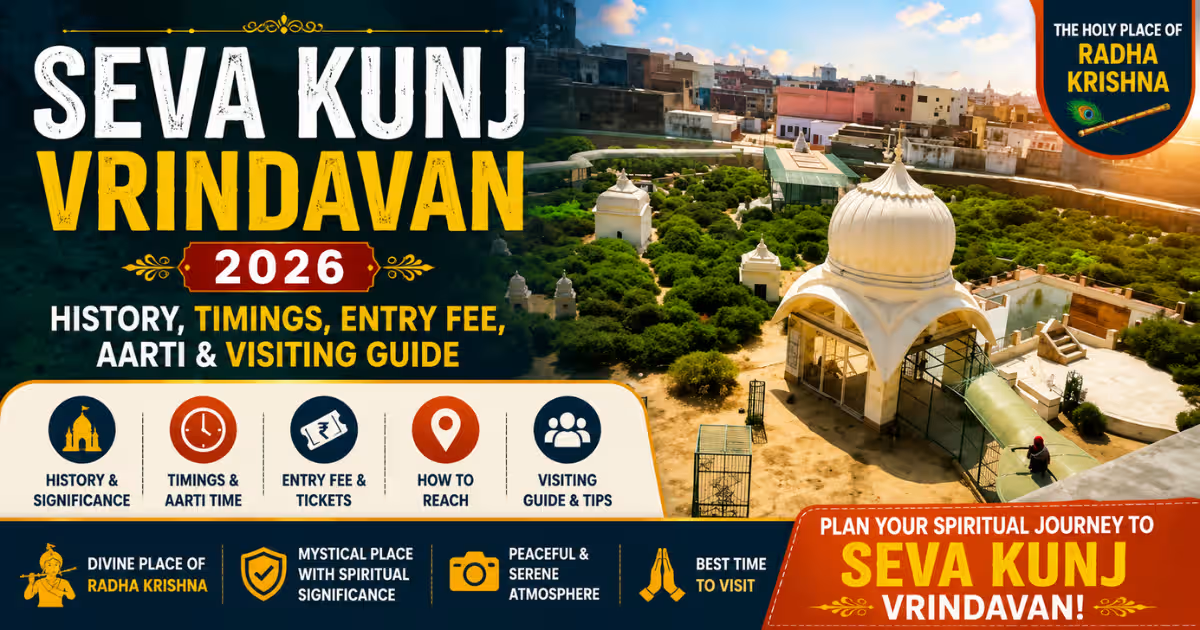
Seva Kunj Vrindavan is a sacred garden where Lord Krishna is believed to have decorated Radha’s feet after the Raas Leela. Summer timings: 5:00 AM-8:30 PM. Winter timings: 5:30 AM-8:00 PM. Entry is free. The garden closes strictly before nightfall – no visitors after closing. Features: Rang Mahal (inner shrine with decorated bed), Lalita Kund (sacred water pond). Adjacent to Nidhivan but a distinct site. Guided Vrindavan tours with Experience My India from ₹1,999 per person. Call +91-7302265809.
Why Seva Kunj Occupies a Unique Place in Vrindavan’s Sacred Landscape
Vrindavan’s most visited sites – Banke Bihari Temple, ISKCON, Prem Mandir – are temples. But among Vrindavan’s sacred spaces, a small category of outdoor gardens and groves holds a devotional significance that temples cannot replicate: these are the sites associated not with the formal worship of Krishna, but with the intimate, personal moments of his divine life. Seva Kunj is the most significant of these outdoor sacred spaces.
The name “Seva Kunj” – Grove of Service – refers to a specific event in the Radha-Krishna lila described in the Braj devotional tradition: after the Raas Leela (the divine circular dance), Lord Krishna attended to Radha Rani’s tired feet – decorating them with alta (red dye), arranging her hair and providing personal service (seva) to her. The grove where this occurred is Seva Kunj.
What makes this site distinctive in Vrindavan’s pilgrimage landscape is the tradition of nocturnal divine presence: like the adjacent Nidhivan, Seva Kunj closes before nightfall – because the Radha-Krishna lila is believed to continue each night in the garden after all humans depart. The gates close strictly and the site is not reopened until the following morning.
I am Gurudutt, founder of Experience My India, born and raised in Braj Bhoomi and guiding pilgrims since 2018. I have visited Seva Kunj with more than 50,000 pilgrims – explaining the Rang Mahal, the Lalita Kund and the devotional significance of the strict evening closure. In this guide you will find the complete 2026 Seva Kunj visiting guide. Call +91-7302265809 to plan with Experience My India. Tours from ₹1,999 per person.
Seva Kunj Vrindavan – Quick Overview
| Detail | Information |
| Full name | Seva Kunj (also written Sewa Kunj) |
| Meaning | “Grove of Service” – named for Lord Krishna’s service to Radha Rani after the Raas Leela |
| Location | Vrindavan, Uttar Pradesh – in the old city area near Nidhivan |
| Summer timings (Apr-Oct) | 5:00 AM – 8:30 PM |
| Winter timings (Nov-Mar) | 5:30 AM – 8:00 PM |
| Night closure | Strictly closed before nightfall; no visitors allowed overnight |
| Entry fee | Free – completely |
| Key features | Rang Mahal (inner shrine with decorated bed) + Lalita Kund (sacred pond) |
| Sacred tradition | Divine Raas Leela and subsequent service (seva) by Krishna to Radha |
| Relationship to Nidhivan | Adjacent – but a distinct site with different sacred narrative |
| Distance from Banke Bihari | 400 metres |
| Distance from Keshi Ghat | 600 metres |
| Distance from Nidhivan | 200 metres (adjacent) |
| Duration recommended | 45-60 minutes |
| Photography | Restricted inside the sacred grove – confirm at entrance |
| Monkey warning | Resident monkeys near the garden – keep phones and glasses secured |
| EMI tour inclusion | All extended Vrindavan tours · from ₹1,999 · +91-7302265809 |
Seva Kunj History and Significance
The Seva Kunj Lila – Why This Garden Is Sacred
Seva Kunj’s theological significance in the Braj Vaishnava tradition rests on a specific moment in the Radha-Krishna lila that comes after the Raas Leela:
| Lila Detail | Information |
| The Raas Leela | The Raas Leela is the sacred circular dance of Krishna with Radha and the gopis – one of the most celebrated Lilas of Vrindavan’s sacred narrative |
| After the Raas Leela | After the divine dance, Radha Rani was fatigued – Lord Krishna, in an act of intimate personal devotion, attended to her care |
| Krishna’s seva (service) | According to the Braj devotional tradition: Krishna decorated Radha’s feet with alta (red lac dye), arranged her hair, offered her water and decorated her with flowers |
| The location | Seva Kunj – this garden in Vrindavan – is the site where this intimate seva took place |
| The name | “Seva” = service; “Kunj” = garden/grove. Seva Kunj = the Garden of (Krishna’s) Service |
| Significance | The deity served – Radha Rani – is the supreme divine reality in the Radha Vallabh and Gaudiya theological traditions. Krishna’s act of seva to Radha expresses his role as her devoted companion |
The Nocturnal Divine Presence
Like the adjacent Nidhivan, Seva Kunj maintains the tradition that the divine couple returns to the garden each night – continuing the lila after the human world sleeps. This is the theological reason for the strict evening closure:
| Nocturnal Tradition Detail | Information |
| Belief | Radha and Krishna return to Seva Kunj each night after the gates close |
| Evening ritual | Each evening, before closure, a decorated bed (shayya) is arranged in the Rang Mahal – the inner shrine – along with a datun (neem stick for cleaning teeth), water and other personal items for the divine couple |
| Morning ritual | Each morning, when the gates open, the arranged items are found in a “used” state – suggesting the divine couple spent the night |
| Closure rule | Strictly observed – all visitors must exit before closing; no exceptions |
| Scriptural basis | The tradition is rooted in the 16th-century Braj Bhakti poets’ compositions – particularly the works of the Ashtachhap poets associated with Vrindavan |
Experience My India explains this devotional context before every Seva Kunj visit. Call +91-7302265809.
Book Your Mathura Vrindavan Tour Package
Seva Kunj Timings 2026
Daily Opening and Closing Times
| Season | Opening Time | Closing Time | Notes |
| Summer (April – October) | 5:00 AM | 8:30 PM | All days of the week |
| Winter (November – March) | 5:30 AM | 8:00 PM | All days of the week |
Key Timing Facts
| Timing Detail | Information |
| Strict closure | The garden closes before nightfall – earlier than the published closing time on days when the sun sets early |
| Evening Sandhya Aarti | Performed inside before closure – the exact time varies seasonally |
| Best visiting window | 5:00-8:00 AM (summer) / 5:30-8:00 AM (winter) – quietest; good morning atmosphere |
| Evening visiting window | 5:30-7:30 PM (summer) / 4:30-7:00 PM (winter) – before the closure begins |
| Recommend duration | 45-60 minutes |
| Closing enforced | Strictly – temple authorities begin requesting visitors to exit 30 minutes before closing |
Evening closure note: Seva Kunj observes a strict night closure tradition. The closing time in the table is the published time – in practice, the site begins ushering visitors out 15-30 minutes before the official closing, to ensure the garden is empty for the Sandhya Aarti and the arrangement of the Rang Mahal for the night. Experience My India always plans Seva Kunj visits for the afternoon window (not the final 30 minutes before closing). Call +91-7302265809.
Rang Mahal – The Inner Shrine of Seva Kunj
The Rang Mahal (literally “Palace of Colour” or “Hall of Play”) is the innermost sacred space within Seva Kunj – a small temple shrine that is the physical centre of the nocturnal divine presence tradition.
| Rang Mahal Detail | Information |
| What it is | A small inner temple/shrine building within the Seva Kunj garden |
| Primary sacred object | A decorated shayya (divine bed/resting place) – prepared each evening for Radha and Krishna |
| Other items arranged each evening | Datun (neem stick for cleaning teeth), clean water, flowers, other personal items for the divine couple |
| Morning condition | The arranged items are found in a “used” state each morning – the foundation of the nocturnal lila tradition |
| Deity | Radha-Krishna – the garden itself is the sacred space; the Rang Mahal is the inner sanctum |
| Photography | Generally restricted inside the Rang Mahal – confirm at entrance |
| Entry | Included in the general Seva Kunj free entry |
Significance for devotees: For pilgrims familiar with the Braj lila tradition, the Rang Mahal is the most devotionally significant point within Seva Kunj – it is the physical space where the nocturnal preparation for the divine couple’s visit is conducted every evening and where the morning “evidence” of their presence is found. Experience My India explains the Rang Mahal tradition to every tour group before entry. Call +91-7302265809.
Lalita Kund – The Sacred Pond Inside Seva Kunj
Lalita Kund is a small water pond within the Seva Kunj garden – associated with a specific episode involving Lalita Sakhi (one of the eight principal companions / sakhis of Radha Rani).
| Lalita Kund Detail | Information |
| What it is | A small natural water pond within the Seva Kunj garden |
| Sacred narrative | When Radha Rani became thirsty during the Raas Leela, Lalita Sakhi asked Lord Krishna to provide water. Krishna is said to have pierced the ground with his flute and a spring appeared – creating this kund (pond) |
| Named after | Lalita Sakhi – the most important of Radha’s eight principal companions (Ashtasakhis) |
| Current condition | A small, shaded pond within the garden – maintained as a sacred site |
| Significance | The Lalita Kund represents Krishna’s responsive care for Radha’s companions as well as for Radha herself |
| Access | Within the general Seva Kunj garden (free entry) |
Experience My India describes the Lalita Kund narrative before every visit. Call +91-7302265809.
Are Seva Kunj and Nidhivan the Same?
This is one of the most frequently asked questions about Vrindavan’s sacred outdoor sites. The short answer is: No – Seva Kunj and Nidhivan are two different sites. They are adjacent (approximately 200 metres apart) and share certain devotional features, which causes the confusion.
| Comparison | Seva Kunj | Nidhivan |
| Location | Vrindavan old city – near Banke Bihari area | Vrindavan old city – adjacent to Seva Kunj |
| Distance from each other | 200 metres | 200 metres |
| Sacred narrative | Seva Kunj: site of Krishna’s seva (service) to Radha after the Raas Leela | Nidhivan: site of the Raas Leela itself; forest where the divine dance takes place nightly |
| Primary feature | Rang Mahal (inner shrine with decorated bed) + Lalita Kund (sacred pond) | Forest of twisted trees; a small shrine of the divine couple |
| Trees | Garden with some sacred trees – not the twisted Nidhivan variety | Distinctive forest – short, twisted trees with downward-bending branches |
| Night closure | Yes – closes before nightfall | Yes – closes strictly before nightfall (even stricter) |
| Entry fee | Free | Free |
| Summer opening | 5:00 AM | 6:00 AM |
| Summer closing | 8:30 PM | Approx. sunset (7:00-8:00 PM, seasonal) |
| Duration recommended | 45-60 minutes | 30-45 minutes |
| Photography | Restricted inside grove | Some areas permitted; confirm at entrance |
| Theological tradition | Seva (service) – Krishna serving Radha | Raas Leela – the divine circular dance |
| Best combined with | Nidhivan (adjacent); Keshi Ghat (600 metres) | Seva Kunj (adjacent); Banke Bihari (400 metres) |
Most practical visiting sequence: Nidhivan afternoon session (3:00 PM) → Seva Kunj (4:00 PM) → Radha Vallabh Temple samaj gayan (6:30 PM, 500 metres away) → Keshi Ghat Aarti (6:30 PM, 600 metres). Experience My India sequences both sites in the standard Vrindavan afternoon circuit. Call +91-7302265809.
Seva Kunj Location and How to Reach
| Location Detail | Information |
| Area | Old Vrindavan – near Banke Bihari Temple and Nidhivan |
| Nearest landmark | Nidhivan – 200 metres |
| Distance from Banke Bihari Temple | 400 metres |
| Distance from Keshi Ghat | 600 metres |
| Distance from Radha Raman Temple | 500 metres |
| Distance from Radha Vallabh Temple | 500 metres |
| Distance from ISKCON Vrindavan | 1.2 km |
| Distance from Prem Mandir | 2 km |
| Distance from Mathura Junction | 14 km |
| Google Maps | Search “Seva Kunj Vrindavan” |
| Parking | No dedicated parking – use e-rickshaw from the nearest main road drop |
How to Reach Seva Kunj
| From | Mode | Distance | Time | Fare |
| Banke Bihari Temple | Walk | 400 metres | 5-8 minutes | Free |
| Nidhivan | Walk | 200 metres | 2-3 minutes | Free |
| Keshi Ghat | Walk | 600 metres | 8-12 minutes | Free |
| ISKCON Vrindavan | E-rickshaw | 1.2 km | 8-15 minutes | ₹20-₹30 |
| Prem Mandir | E-rickshaw | 2 km | 10-20 minutes | ₹30-₹50 |
| Mathura Junction | Cab | 14 km | 30-45 minutes | ₹300-₹450 per cab |
Navigation note: Seva Kunj is in the narrow lane network of old Vrindavan – the same area as Banke Bihari Temple and Nidhivan. Private cars cannot reach the immediate area; use an e-rickshaw to the nearest accessible point on the Parikrama Marg and walk the final 200-400 metres. Experience My India manages all navigation and transport in old Vrindavan. Call +91-7302265809. View Our 2 Days Vrindavan Barsana Tour Package
Visiting Rules, Photography and Safety
| Rule / Guideline | Detail |
| Timing | Exit before closing – do not remain inside as the closing time approaches |
| Dress code | Traditional attire – shoulders and knees covered; modest clothing |
| Footwear | Remove shoes before entering the garden and any inner shrine area |
| Photography | Restricted inside the sacred grove – confirm specific rules at the entrance; photography of the Rang Mahal is typically not permitted |
| Mobile phones | Keep on silent; no loud conversations inside the garden |
| Monkey warning | Resident monkeys in the surrounding lanes are known to grab glasses, phones, food and bags – keep these items secured and inside pockets or bags before approaching |
| Behaviour | Quiet and contemplative – Seva Kunj is a site of intimate devotion, not a sightseeing venue |
| Children | Welcome; keep close to adults in the narrow lane approach |
| Groups | Large groups should maintain silence and move slowly through the garden |
On the monkey situation: The lanes leading to Seva Kunj (and Nidhivan, adjacent) are frequented by resident langur and rhesus monkeys. These are not dangerous but are bold. Glasses, phones held loosely, open food bags and unzipped bags have all been taken. Experience My India briefs every group on this before approaching the old Vrindavan lane area. Call +91-7302265809.
Places to Visit Near Seva Kunj Vrindavan
| Place | Distance | Travel Time | Significance |
| Nidhivan | 200 metres | 2-3 minutes walk | Adjacent sacred forest; Raas Leela site; closes before dark |
| Banke Bihari Temple | 400 metres | 5-8 minutes walk | Most visited Vrindavan temple; 7:45/8:45 AM opening |
| Keshi Ghat | 600 metres | 8-12 minutes walk | Yamuna Aarti daily 6:30 PM |
| Radha Raman Temple | 500 metres | 6-10 minutes walk | 1542 CE; swayambhu deity; Shringar Aarti 8-9 AM |
| Radha Vallabh Temple | 500 metres | 6-8 minutes walk | Open sewa darshan; samaj gayan 6:30 PM |
| Radha Damodar Temple | 800 metres | 10-15 minutes walk | 1542 CE; Prabhupada bhajan kutir |
| Madan Mohan Temple | 1 km | 12-18 minutes walk | Oldest hilltop temple in Vrindavan (16th century) |
| ISKCON Vrindavan | 1.2 km | 15-20 minutes e-rickshaw | 6 daily Aartis; Mangala 4:30 AM |
| Prem Mandir | 2 km | 10-15 minutes e-rickshaw | Fountain show 7:00/7:30 PM |
Recommended Seva Kunj afternoon-evening circuit: 3:00 PM – Nidhivan (afternoon session opens) 4:00-5:00 PM – Seva Kunj (45-60 minutes) 5:00-5:30 PM – Radha Raman or Radha Vallabh Temple 5:30-6:00 PM – Walk to Keshi Ghat (600 metres from Seva Kunj) 6:30 PM – Keshi Ghat Yamuna Aarti 7:00/7:30 PM – Prem Mandir fountain show (2 km)
Experience My India uses this sequence for every extended Vrindavan afternoon tour. Call +91-7302265809. View Our 3 Days Mathura Vrindavan Tour Package
Best Time to Visit Seva Kunj Vrindavan
| Visit Type | Best Time | Reason |
| Morning opening visit | 5:00-7:00 AM (summer) / 5:30-7:30 AM (winter) | Quietest; morning atmosphere; garden at its most serene |
| Combined with Nidhivan | 3:00-5:00 PM | Nidhivan afternoon session → walk 200 metres to Seva Kunj |
| Combined with evening Aarti circuit | 4:00-6:00 PM | Seva Kunj → Keshi Ghat Aarti (6:30 PM) → Prem Mandir |
| Least crowded | Tuesday-Thursday mornings | Lowest visitor volume |
| Festival: Janmashtami | August 17, 2026 | Special decorations in Rang Mahal; extended visiting hours |
| Festival: Radhashtami | August/September 2026 | Radha Rani’s appearance day – special significance at Seva Kunj |
Season-wise Visit
| Season | Temperature | Conditions | Verdict |
| October – February | 8°C-25°C | Best – garden walking comfortable; morning and evening both pleasant | ✅ Best season |
| March – May | 25°C-45°C | Hot from 10:00 AM; 5:00-8:00 AM and 5:00-7:30 PM comfortable | ✅ Morning + evening |
| Monsoon (June – September) | 28°C-38°C | Garden lush and green; afternoon heat reduces after 4:00 PM | ✅ Good |
| Janmashtami (Aug 17, 2026) | 28°C-34°C | Seva Kunj especially decorated for Janmashtami night; special Rang Mahal arrangement | ✅ With planning |
Seva Kunj Vrindavan 2026 – Experience Summary
| Detail | Information |
| Summer timings | 5:00 AM – 8:30 PM |
| Winter timings | 5:30 AM – 8:00 PM |
| Entry fee | Free |
| Night closure | Strictly before nightfall – enforced |
| Sacred narrative | Grove of Service – Krishna attended to Radha Rani after the Raas Leela |
| Key features | Rang Mahal (inner shrine + decorated bed) + Lalita Kund (sacred pond) |
| Adjacent site | Nidhivan (200 metres) |
| Distance from Banke Bihari | 400 metres |
| Distance from Keshi Ghat | 600 metres |
| Distance from Prem Mandir | 2 km |
| Photography | Restricted inside grove |
| Monkey warning | Yes – keep phones, glasses, food secured |
| Duration recommended | 45-60 minutes |
| Best afternoon sequence | Nidhivan 3:00 PM → Seva Kunj 4:00 PM → Keshi Ghat Aarti 6:30 PM → Prem Mandir |
| EMI tour inclusion | Extended Vrindavan tours · from ₹1,999 · +91-7302265809 |
Book Our Same Day Mathura Vrindavan Tour
What Nobody Tells You About Seva Kunj Vrindavan
After visiting Seva Kunj with more than 50,000 pilgrims since 2018, here is what I – Gurudutt, founder of Experience My India – share privately before every visit:
Seva Kunj is not a temple – and first-time visitors expecting a temple structure are sometimes surprised. Unlike Banke Bihari (with its curtained deity) or Prem Mandir (with its architectural grandeur), Seva Kunj is primarily a garden. The sacred experience is in the environment – the ancient trees, the quiet ground, the Lalita Kund and the Rang Mahal’s small inner shrine. Pilgrims who come with this understanding leave more moved than those expecting a conventional temple experience.
The morning visit (5:00-7:30 AM) is significantly quieter and more devotionally intimate than the afternoon visit. By 10:00 AM on weekends, the lane outside Seva Kunj is shared with the Banke Bihari Temple crowd (400 metres away). The 5:00-7:30 AM window in summer has almost no tourist traffic – just local Braj devotees doing their morning devotional circuit. Experience My India’s overnight Vrindavan package is timed specifically to reach Seva Kunj at 5:00 AM.
The “decorated bed found used each morning” is not something all visitors experience consciously – because it requires being present when the gates first open. The morning opening (5:00 AM summer / 5:30 AM winter) reveals the Rang Mahal with the previous evening’s arrangement in its “morning after” state. Devotees who arrive at 10:00 AM see the Rang Mahal after it has been cleaned and reset. To experience the morning-after Rang Mahal tradition, arrive at the opening time. Experience My India’s overnight package is the only way to do this on a Vrindavan tour.
Seva Kunj’s night closure is slightly less strict than Nidhivan’s. Both close before nightfall. Nidhivan’s closure is enforced with a higher degree of strictness – the forest management has a formal process for verifying all visitors have exited. Seva Kunj’s closure is enforced by temple staff, who begin ushering visitors out approximately 20-30 minutes before the official closing time. Arriving after 8:00 PM in summer (after 7:30 PM in winter) risks finding the gates closed.
Radhashtami is arguably more significant at Seva Kunj than Janmashtami. While Janmashtami celebrates Krishna’s birth, Seva Kunj’s sacred narrative centres on Radha Rani – it is the site of Krishna’s devotion to Radha. Radhashtami (Radha’s appearance day – Bhadrapada Shukla Ashtami, typically August/September) is the day when Seva Kunj’s Rang Mahal is most elaborately decorated and when the site receives the most devout visitors in the Radha-centred traditions of the Radha Vallabh Sampradaya.
Experience My India plans all Seva Kunj visits around these realities. WhatsApp +91-7302265809.
Know Before You Visit Seva Kunj Vrindavan
- Summer timings: 5:00 AM-8:30 PM · Winter timings: 5:30 AM-8:00 PM – close before nightfall; enforced
- Entry is completely free – no ticket, no donation required
- Seva Kunj and Nidhivan are NOT the same – they are adjacent (200 metres apart) with different sacred narratives
- Photography restricted inside the sacred grove – confirm specific rules at the entrance
- Dress code: shoulders and knees covered; remove footwear before inner shrine areas
- Monkey warning: keep phones, glasses and food secured in the surrounding lanes
- The Rang Mahal decorated bed arrangement is seen in its “morning after” state only at the opening time (5:00 AM summer)
- Best afternoon sequence: Nidhivan 3:00 PM → Seva Kunj 4:00 PM → Keshi Ghat Aarti 6:30 PM
- Most sacred festival at Seva Kunj: Radhashtami (August/September) – Radha Rani’s appearance day
- Recommended duration: 45-60 minutes
- Experience My India includes Seva Kunj in extended Vrindavan tours. Call +91-7302265809.
Frequently Asked Questions – Seva Kunj Vrindavan
No – Seva Kunj and Nidhivan are two different sacred sites in Vrindavan, approximately 200 metres apart. Nidhivan is a forest associated with the Raas Leela itself – the circular divine dance of Krishna with Radha and the gopis. Seva Kunj is a garden associated with Krishna’s seva (service) to Radha Rani after the Raas Leela – featuring the Rang Mahal (inner shrine with decorated bed) and Lalita Kund (sacred pond). Both close before nightfall. Experience My India covers both in the Vrindavan afternoon circuit – call +91-7302265809.
No official VIP entry system exists at any major Vrindavan site – including Seva Kunj, Nidhivan, Banke Bihari Temple, Radha Raman Temple, ISKCON or Prem Mandir. All are free and operate on a first-come, first-served basis. The most effective way to experience these sites with minimal crowds is to visit at the correct time: 5:00 AM summer opening for Seva Kunj; 7:45 AM for Banke Bihari; 8:00-9:00 AM for Radha Raman Shringar Aarti. Experience My India times every visit optimally – call +91-7302265809.
Key Vrindavan temple Aarti timings: ISKCON Mangala Aarti 4:30 AM; Banke Bihari no regular Aarti (jhanki darshan only); Radha Raman Shringar Aarti 8:00-9:00 AM; Radha Vallabh Sandhya Aarti 6:30 PM; Keshi Ghat Yamuna Aarti 6:30 PM (year-round); Prem Mandir fountain show 7:00 PM (winter) / 7:30 PM (summer). Seva Kunj has an evening Sandhya Aarti before closure. Experience My India confirms all current Aarti timings before every Vrindavan tour – call +91-7302265809.
Seva Kunj (Grove of Service) is a sacred garden in Vrindavan where Lord Krishna is believed to have personally served Radha Rani after the Raas Leela – decorating her feet with alta (red dye), arranging her hair and providing the intimate service (seva) described in the Braj devotional poetry tradition. The garden closes each evening so that the divine couple can return undisturbed. Inside: the Rang Mahal (shrine with decorated bed) and Lalita Kund (sacred pond where Krishna created water with his flute for Lalita Sakhi). Experience My India – call +91-7302265809.
Entry to Seva Kunj is completely free – no ticket, no donation required, no paid priority access. The garden, the Rang Mahal and the Lalita Kund are all accessible at no charge within the operating hours (Summer: 5:00 AM-8:30 PM; Winter: 5:30 AM-8:00 PM). Photography inside the sacred grove is restricted – confirm specific rules at the entrance. Experience My India includes Seva Kunj in all extended Vrindavan tours at no site cost – call +91-7302265809.
The Rang Mahal (literally “Palace of Play/Colour”) is the inner shrine within Seva Kunj – a small temple building where, each evening before closure, temple staff arrange a decorated shayya (divine bed/resting place), a datun (neem stick for cleaning teeth), fresh water and flowers for the divine couple Radha-Krishna. Each morning at the opening, these items are found in a “used” state – the devotional tradition that the divine couple spent the night in the garden. Experience My India explains this context before every visit – call +91-7302265809.
Lalita Kund is a small sacred water pond within the Seva Kunj garden. According to the Braj devotional tradition, Lalita Sakhi – the most important of Radha Rani’s eight principal companions – requested Lord Krishna to provide water when Radha Rani was thirsty after the Raas Leela. Krishna pierced the ground with his flute and a spring emerged – creating the kund (pond). The pond is named after Lalita Sakhi. Experience My India describes this narrative before every Seva Kunj visit – call +91-7302265809.
Seva Kunj and Nidhivan are approximately 200 metres apart – they are adjacent sites in the old Vrindavan city area near Banke Bihari Temple. Walking between them takes 2-3 minutes. Both close before nightfall. A natural afternoon sequence is Nidhivan (3:00 PM) followed by Seva Kunj (4:00 PM) – allowing 45-60 minutes at each before proceeding to the evening Keshi Ghat Aarti (6:30 PM, 600 metres from Seva Kunj). Experience My India sequences both sites – call +91-7302265809.
October to February is the most comfortable season – temperatures 8°C-25°C. Within the day: 5:00-7:30 AM (summer) / 5:30-8:00 AM (winter) is the quietest window with the lowest visitor numbers and the morning Rang Mahal arrangement visible. The afternoon window (3:00-6:00 PM) works well when combined with a Nidhivan visit (adjacent) and the Keshi Ghat Aarti (600 metres). Radhashtami (August/September) is the most significant festival at Seva Kunj. Experience My India advises on optimal timing – call +91-7302265809.
Yes – but with timing care. The evening visiting window is 5:30-7:30 PM (summer) / 4:30-7:00 PM (winter). The garden begins ushering visitors out 20-30 minutes before the official closing time (8:30 PM summer / 8:00 PM winter) for the Sandhya Aarti preparation and Rang Mahal arrangement. Do not plan to arrive after 7:30 PM (summer) or 7:00 PM (winter). Experience My India always plans Seva Kunj visits well within the evening window – call +91-7302265809.
Do not photograph inside the sacred grove (restricted – confirm rules at entrance). Do not bring food or open beverages into the garden. Do not hold phones, glasses or loose bags in the approach lanes (monkey warning – items may be taken). Do not arrive in the final 30 minutes before closing. Do not make loud noise inside the garden – Seva Kunj is a contemplative sacred space. Dress modestly with shoulders and knees covered and remove footwear in shrine areas. Experience My India briefs every group – call +91-7302265809.
Yes. Experience My India includes Seva Kunj in all extended Vrindavan 1-day tours (₹1,999 per person) – as part of the old Vrindavan afternoon circuit including Nidhivan and the Keshi Ghat Aarti. The overnight Vrindavan package (₹2,999 per person) also includes the 5:00 AM opening visit when the morning Rang Mahal arrangement is visible. WhatsApp +91-7302265809 – your Vrindavan itinerary with Seva Kunj included in 30 minutes.
Recommended products
-
02 Days Mathura Vrindavan Tour
-
03 Days Mathura Vrindavan Tour
Original price was: ₹9,000.00.₹8,000.00Current price is: ₹8,000.00. -
04 Days Agra Mathura Vrindavan Tour
-
5 Days Braj 84 Kosh Yatra
🙏 Ready to Visit Seva Kunj Vrindavan with Experience My India?
WhatsApp us and receive your personalised Vrindavan itinerary within 30 minutes – Seva Kunj and Nidhivan correctly sequenced in the afternoon, Keshi Ghat Aarti at 6:30 PM, Prem Mandir fountain show timed for your date and monkey safety briefing included. Tours from ₹1,999 per person.
WhatsApp +91-7302265809 – Book Now
Jai Shri Krishna 🙏