Holi in Mathura–Vrindavan is never just about colour. Anyone who has spent even one proper day here during Holi knows that very quickly. This is Braj Bhoomi. Things move at their own pace. Rituals come before excitement. Meaning comes before noise. And that is exactly why, when people speak honestly about the best Holi in India, Vrindavan quietly rises to the top.
Highlights
ToggleHoli in Vrindavan is tied to the land, not to marketing calendars. It follows temple traditions, village rhythms, and the Hindu Panchang that locals still live by. Colours arrive late here, almost as an afterthought. First come bhajans, flowers, darshan, and shared space. Then, slowly, the festival opens up.
If you are planning Holi 2026 and want to experience it in its most authentic form, understanding the dates and the flow matters far more than choosing a single “main day”.
Holi in Vrindavan 2026 – Dates That Actually Matter
One of the biggest mistakes visitors make is treating Holi as a one-day event. In Vrindavan, Holi is a sequence, not a moment. Each day has its own mood, its own crowd pattern, and its own meaning.
Here are the key Holi dates for Vrindavan and the Braj region in 2026, as they are traditionally followed:
- 25 February 2026 (Wednesday) – Barsana Laddu Holi
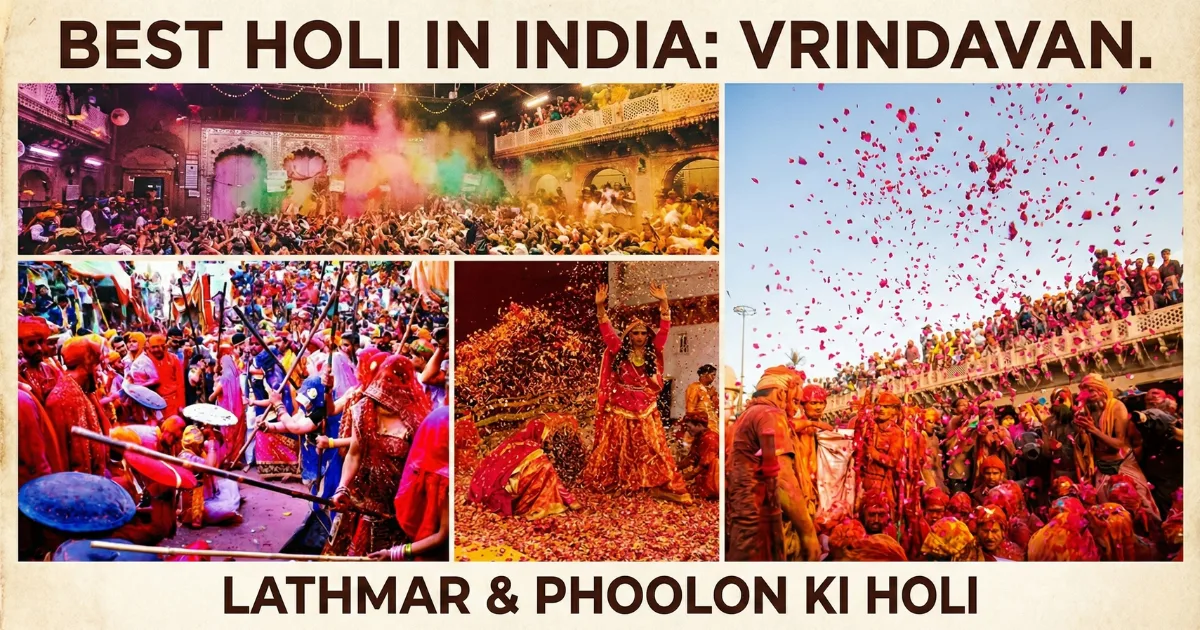
- 26 February 2026 (Thursday) – Barsana Lathmar Holi
- 27 February 2026 (Friday) – Nandgaon Lathmar Holi
- 28 February 2026 (Saturday) – Rangbharni Ekadashi & early temple Holi
- 1 March 2026 (Sunday) – Widow Holi in Vrindavan
- 2 March 2026 (Monday) – Phoolon Wali Holi in Vrindavan
- 3 March 2026 (Tuesday) – Holika Dahan
- 4 March 2026 (Wednesday) – Rangwali Holi (main colour day)
If you really want to understand why people call this the best Holi in India Vrindavan, plan your stay between 25 February and 4 March 2026. Anything shorter misses the story.
Why Vrindavan’s Holi Feels Different From Everywhere Else
Holi happens all over India, but Vrindavan doesn’t try to impress you. It doesn’t rush you. It lets you settle in.
Here, temples decide the tempo. Streets follow later. Villages add their own layers. Even with large crowds, the atmosphere stays surprisingly grounded.
A few things stand out once you’re here:
- Holi stretches across 8–10 days, not one afternoon
- Every event links back to Krishna–Radha leela
- Temples remain the emotional centre of the festival
- Saints, widows, locals, pilgrims, and travellers stand side by side
- Even at peak times, devotion doesn’t disappear
That balance is rare. And that’s what makes Vrindavan different.
How Holi Slowly Unfolds in Vrindavan
Holi in Vrindavan does not start with gulal. It starts quietly.
Rangbharni Ekadashi is when colours are first offered to the deities. That moment is symbolic. It tells you the festival has begun, but gently. After that, each day adds something new. Flower Holi softens the mood. Widow Holi adds emotional depth. Only at the very end does full colour take over the streets.
Visitors who arrive early experience Holi growing naturally. Those who come only on the last day often miss what makes it special.
Phoolon Wali Holi – Where Vrindavan Shows Its True Nature
If there is one moment that explains why this is the best Holi in India, it is Phoolon Wali Holi.
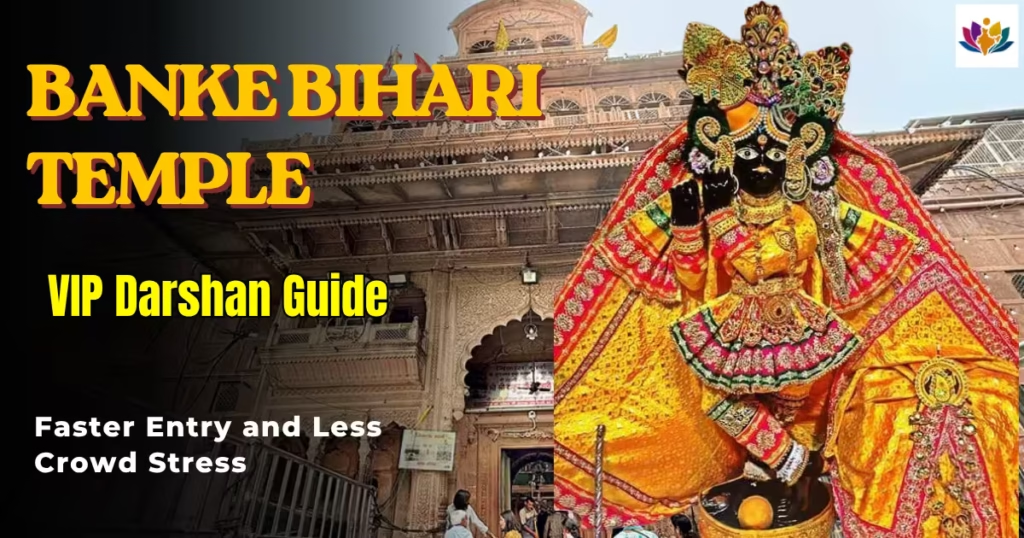
Inside the Banke Bihari Temple, there is no scrambling for colour. Instead, flower petals fall from above while bhajans echo through the hall. People don’t shout. They wait. They look up. Some close their eyes.
It is calm. Emotional. Almost still.
For families, senior travellers, and first-time visitors, this often becomes the most meaningful part of the entire journey. It shows that Holi doesn’t need chaos to feel complete.
Is Holi in Vrindavan Safe in 2026?
This question comes up often, and the honest answer is simple.
Yes, Holi in Vrindavan is safe if you follow the local rhythm.
Crowds are heavy near temples. Entry timings are strict. Photography rules change without notice. But the intent of the crowd is devotional, not aggressive.
A few realities help:
- Morning hours are calmer and better managed
- Temple areas feel more controlled than open streets
- Modest clothing matters here
- Respectful behaviour goes a long way
People who move slowly and observe first usually have the best experience.
Best Time of Day to Step Out During Holi
Timing is everything in Vrindavan.
Most temple-based Holi celebrations run between 8:00 AM and 12:00 PM. After that, crowds thicken, and movement becomes difficult. Locals finish early. Visitors should too.
If you plan your days like a local, Holi feels manageable. If you chase everything at once, it feels exhausting.
What to Wear for Holi in Vrindavan
This is not a fashion event. Comfort matters more than anything.
- Old or white cotton clothes work best
- Comfortable footwear is essential
- A light scarf or dupatta helps with colour and sun
- Avoid valuables and bulky bags
Simple choices make long days far easier.
Planning Holi Without Letting Logistics Ruin It
Holi week is the peak season in Vrindavan. Hotels near temples fill quickly. Traffic restrictions are common. Last-minute planning often leads to unnecessary stress.
This is why many travellers prefer planning with Mathura Vrindavan Tourism. Staying close to temple areas, understanding daily movement, and avoiding blocked routes makes a noticeable difference during Holi days.
For first-time visitors especially, local planning removes a lot of uncertainty.
Why Local Planning Actually Helps
Experiencing the best Holi in India Vrindavan is less about covering everything and more about being present in the right places at the right times.
Mathura Vrindavan Tourism works around temple schedules, crowd flow, and local patterns that visitors usually learn too late. Their on-ground familiarity helps people experience Holi without constantly worrying about where to go next.
Families and senior travellers often find this approach calmer and more meaningful.
A Quiet Ending, Like Vrindavan Itself
The best Holi in India is not measured by how colourful your clothes become.
In Vrindavan, Holi teaches you to slow down. To wait. To stand quietly while flowers fall. To listen before joining in. If you allow it, Holi here becomes less of a festival and more of a memory that stays with you long after the colours fade.
And that is why, year after year, Vrindavan continues to hold its place as the truest Holi experience in India.
A Simple Way to Remember Mathura Holi
Mathura doesn’t shout during Holi.
It opens itself.
Contact Mathura Vrindavan Tourism Today:
Call Us: +91 7300620809
WhatsApp Us: +91 7300620809
Visit Our Website: Mathura Vrindavan Tourism
Email: mathuravrindavantourism.com@gmail.com
If you go expecting chaos, you might miss the calm beneath it. But if you allow the city to set the pace, things fall into place. You leave tired, stained with colour, maybe slightly disoriented. But you also leave with a sense that you didn’t just attend a festival. You walked through something that has been lived the same way for centuries.
And that feeling stays long after the colour washes off.
FAQs – Best Holi in India Vrindavan 2026
1. Why is Vrindavan considered the best place to celebrate Holi in India?
Vrindavan’s Holi is rooted in devotion, not entertainment. The festival follows temple traditions, village customs, and the Braj calendar rather than modern city-style celebrations. Holi here unfolds slowly over many days, making it feel meaningful and lived-in rather than rushed.
2. What are the main Holi dates in Vrindavan for 2026?
Holi celebrations in Vrindavan begin around 25 February 2026 and conclude on 4 March 2026 with Rangwali Holi. Important events include Rangbharni Ekadashi, Widow Holi, Phoolon Wali Holi, Holika Dahan, and the main colour day. Planning around this full window gives the best experience.
3. Is Holi in Vrindavan safe for first-time visitors?
Yes, Holi in Vrindavan is generally safe if you follow the local flow. Morning hours are calmer, temple areas are better managed, and the overall mood is devotional. Avoid late afternoons, respect temple rules, and move slowly rather than forcing your way through crowds.
4. Which Holi event should I not miss in Vrindavan?
Phoolon Wali Holi is often the most memorable. Celebrated inside temples like Banke Bihari Temple, it replaces colours with flower petals and bhajans. For many visitors, this moment defines why Vrindavan is known for the best Holi in India.
5. Is Vrindavan Holi suitable for families and senior citizens?
Yes, especially temple-based celebrations such as Phoolon Wali Holi and early-morning darshan events. These are calmer and spiritually focused. With proper planning and staying close to temple areas, families and seniors usually have a comfortable experience.
6. What is the best time of day to enjoy Holi in Vrindavan?
Morning hours between 8:00 AM and 12:00 PM are ideal. Most temple Holi celebrations conclude by noon, and crowds become denser later in the day. Locals plan their activities early, and visitors should follow the same rhythm.
7. What should I wear during Holi in Vrindavan?
Wear old or white cotton clothes, comfortable footwear, and carry a light scarf or dupatta. Avoid jewellery and valuables. Holi in Vrindavan involves a lot of walking and standing, so comfort matters more than appearance.
8. How crowded does Vrindavan get during Holi?
Vrindavan gets very crowded during Holi week, especially near major temples and on key dates. Entry restrictions and crowd controls are common. This is normal here and part of the experience, which is why early timing and patience make a big difference.
9. Should I book hotels in advance for Holi 2026?
Absolutely. Holi is peak season in Vrindavan, and hotels near temples sell out weeks in advance. Last-minute bookings often mean staying far away or paying higher prices. Early planning helps avoid unnecessary stress.
10. Do I need a local tour operator for Holi in Vrindavan?
It’s not mandatory, but many visitors prefer it. Local planning helps with temple timings, crowd movement, and accommodation during busy days. Services like Mathura Vrindavan Tourism are often chosen to keep the experience smooth, especially for first-time visitors and families.