October to March is the best time to visit Mathura Vrindavan, when temperatures stay between 8°C and 28°C. November and February are the quietest, most comfortable months. March brings Braj Holi (25 Feb–5 Mar 2026) — vibrant but crowded. Janmashtami 2026 falls on 4 September — a once-a-year experience that requires booking 3 months ahead. Plan for 2–3 days minimum. Tours start from ₹1,999/person with Experience My India — call +91-7302265809 to plan your yatra. Jai Shri Krishna 🙏
Choosing the best time to visit Mathura Vrindavan is not merely a weather decision. It determines whether you walk the Govardhan Parikrama in cool dawn air or push through 42°C heat. It decides whether you reach Banke Bihari Temple in three minutes or stand in a two-hour queue. It shapes whether the Yamuna evening aarti at Vishram Ghat feels intimate and still, or whether you are watching it over the heads of five thousand other people.
I’m Gurudutt — born and raised in Braj Bhoomi, founder of Experience My India, and I have been guiding pilgrims through Mathura and Vrindavan since 2018. More than 50,000 pilgrims have done their yatra with our team. I know the difference between a comfortable February morning at Nidhivan and a punishing May afternoon at the same spot.
In this guide, you will find the exact 2026 festival calendar with dates confirmed, a month-by-month weather and crowd table, specific travel tips for each season, and a Ground Truth section with things most travel articles leave out entirely. If you want to plan your visit with Experience My India, call +91-7302265809 — we’ll build your itinerary around the dates and experience level that suit your group.
Why Timing Your Mathura Vrindavan Visit Matters
Mathura and Vrindavan together receive more than 15 million pilgrims annually. That number is not spread evenly across the calendar — it clusters intensely around festivals and the October–March season. The practical consequences are real:
- Hotel prices during Janmashtami and Holi week can be 3–4× higher than off-festival rates
- Road closures around Krishna Janmabhoomi Temple begin the day before Janmashtami; vehicles are stopped up to 3 km away
- Darshan queues at Banke Bihari Temple can run 90 minutes on a festival day versus 10 minutes on a quiet November morning
- Govardhan Parikrama (21 km barefoot circuit) is physically viable only between October and February — attempting it in April or May causes real heat exhaustion
Timing is not about comfort alone. It is about which version of this sacred land you experience. Experience My India structures every tour package around these seasonal realities — call +91-7302265809 to discuss what timing works for your group.
Best Time to Visit Mathura Vrindavan: Season Overview
There are four distinct seasonal windows for a Mathura Vrindavan visit. Here is an honest assessment of each:
October to March — The Recommended Season
This is the best time to visit Mathura Vrindavan for the vast majority of pilgrims and travelers. Daytime temperatures range from 15°C to 28°C (October–November) dropping to 8°C–23°C in January, then rising back to a comfortable 20°C–32°C by March. The sky is clear, the roads are dry, and both cities are fully alive with pilgrims.
Within this window, November and December offer the fewest crowds at perfectly comfortable temperatures. January and February are slightly colder (night temperatures can touch 6°C) but deeply atmospheric — Vrindavan’s temple lanes in a cool winter morning carry a quality of stillness that the peak-season months simply cannot match. March brings Braj Holi, the world’s largest colour festival, which transforms everything.
April to June — Avoid Unless Necessary
Temperatures climb to 40°C–45°C by May and June. Outdoor darshan between 10:00 AM and 5:00 PM becomes genuinely uncomfortable for most visitors, particularly for elders and children. The only advantage: temple queues are dramatically shorter — a front-row darshan at Banke Bihari is possible in under 5 minutes on a quiet May morning. Budget travelers who can restrict movement to 5:30–9:00 AM and 6:00–8:30 PM windows do occasionally visit in this season with good results.
Experience My India does not recommend April–June for first-time visitors or family groups with children under 10 or adults over 65.
July to September — Monsoon: Underrated and Spiritually Rich
The monsoon is Braj Bhoomi’s greenest, most visually striking season. Govardhan Hill turns deep green. The Yamuna fills and broadens. The forest paths of Vrindavan feel lush and alive. Humidity sits between 70–80%, which is noticeable but not intolerable compared to coastal monsoon destinations. Average temperatures stay between 28°C and 35°C.
Janmashtami falls within this season (4 September 2026) — the single most important festival in Mathura’s calendar. If your goal is the Janmashtami experience, this is your season by definition, and the crowds and hotel costs that come with it are the price of that experience.
Kartik Month (October–November) — For the Devoted Pilgrim
The month of Kartik in the Hindu calendar — typically falling mid-October to mid-November — is considered the most spiritually charged time in the entire Braj calendar, exceeding even Janmashtami for the quality of daily devotional experience. Every day of Kartik carries special significance: dawn bathes in the Yamuna, the Vrindavan Parikrama at dusk, the Deep Daan (lamp offering) on the river at night. Temples run special daily programs throughout the month.
Month-by-Month Weather, Crowds & Darshan Quality
This table is the reference tool I wish had existed when I started guiding in 2018. The “Darshan Quality” column reflects how easily and meaningfully you will be able to have temple darshan based on crowd levels and the overall atmosphere.
| Month | Avg Day Temp | Avg Night Temp | Crowd Level | Darshan Quality | Notes |
| January | 22°C | 6°C | Medium | ★★★★☆ | Coldest month — carry woolens for dawn/dusk |
| February | 26°C | 10°C | Medium–High | ★★★★★ | Peak comfort; Holi prep begins late Feb |
| March | 32°C | 16°C | Very High (Holi) | ★★★☆☆ (general) / ★★★★★ (Holi) | Braj Holi 25 Feb–5 Mar; intense but extraordinary |
| April | 38°C | 22°C | Low | ★★★★★ | Crowds thin; heat builds; go before 9 AM |
| May | 43°C | 28°C | Very Low | ★★★★★ | Hottest month; only 5:30–9:00 AM viable |
| June | 42°C | 29°C | Very Low | ★★★★☆ | Pre-monsoon heat; occasional dust storms |
| July | 35°C | 27°C | Low | ★★★☆☆ | Monsoon begins; lush green; occasional flooding |
| August | 33°C | 26°C | High (Janmashtami) | ★★★☆☆ (general) / ★★★★★ (Janmashtami) | Janmashtami 4 Sep 2026; book 3 months ahead |
| September | 33°C | 24°C | Medium | ★★★★☆ | Post-Janmashtami; pleasant start; Radhashtami |
| October | 30°C | 17°C | Medium–High | ★★★★☆ | Kartik month begins; highly spiritually active |
| November | 25°C | 11°C | Medium | ★★★★★ | Sweet spot — best weather, manageable crowds |
| December | 22°C | 8°C | Medium | ★★★★★ | Cool, clear, festive; Christmas crowds at ISKCON |
2026 Festival Calendar: Dates You Cannot Miss
These are the confirmed 2026 dates for the major Braj festivals. Plan your visit around these or deliberately around them, depending on your preference for atmosphere vs. calm.
| Festival | 2026 Date(s) | Location Focus | Crowd Impact | Advance Booking Required |
| Basant Panchami | 24 January 2026 | Vrindavan temples | Moderate | 2 weeks |
| Braj Holi (Full Season) | 25 Feb – 5 March 2026 | Barsana, Nandgaon, Vrindavan, Mathura | Extreme | 4–6 weeks |
| Lathmar Holi – Barsana | 25 February 2026 | Sriji Temple, Barsana | Very High | 4–6 weeks |
| Lathmar Holi – Nandgaon | 26 February 2026 | Nand Bhawan, Nandgaon | Very High | 4–6 weeks |
| Phoolon Ki Holi – Vrindavan | 27 February 2026 | Banke Bihari Temple | Very High | 4–6 weeks |
| Rangwali (Main) Holi | 4 March 2026 | All Braj | Extreme | 4–6 weeks |
| Dauji Huranga Holi | 5 March 2026 | Dauji Temple, Baldeo | High | 3 weeks |
| Ram Navami | April 2026 | Mathura (general) | Moderate | 2 weeks |
| Guru Purnima | July 2026 | Vrindavan | Moderate | 2 weeks |
| Krishna Janmashtami | 4 September 2026 | Krishna Janmabhoomi, Mathura; ISKCON Vrindavan | Extreme | 3 months |
| Radhashtami | ~12 September 2026 | Vrindavan, Barsana | High | 3 weeks |
| Sharad Purnima | October 2026 | Vrindavan ghats | High | 3 weeks |
| Govardhan Puja / Annakut | November 2026 | Govardhan Hill | Very High | 4 weeks |
| Kartik Purnima / Deep Daan | November 2026 | Yamuna ghats, Vrindavan | Very High | 4 weeks |
Experience My India runs dedicated packages for Holi, Janmashtami, Kartik, and Govardhan Puja. call +91-7302265809 to check availability.
Holi 2026 in Braj: The Complete Day-by-Day Schedule
Braj Holi is not a single day — it is an 11-day calendar that unfolds across different villages and temples. Most travel guides list it as “Holi in March.” That description misses most of the experience.
Here is the 2026 Braj Holi schedule confirmed from the official Braj Holi calendar:
| Date | Event | Location |
| 24 Feb (Tue) | Laddu Holi | Sriji Temple, Barsana |
| 25 Feb (Wed) | Lathmar Holi — Barsana | Sriji Temple & lanes |
| 26 Feb (Thu) | Lathmar Holi — Nandgaon | Nand Bhawan |
| 27 Feb (Fri) | Phoolon Ki Holi (Flower Holi) | Banke Bihari Temple, Vrindavan |
| 27 Feb (Fri) | Rangbhari Ekadashi | Vrindavan temples |
| 1 Mar (Sun) | Gokul Holi & Raman Reti visit | Gokul |
| 3 Mar (Tue) | Holika Dahan | Dwarkadhish Temple; Vishram Ghat |
| 4 Mar (Wed) | Rangwali / Dhulandi Holi | All Braj — Dwarkadhish, Mathura |
| 5 Mar (Thu) | Dauji Huranga | Dauji Temple, Baldeo (40 km from Vrindavan) |
Practical Holi planning notes:
- Barsana is 42 km from Vrindavan. Plan 1.5–2 hours travel each way; leave by 6:30 AM to secure a viewing position before crowds lock in
- Wear old clothes — the colours used at Lathmar Holi are gulal (dry powder), which stains permanently
- Protect cameras in ziplock bags; dust and colour reach everything
Janmashtami 2026 in Mathura Vrindavan
Krishna Janmashtami 2026 falls on Friday, 4 September 2026.
The celebrations at Krishna Janmabhoomi Temple in Mathura run through to midnight, culminating at the Nishita Kaal — the precise moment of Krishna’s birth — when the deity is bathed, dressed, and revealed to worshippers in a ceremony that draws hundreds of thousands of devotees. ISKCON Vrindavan holds a simultaneous celebration of equal scale.
What to plan for:
- Arrive at least 2 days early. Mathura’s hotels within 2 km of Janmabhoomi fill 3 months in advance. Roads near the temple close the evening before
- The crowd at Krishna Janmabhoomi on Janmashtami day exceeds 200,000 people — police manage the flow with timed entry systems; plans and timings change each year
- ISKCON Vrindavan is a practical alternative for those who want the full Janmashtami experience in a slightly more organised environment — their midnight ceremony is internationally renowned
- Radhashtami falls approximately 8 days after Janmashtami (around 12 September 2026) — if you stay, you witness the celebration of Radha Rani’s birthday, which is particularly special in Barsana and Vrindavan
Essential Travel Tips for Mathura Vrindavan
These are the practical realities of navigating Mathura and Vrindavan that make the difference between a smooth yatra and a frustrating one.
Transport within the cities: Auto-rickshaws, e-rickshaws, and cycle-rickshaws are the correct modes of transport in Vrindavan’s narrow lanes. Private cars cannot enter many of the temple approach roads. From Mathura to Vrindavan, the distance is 12 km — e-rickshaws and shared autos make this run frequently (fare: ₹20–₹40 per person). For groups or families, a private cab gives flexibility; Experience My India provides this as part of all tour packages.
Temple timings: Most major temples in Mathura and Vrindavan operate two sessions daily — morning (approximately 5:30–12:00) and evening (4:00–8:30). The afternoon break between 12:00 PM and 4:00 PM is observed strictly. Do not plan temple visits between noon and 4 PM — gates are locked and no exceptions are made. Banke Bihari Temple has specific timing variations — confirm the day before your planned visit, as timings adjust for festivals.
Dress code: Both Mathura and Vrindavan are places of active worship. Shorts, sleeveless tops, and visible Western-style clothing draw attention and are discouraged in all temple areas. Carry a light cotton stole or dupatta — it doubles as a head cover at certain temples and a shoulder cover where needed.
The monkey situation: Vrindavan’s rhesus monkeys are persistent and confident. They target spectacles, open food packets, and loose caps specifically. The practical protocol: keep food inside your bag, hold spectacles firmly when walking through open temple courtyards, and do not try to feed or photograph them at close range. This is not an occasional issue — it is a daily reality in Vrindavan that our guides brief all Experience My India groups about before entering temple areas.
Duration: Plan for a minimum of 2 nights / 3 days to cover both Mathura and Vrindavan with meaningful time at each. 3 nights / 4 days allows you to add Gokul, Govardhan, and one of the parikrama routes comfortably. For a complete Braj Mandal circuit (adding Barsana, Nandgaon, and Govardhan), plan for 4 nights / 5 days.
Ground Truth — What Nobody Tells You Before You Go
Most guides about the best time to visit Mathura Vrindavan stop at “October to March is ideal.” Here is what the same articles leave out:
1. Govardhan Parikrama is only comfortably walkable for 4 months of the year. The 21 km barefoot circuit around Govardhan Hill is one of the defining experiences of Braj pilgrimage. Under 15°C–25°C temperatures (November–February), it takes 5–7 hours and is deeply manageable. Above 35°C, it becomes a medical risk — each year, pilgrims require treatment for heat exhaustion on the route. If the Parikrama is on your list, this fact should drive your timing decision entirely.
2. Hotel prices during Janmashtami week in Mathura increase by 300–400%. A hotel room that costs ₹1,200/night in November costs ₹4,500–₹6,000 the same week as Janmashtami. Book accommodation 3 months ahead and verify the cancellation terms. Experience My India pre-blocks inventory for Janmashtami at confirmed rates — call +91-7302265809 to secure your spot.
3. The Braj Holi season is 11 days, but only 4 of those days have the iconic experiences. Most visitors arrive for just Rangwali Holi (4 March 2026) and miss Lathmar Holi in Barsana (25 Feb) and Phoolon Ki Holi in Vrindavan (27 Feb) — which many regulars consider the more spiritually authentic events. If you can attend only one, Lathmar Holi in Barsana on 25 February 2026 is the single most distinctive experience.
4. The quietest month in Vrindavan is November — not January. January gets more press for being the “best” month, but it also coincides with North India’s fog season. Dense fog can delay road travel from Delhi to Mathura by 2–3 hours in December and January. November has comparably good weather with zero fog risk and slightly thinner crowds.
5. Vishram Ghat evening aarti has a Sunday crowd problem year-round. The Yamuna aarti at Vishram Ghat in Mathura is one of the most beautiful devotional experiences in Braj — on any weekday. On Sundays, day-trippers from Delhi and Agra arrive in large numbers, and the ghat fills to capacity. If you want an intimate aarti experience, plan it for a Tuesday or Wednesday regardless of what season you visit.
What to Buy in Vrindavan: Shopping Guide
No Braj visit is complete without exploring the local markets. Here is what is genuinely worth buying and where:
Mathura Peda: The signature sweet of Mathura — soft milk fudge flavoured with cardamom, made from reduced milk (khoya). The most authentic shops are within the lanes near Krishna Janmabhoomi Temple and on Holi Gate Bazaar. Brijwasi Sweets is the most reputable name. Prices run ₹300–₹450 per kg; buy fresh and consume within 2–3 days. This is the one food purchase every pilgrim should make.
Brass and Panchdhatu Idols: Vrindavan’s market lanes near Banke Bihari Temple have dozens of shops selling hand-cast brass and panchdhatu (five-metal alloy) Krishna and Radha idols. Quality varies enormously — expect to pay ₹500–₹5,000 for a reasonably crafted idol, and significantly more for museum-quality pieces. Our guides direct Experience My India groups to verified craftsmen.
Rudraksha Malas and Tulsi Kanthi Malas: Both are widely available throughout Vrindavan. Genuine Rudraksha (price: ₹200–₹800 for a standard mala) and hand-strung Tulsi Kanthi beads (₹100–₹400) make meaningful spiritual purchases. Verify that Rudraksha are authentic before buying — many shops sell plastic imitations.
Traditional Puja Items: Incense, dhoop, camphor, sindoor, and puja thali sets are all available throughout both cities at reasonable prices and travel well. Buy near the temple rather than at the airport exit.
Ethnic Textiles: Cotton and silk kurtas, dupattas, and sarees with Braj-motif embroidery are available throughout Vrindavan’s market lanes. These are genuine regional products at prices far lower than Delhi or Jaipur boutiques.
FAQs
November and February are the two best individual months. November (daytime 24–28°C, nights 10–12°C) gives the fewest crowds and the most comfortable walking conditions for temple circuits and parikrama. February offers slightly warmer nights and leads into Braj Holi season from 25 February. Both months offer excellent darshan quality at all major temples. Experience My India runs full tour packages in both months — call +91-7302265809 for dates and pricing from ₹1,999/person.
January is Mathura’s coldest month, with daytime temperatures averaging 20–23°C and night-time temperatures dropping to 6–8°C. Dense fog is common in January mornings, which can delay road travel from Delhi by 2–3 hours. If you visit in January, carry a warm jacket and an extra layer for dawn temple visits — the 5:30 AM aarti at Banke Bihari Temple or the Yamuna dawn bath is significantly colder than you might expect. Experience My India plans winter tours with adjusted departure timings to manage this.
November and May are Vrindavan’s two least crowded months — for entirely different reasons. November is quiet because it falls between the Kartik festival season and the Holi season buildup, with pleasant weather. May is quiet because of the 40–43°C heat. For a genuinely comfortable, low-crowd visit, November is the correct choice. During festival periods — Holi week, Janmashtami, and Kartik month — crowd levels increase 10–15× above the November baseline. Experience My India plans itineraries around peak crowd avoidance — call +91-7302265809.
Vrindavan and Mathura are known for Mathura Peda (fresh milk sweet, ₹300–₹450/kg from Brijwasi Sweets near Janmabhoomi), brass and panchdhatu Krishna idols (₹500–₹5,000 depending on size and quality), Tulsi Kanthi and Rudraksha malas (₹100–₹800), traditional puja items, and Braj-motif ethnic textiles. Experience My India guides take groups to verified craftsmen and sweet shops to avoid counterfeit products, a common issue in the tourist lanes near major temples.
Yes — but it requires specific preparation. Braj Holi 2026 runs from 25 February to 5 March. The most iconic events are Lathmar Holi in Barsana (25 Feb) and Phoolon Ki Holi in Vrindavan (27 Feb). Hotels in Mathura and Vrindavan fill entirely 4–6 weeks before these dates. Crowds are extreme — manageable with a guided group, genuinely chaotic if you navigate independently. Experience My India runs a dedicated Holi Package from ₹3,999/person — call +91-7302265809 to book for 2026.
2 nights / 3 days is the minimum to cover the major temples in both Mathura (Janmabhoomi, Dwarkadhish, Vishram Ghat aarti) and Vrindavan (Banke Bihari, ISKCON, Prem Mandir, Nidhivan) with breathing room. Add 1 day each for Gokul, Govardhan, or Barsana if your schedule allows. Experience My India offers a 2-Night 3-Day package from ₹3,999/person and a Braj Mandal 4-Day circuit from ₹6,999/person. Call +91-7302265809 to customise.
Yes, with realistic expectations. July–September temperatures are 28–35°C with 70–80% humidity — noticeably warm and sticky, but not extreme. The landscape is genuinely beautiful — Govardhan Hill and Vrindavan’s forests turn vivid green. The key risk is occasional flash flooding near Yamuna ghats, particularly in August. Janmashtami 2026 (4 September) falls in this season — if that is your reason for visiting, book accommodation 3 months ahead and expect the most intense crowd experience of the year. Contact Experience My India at +91-7302265809 for monsoon-specific planning.
Vrindavan and Mathura are pilgrimage towns with an overwhelmingly devotional atmosphere. Thousands of solo female pilgrims visit year-round, including large numbers of widows who have settled in the city long-term. The temple areas are public and well-populated throughout the day. Standard precautions apply — avoid the narrow outer lanes alone after 9:00 PM, dress modestly throughout your visit, and choose accommodation with 24-hour reception. Experience My India has guided significant numbers of solo female pilgrim groups and can advise on accommodation and route planning — call +91-7302265809.
Krishna Janmashtami 2026 falls on Friday, 4 September 2026. The main ceremonies at Krishna Janmabhoomi Temple in Mathura culminate at midnight (Nishita Kaal). ISKCON Vrindavan holds a simultaneous large celebration. Roads around Janmabhoomi close the evening before. Experience My India runs a dedicated Janmashtami Package from ₹4,999/person covering 4 nights with confirmed hotel and managed temple access. Slots for 2026 open from January — call +91-7302265809 early.
Yes. Most major temples observe a mandatory afternoon break from approximately 12:00 PM to 4:00 PM daily. This applies to Banke Bihari Temple, Krishna Janmabhoomi, Dwarkadhish Temple, Prem Mandir, and most other temples across both cities. Plan all your temple visits in two sessions: dawn to 11:30 AM and 4:30 PM to 8:00 PM. Using the afternoon for travel between Mathura and Vrindavan (12 km), meals, or rest is the correct approach. Experience My India itineraries are built around this structure.
Recommended products
-
02 Days Mathura Vrindavan Tour
-
03 Days Mathura Vrindavan Tour
Original price was: ₹9,000.00.₹8,000.00Current price is: ₹8,000.00. -
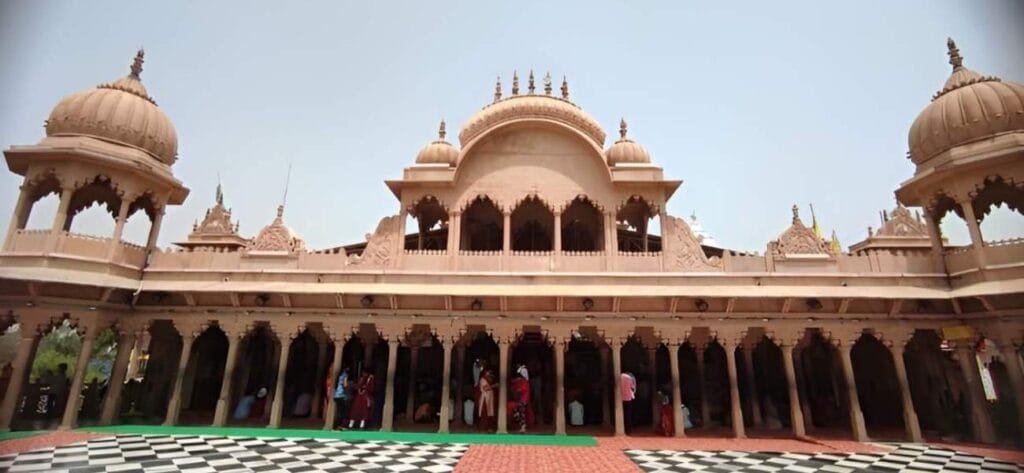
04 Days Agra Mathura Vrindavan Tour
-
Perfect Same Day Agra Mathura Vrindavan Tour
Original price was: ₹9,500.00.₹8,500.00Current price is: ₹8,500.00.
CONCLUSION
The best time to visit Mathura Vrindavan is the six-month window from October to March — but within that window, the right specific month depends on what you have come for. The November pilgrim seeking quiet, the February family wanting comfortable temple walks, the Holi devotee planning for 25 February in Barsana, the Janmashtami observer booking their 4 September arrival three months ahead — each of them is making the right decision for a different reason.
What remains constant is this: Braj Bhoomi rewards those who arrive informed and leave unhurried. Two to three days minimum. Temple sessions timed correctly. A guide who knows which gate to use and when.
Experience My India has been doing exactly this since 2018 — for more than 50,000 pilgrims, rated 4.5★ by 204+ of them.
💬 WhatsApp +91-7302265809 — Book Now
Jai Shri Krishna 🙏