There are places you visit, and then there are places that slowly settle inside you. Mathura and Vrindavan feel like that. Not loud. Not trying to impress. Just moving at their own pace, with temples opening early, bells ringing softly, and people walking without hurry. You don’t really “cover” these towns. You move through them, and somewhere in between, they start making sense.
Highlights
ToggleAnd if you’re wondering which places truly matter here, the answer isn’t just about popularity. It’s about what you feel when you stand there, even for a few minutes.
Top Attractions in Mathura & Vrindavan
Shri Krishna Janmasthan Temple, Mathura
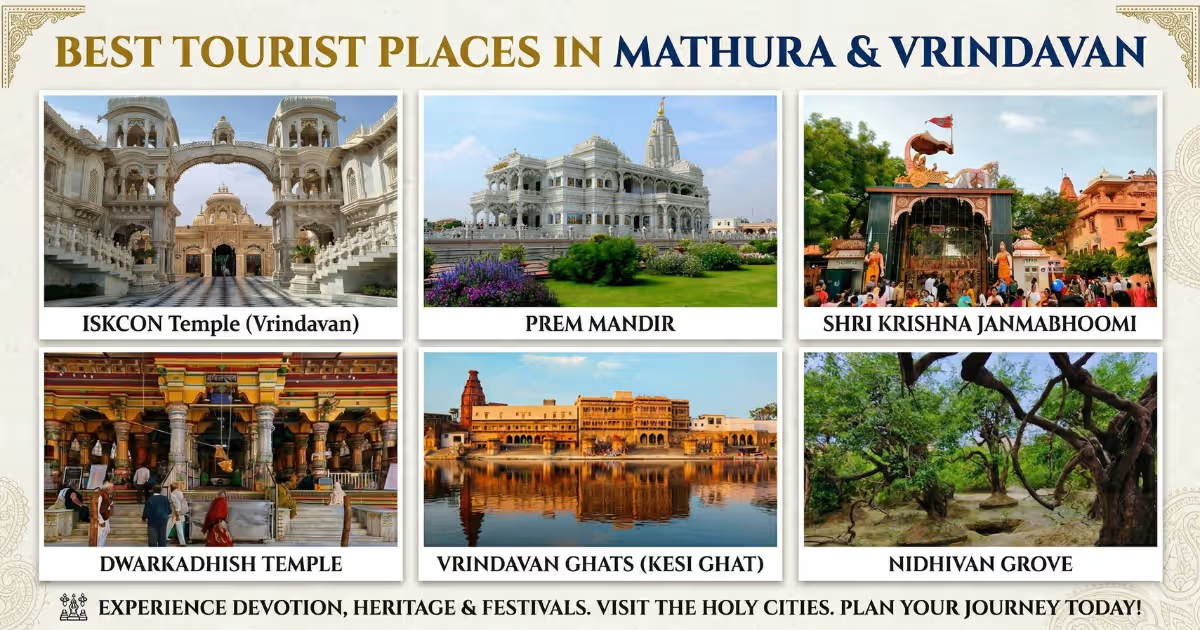
The moment you step inside the Shri Krishna Janmasthan Temple, the atmosphere changes. Security is tight, the walk inside is structured, and yet there is a quiet pull that keeps you moving forward. The Garbha Griha, believed to be the exact prison cell where Lord Krishna was born, is not grand in appearance. It is simple, almost bare. But that simplicity carries weight.
People don’t stay here for long, but they stand still. Some close their eyes. Some just look around. And somehow, that small space feels larger than the entire complex outside.
Dwarkadhish Temple, Mathura
This temple feels different from Janmasthan. More vibrant. More alive. The black marble idol of Dwarkadhish stands beautifully decorated, and the entire temple moves with a certain rhythm. Morning darshan here feels energetic, almost festive.
If you visit during Shravan or Janmashtami, the decorations become even more detailed. But even on a normal day, the crowd, the chants, and the constant movement give this place its own identity.
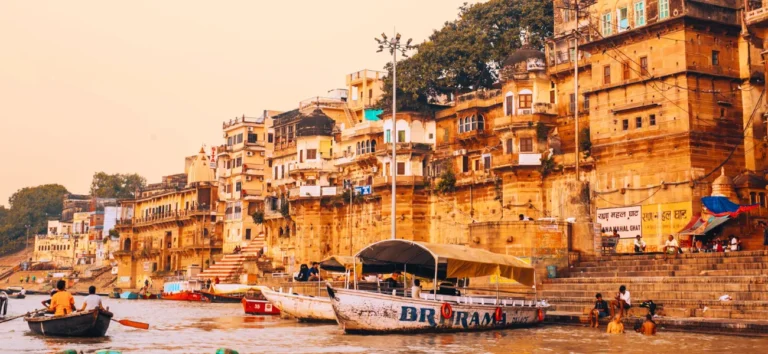
Vishram Ghat, Mathura
By evening, everything slowly shifts towards Vishram Ghat. The Yamuna flows quietly, and people begin to gather without being called. The aarti here is not rushed. Lamps are lit, bells ring, and the river reflects everything back.
It is believed that Krishna rested here after defeating Kansa. Maybe that’s why the place feels calm, even with people around. You can sit on the steps and do nothing. And that is enough.
Banke Bihari Temple, Vrindavan
Now this is where things change completely. The Banke Bihari Temple is crowded. It was very crowded. But there is a reason people keep coming back.
Darshan here is unique. The curtain opens and closes every few seconds. You don’t get a long, steady view. Just glimpses. And strangely, that makes the experience more intense.
You are pushed, pulled, moved with the crowd. But when the curtain opens and you catch that one moment, everything pauses. Just for a second.
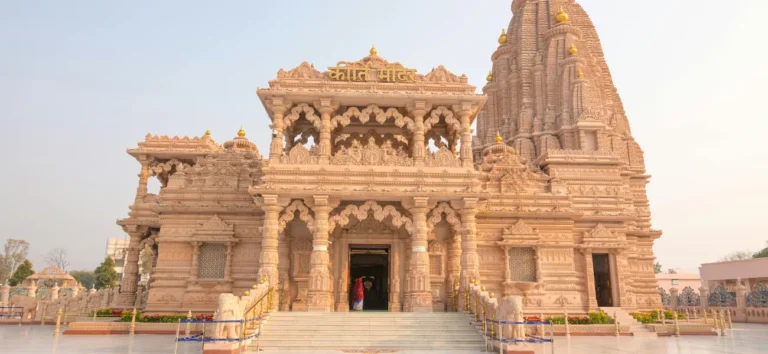
Prem Mandir, Vrindavan
Prem Mandir feels like a contrast to everything else. Clean pathways, detailed carvings, wide open space. It is one of those places where you can walk slowly without being rushed.
By evening, the temple lights up, and the sound-and-light show begins. Scenes from Krishna’s life are shown through lights and music. Even if you’re not someone who usually watches these things, you might still find yourself standing there till the end.
ISKCON Temple, Vrindavan
The ISKCON Temple has a different kind of energy. More organized. More structured. The kirtans here are continuous, and the environment feels calm, almost disciplined.
Foreign devotees, local visitors, everyone sits together. No rush, no pushing. Just chanting, music, and a steady flow of people coming and going.
Nidhivan, Vrindavan
Nidhivan is not a place you explore casually. There is a certain stillness here that feels different. Trees are twisted, almost intertwined, and the area is closed after evening.
Locals believe that Radha and Krishna perform Raslila here every night. Whether you believe it or not, the place carries a kind of silence that is hard to explain. You don’t stay here for too long. But it stays with you.
Radha Raman Temple, Vrindavan
Smaller than the more famous temples, but deeply peaceful. The idol of Radha Raman is considered self-manifested, and the temple has an old, lived-in feeling.
There is no rush here. You can stand quietly, watch the rituals, and leave without being hurried. Sometimes, these smaller places give you the kind of experience the bigger ones cannot.
Govardhan Hill (Nearby)
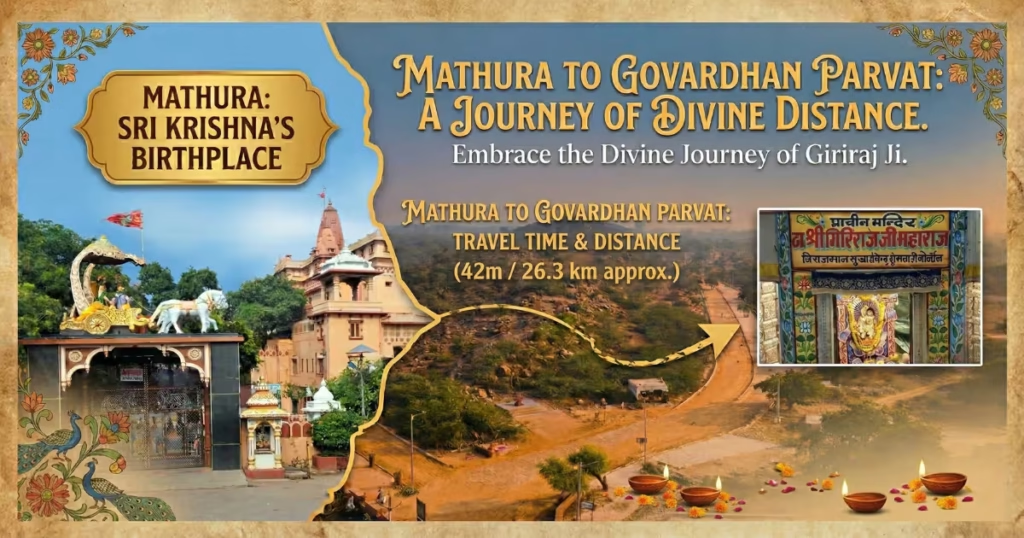
A little away from Vrindavan, Govardhan is not just a place. It’s a journey. The 21 km parikrama is something many devotees do barefoot.
You will see people walking slowly, some chanting, some silent. Shops, small temples, cows, dust, everything becomes part of the path. It takes time. But maybe that’s the point.
Kans Qila, Mathura
Standing near the Yamuna, Kans Qila carries a different kind of history. It is quieter compared to temples, and not as crowded.
From here, you can see the river and parts of the old city. It is not a place where you spend hours, but it adds another layer to your understanding of Mathura.
Important Nearby Locations Around Mathura and Vrindavan
Barsana – Radha’s Birthplace
Barsana feels softer, slower. The Radha Rani Temple sits on a hill, and the climb itself is part of the experience. During Lathmar Holi, the place becomes completely different. Full of color, laughter, and tradition.
Gokul – Krishna’s Childhood Land
Gokul is quieter than Mathura and Vrindavan. It feels more like a village. Narrow lanes, simple temples, and a slower pace. This is where Krishna is believed to have spent his childhood, and the stories feel closer to the ground here.
Best Time to Visit Mathura and Vrindavan
October to March is the most comfortable time. The weather is pleasant, and walking around becomes easier. But if you really want to see these places in full energy, then Janmashtami and Holi are unmatched.
Just be prepared for crowds. A lot of them.
Ideal Duration for Mathura Vrindavan Trip
A 2 to 3-day trip is enough if you want to cover the main temples and nearby places without rushing too much. One day usually goes in Mathura, and the next in Vrindavan and Govardhan.
Anything shorter starts feeling hurried.
Transportation in Mathura and Vrindavan
Getting around is simple.
- E-rickshaws are the most common and convenient
- Auto-rickshaws are available easily
- Walking is often the best way inside temple areas
Distances are not very large, but traffic and crowds can slow things down.
Travel Planning with Mathura Vrindavan Tourism
Planning a trip here sounds simple, but once you arrive, things can feel a bit unorganized. Narrow lanes, unpredictable crowds, temple timings that change without notice.
That’s where a guided plan helps.
Mathura Vrindavan Tourism keeps things sorted quietly. Pickup, temple visits, timing adjustments, local guidance. Nothing flashy. Just making sure you don’t waste time figuring things out on the spot.
Sometimes that makes a big difference.
Contact Mathura Vrindavan Tourism Today:
Call Us: +91 7300620809
WhatsApp Us: +91 7300620809
Visit Our Website: Mathura Vrindavan Tourism
Email: mathuravrindavantourism.com@gmail.com
FAQs – Best Tourist Places in Mathura and Vrindavan
Shri Krishna Janmasthan, Banke Bihari Temple, Prem Mandir, ISKCON Temple, and Vishram Ghat are usually the first places people visit.
2 to 3 days are generally enough to cover the main temples and nearby locations comfortably.
October to March offers pleasant weather, while Janmashtami and Holi are best for experiencing festivals.
Yes, especially during weekends and festivals. Early morning visits are slightly manageable.
Yes, but the parikrama takes time, so plan accordingly.
No, it is strictly closed after evening.
Yes, e-rickshaws and autos are available almost everywhere.
Yes, it is generally safe, but like any crowded place, basic precautions are needed.
Simple and modest clothing is recommended.
Yes, they help in managing time, avoiding confusion, and covering places efficiently.
Conclusion
Mathura and Vrindavan are not places you finish in a checklist. You walk through temples, sit by the river, stand in crowds, wait for a glimpse, and somewhere in between, something slows down inside you.
And maybe that is what people come back for. Not just the temples, but the feeling they leave behind.