There’s a moment during Holi planning when people pause and ask a slightly uncomfortable question.
“Is Dauji Huranga too intense for me?”
It’s a fair doubt. Dauji Huranga isn’t gentle like Phoolon ki Holi. It isn’t playful chaos like street Holi either. It’s raw. Loud. Physical. And deeply traditional. If you’ve only seen it on videos, the reality can feel very different once you’re standing inside that temple courtyard, hearing laughter, drumbeats, and shouts echo off old walls.
In my experience, Dauji Huranga 2026 is best understood not as a spectacle, but as a ritual that still belongs to the village. You don’t attend it like an event. You step into it carefully, observe first, and then decide how close you want to be. This guide walks you through the dates, traditions, crowd reality, safety, and travel planning, without hype. Just how it actually feels on the ground.
About Dauji Huranga Holi
Dauji Huranga is celebrated in Baldeo, a small town near Mathura, at the temple of Lord Balaram, known locally as Dauji. This isn’t an extension of Barsana or Nandgaon. It’s its own thing, with its own energy and rules that aren’t written down anywhere.
What surprises first-time visitors is how local the atmosphere feels. There are pilgrims, photographers, and travellers, yes. But the heart of the celebration is still the men and women of Baldeo. They know each other. They know how far to go. Outsiders are expected to watch, not interfere.
By the way, this is exactly why Dauji Huranga happens after the main Holi. It’s like a final release of energy once the rest of Braj has already exhaled.
Official Holi 2026 Dates You Should Lock First
Before planning anything around Dauji Huranga 2026, these dates need to be fixed in your mind. Everything else revolves around them.
Holi Calendar – Braj Region 2026
- Holika Dahan: Tuesday, 3 March 2026
- Rangwali Holi (Main Color Festival): Wednesday, 4 March 2026
- Dauji Huranga: Thursday, 5 March 2026
Miss this order, and the trip starts to feel rushed or disconnected.
World Famous Dauji Huranga Holi 2026 – What Happens and Where
Dauji Huranga Date, Time and Location
- Date: Thursday, 5 March 2026
- Location: Dauji Temple
- Nearest Town: Mathura
- Start Time: Around 12:00 PM (often later, never earlier)
The timing is important. People arrive early. The ritual doesn’t start early.
What Actually Happens During Huranga
Huranga isn’t random aggression. It’s controlled chaos. Women tear men’s shirts into strips and strike them playfully, while men respond by throwing colours. It looks wild. It sounds louder than it is. And yet, there’s an unspoken rhythm to it.
Surprisingly, most injuries happen not during Huranga itself, but during careless movement in crowds before and after.
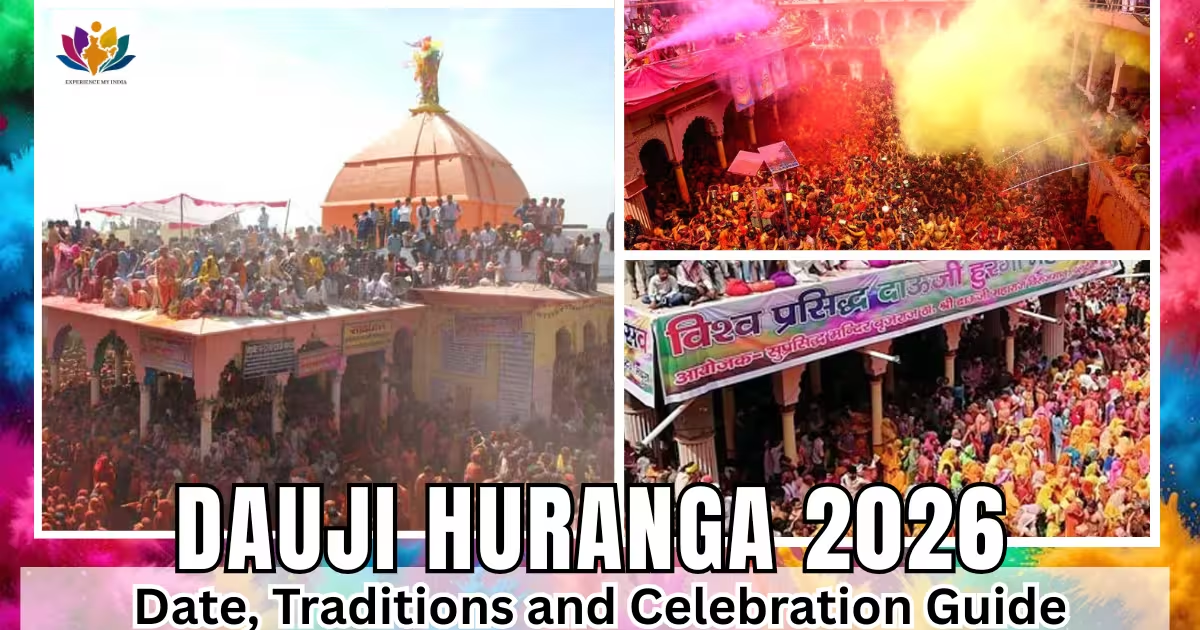
Crowd Reality at Dauji Huranga
- Crowd density: Very high inside the temple courtyard
- Peak time: 12:30 PM to 3:00 PM
- Best observation window: First 30–40 minutes
- Traveller type best suited: Experienced Holi travellers, photographers, cultural explorers
Local Guide Tip
Stand near the outer edges of the courtyard. Locals move instinctively when energy spikes. Follow their movement, not your camera.
The Tradition Behind Dauji Huranga (Why It Still Exists)
Huranga is tied to the playful relationship between Lord Krishna and Lord Balaram. Baldeo, being Balaram’s land, celebrates Holi with a sharper edge. The idea isn’t violence. It’s inversion. Power shifts. Laughter replaces restraint.
In villages, this kind of ritual allows emotional release without long-term conflict. That’s why locals defend it so strongly. It’s not about tourists. It’s about continuity.
I’ve found that people who try to “participate” without understanding this often feel overwhelmed. Those who observe respectfully usually leave deeply moved.
Safety Tips for Dauji Huranga 2026 (Read This Carefully)
Personal Safety on the Ground
- Wear old, full-sleeve cotton clothes. Shirts will tear. That’s part of it.
- Keep phones inside zipped, inner pockets with waterproof covers.
- Avoid glasses unless secured tightly.
- Never push towards the centre.
Crowd Awareness
- Entry and exit paths choke quickly after 2 PM.
- Elderly travellers should not enter the main courtyard.
- Children should not attend Dauji Huranga at all.
Local Guide Tip
If you feel uncomfortable even for a second, step back immediately. Dauji Huranga rewards hesitation poorly.
How to Reach Dauji Huranga 2026 (Practical and Honest)
🚗 By Car
- Distance from Mathura: Around 25 km
- Best option for flexibility
- Parking is done far from the temple during Holi week
🚆 By Train
- Nearest major station: Mathura Junction
- From there, taxis or local jeeps to Baldeo
✈️ By Air
- Nearest airport: Delhi
- Road travel from Delhi to Mathura unavoidable
Local Guide Tip
Start from Mathura by 7:00 AM. Late arrivals often miss controlled entry access.
Planning Support Partner
Many travellers underestimate how draining Dauji Huranga can be, mentally and physically. Mathura Vrindavan Tourism often helps travellers plan Holi routes that respect personal limits. Not everyone needs to do everything. Sometimes choosing only Dauji Huranga, and skipping other intense days, leads to a better experience overall.
This planning support matters most when exits, rest breaks, and same-day returns are handled realistically.
Contact Mathura Vrindavan Tourism Today:
Call Us: +91 7300620809
WhatsApp Us: +91 7300620809
Visit Our Website: Mathura Vrindavan Tourism
Email: mathuravrindavantourism.com@gmail.com
Mathura Vrindavan Tourism is a Unit of Experience My India
Experience My India trip advisor review – Click Here
FAQs – Dauji Huranga 2026
Dauji Huranga is safe when observed responsibly. The ritual itself is controlled by locals, but crowds can be overwhelming. First-time visitors should avoid the centre and stay near exit edges. Guided movement helps reduce risk significantly.
Yes, women can attend, but participation is limited to local women only. Female travellers should remain observers and stay in secure zones. Visiting with local guidance makes the experience calmer and safer.
Generally, no. The noise, crowd pressure, and long standing hours make it uncomfortable. Seniors who still wish to witness it should observe from outside areas and leave early.
Arriving by 8:00–9:00 AM is ideal. This allows controlled entry, orientation, and rest before the ritual begins. Late arrivals often struggle with blocked access routes.
It’s strongly discouraged. The environment is loud, physical, and unpredictable. Dauji Huranga is meant for adults who understand crowd dynamics.
Photography is allowed from outer zones. Close-up shots inside the core ritual area are risky and sometimes restricted. Always follow local instructions.
The main ritual lasts about 1.5 to 2 hours. However, crowd movement before and after can stretch the total experience to 4–5 hours.
Mathura or Vrindavan are the best bases. Baldeo has limited accommodation and restricted movement during Holi days.
No. It follows the Hindu calendar and always happens a day after Rangwali Holi. Dates change every year, so planning ahead is essential.
Yes. Dauji Huranga is intense and not for everyone. Many travellers choose Barsana, Nandgaon, and Vrindavan instead and still feel spiritually fulfilled.
Conclusion
Dauji Huranga 2026 isn’t something you casually tick off a list. It asks something of you. Attention. Humility. Physical awareness. And respect for a tradition that wasn’t designed for outsiders.
If you go prepared, observe patiently, and leave before exhaustion sets in, Dauji Huranga can be unforgettable. Not because it’s wild. But because it’s honest. And in today’s world, that kind of honesty is rare.