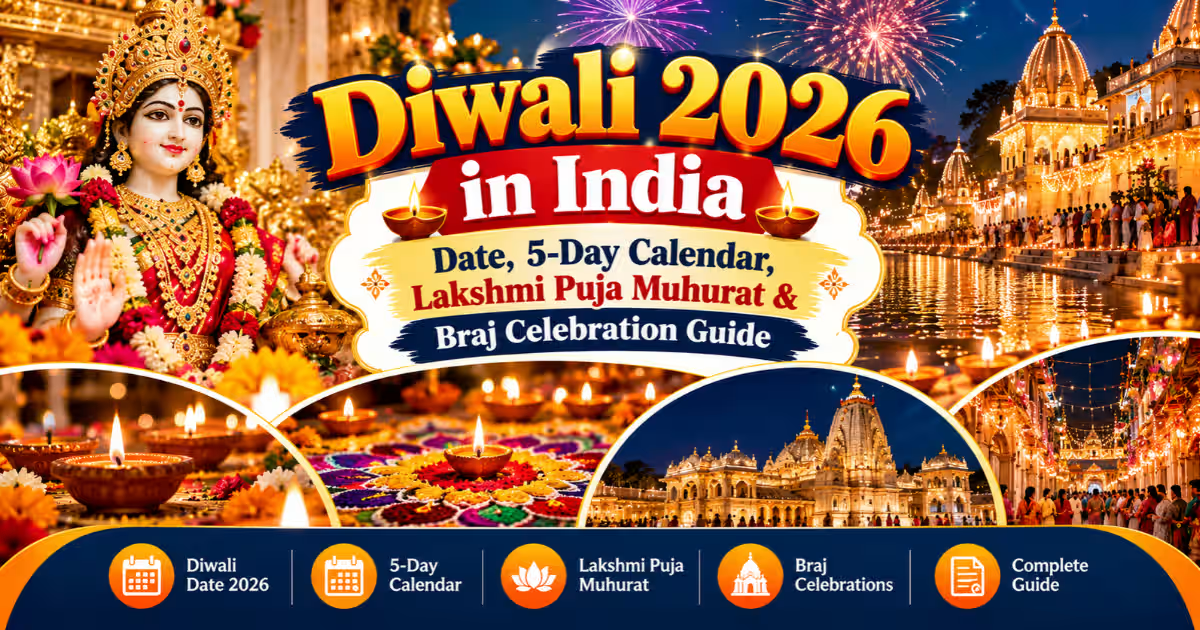
Diwali 2026 date: Sunday, 8 November 2026. Diwali falls later than usual because of an Adhik Maas (extra lunar month) earlier in 2026, which shifted the Hindu calendar by 18-20 days. Lakshmi Puja muhurat (New Delhi): 5:54 PM – 7:50 PM. Five-day Diwali 2026 calendar: Dhanteras (6 Nov), Choti Diwali (7 Nov), Main Diwali / Lakshmi Puja (8 Nov), Tithi Gap (9 Nov), Govardhan Puja / Annakut (10 Nov), Bhai Dooj (11 Nov). Govardhan Puja makes Barsana, Mathura and Vrindavan extraordinary on 10 November. Experience My India. See our Mathura Vrindavan tour Package or message WhatsApp +91 7302265809.
Diwali 2026 – The Festival of Lights Arrives in November
Diwali 2026 will be celebrated on Sunday, 8 November 2026 – the most anticipated festival of the Hindu calendar. This year it falls approximately two weeks later than its usual late-October slot.
The reason: an Adhik Maas (an extra lunar month, intercalated this year between mid-May and mid-June to realign the solar and lunar calendars) has shifted all subsequent Hindu festivals forward by approximately 18-20 days. This is a regular astronomical correction that occurs every 2-3 years in the Hindu calendar – and it means that Diwali 2026 arrives in November rather than October.
Whether you are planning your Lakshmi Puja muhurat, your home celebrations, your family travel or your Govardhan Puja pilgrimage to Braj – this complete guide has everything you need.
Diwali 2026 Date – Why It Falls in November
| Detail | Information |
| Diwali 2026 date | Sunday, 8 November 2026 |
| Day | Sunday |
| Tithi | Amavasya (New Moon) of Kartik Maas |
| Amavasya begins | 11:27 AM on 8 November 2026 |
| Amavasya ends | 12:31 PM on 9 November 2026 |
| Why November? | Adhik Maas (extra lunar month) in mid-2026 shifted the calendar by 18-20 days |
| Normal Diwali window | Typically falls between mid-October and mid-November |
What is Adhik Maas? The Hindu lunar calendar has 354 days per year vs 365 days in the solar calendar. To prevent the lunar calendar from drifting too far from the solar year, an extra month (Adhik Maas or “extra month”) is periodically added. In 2026, this extra month was intercalated between mid-May and mid-June – pushing all subsequent festivals, including Diwali, approximately 18-20 days later.
For pilgrims planning the Govardhan Puja (Annakut) in Mathura-Vrindavan – one of the most important Diwali-linked events in Braj – the Delhi to Govardhan distance guide covers the approach route. The 3 Days Mathura Vrindavan Tour from Experience My India is available during the Diwali-Govardhan Puja period (6-11 November 2026). Call +91-7302265809.
The Complete 5-Day Diwali 2026 Calendar
| Day | Festival | Date 2026 | Key Significance & Rituals |
| Day 1 | Dhanteras | Friday, 6 November 2026 | Worship of Lord Dhanvantari, Kuber and Goddess Lakshmi; traditional day to buy gold, silver or new kitchen utensils; lamps lit for the first time |
| Day 2 | Choti Diwali / Narak Chaturdashi | Saturday, 7 November 2026 | Celebrating Lord Krishna’s victory over the demon Narakasura; first small diyas lit in homes; ritual oil bath before sunrise |
| Day 3 | Main Diwali (Lakshmi Puja) | Sunday, 8 November 2026 | The central celebration – Ganesh-Lakshmi puja during muhurat; homes illuminated with diyas; sweets shared; fireworks; family gathering |
| – | Tithi Gap | Monday, 9 November 2026 | A unique astronomical gap in 2026 – no major festival designation; quiet day |
| Day 4 | Govardhan Puja (Annakut) | Tuesday, 10 November 2026 | Commemoration of Lord Krishna lifting Govardhan Hill; massive vegetarian food mountains (Annakut) offered at temples; especially grand in Mathura-Vrindavan |
| Day 5 | Bhai Dooj | Wednesday, 11 November 2026 | Celebration of the sacred brother-sister bond; tilak ceremonies; feasts; at Vishram Ghat Mathura – mass Yamuna bathing with siblings |
The Tithi Gap (9 November): A unique feature of Diwali 2026 is the one-day tithi gap on Monday 9 November – an astronomical gap caused by the same calendar shifts. This means Govardhan Puja falls two days after the main Diwali night rather than the day immediately following. Experience My India plans every Braj Diwali tour around this specific 2026 calendar. WhatsApp +91-7302265809.
Lakshmi Puja Muhurat 2026
For the main Diwali night (8 November 2026), the most auspicious timings for performing Lakshmi Puja:
| Puja Window | Timing (New Delhi Reference) |
| Best Muhurat (Vrishabha Lagna) | 5:54 PM – 7:50 PM |
| Duration | 1 hour 56 minutes |
| Pradosh Kaal (General) | 5:31 PM – 8:09 PM |
| Pradosh Kaal (Delhi + North India) | 6:29 PM – 8:29 PM |
| Amavasya Tithi begins | 11:27 AM on 8 November 2026 |
| Amavasya Tithi ends | 12:31 PM on 9 November 2026 |
City variation: Exact timings vary slightly by city depending on local sunset time. The timings above use New Delhi as the reference. For other cities, add or subtract 5-30 minutes depending on your location’s longitude. Check Drik Panchang (drikpanchang.com) for city-specific muhurat timings.
Which window to use: The Vrishabha Lagna window (5:54-7:50 PM) is the most precisely auspicious window – this is when Goddess Lakshmi is traditionally understood to be most receptive to worship. If completing puja within this window is not possible, any time during Pradosh Kaal (post-sunset to approximately 8-8:30 PM) is considered acceptable.
For Braj pilgrims visiting Mathura-Vrindavan during Diwali, Experience My India coordinates the Vishram Ghat Deepdaan (lamp floating) on the evening of 8 November with the Lakshmi Puja muhurat timing in view. The 2 Days Mathura Vrindavan Tour during Diwali covers the 8-10 November events. Call +91-7302265809.
History & Significance – Why We Celebrate Diwali
Diwali (Sanskrit: Deepavali – “row of lamps”) is the festival of light – symbolising the universal principles of light over darkness, good over evil and knowledge over ignorance. It is celebrated across different communities in India and the Indian diaspora, each with their own historical and spiritual framework.
The Return of Lord Rama – Ayodhya’s Illumination
The most widely observed narrative: Lord Rama – the seventh avatar of Vishnu – completed his 14-year exile and returned to Ayodhya on this night after defeating the demon king Ravana in Lanka and rescuing Sita. The people of Ayodhya lit thousands of clay lamps (diyas) to illuminate the entire city and welcome their king home.
In 2026, the connection between Diwali and Ayodhya carries added weight: pilgrims visiting the newly consecrated Ram Mandir at Ayodhya during Diwali week (8-11 November) can combine the Ayodhya pilgrimage with the Braj Govardhan Puja circuit. Experience My India manages the complete Ayodhya-Mathura-Vrindavan circuit. The 5 Days Mathura Vrindavan Tour from Jaipur is available for Diwali-period planning. WhatsApp +91-7302265809.
Goddess Lakshmi & the Samudra Manthan
The Amavasya night of Kartik Maas is the specific date on which Goddess Lakshmi emerged from the Samudra Manthan (the cosmic churning of the ocean of milk, Kshir Sagar). Diwali night is therefore simultaneously the celebration of Lakshmi’s cosmic birth – the reason Lakshmi Puja is performed during the Pradosh Kaal on Amavasya, when she is understood to be most present.
| Event | Significance |
| Lakshmi’s emergence | On Amavasya of Kartik, Goddess Lakshmi rose from the Kshir Sagar |
| Why Pradosh Kaal | The post-sunset window is when Lakshmi is understood to move through homes and bless those who have prepared |
| The clean home | Homes cleaned before Diwali are prepared for Lakshmi’s entry – she enters only where there is cleanliness and light |
| Diyas at windows | Traditionally placed to guide Lakshmi in and illuminate her path through the home |
Lord Krishna & Narakasura – The South Indian Tradition
On Narak Chaturdashi (Day 2 – 7 November 2026), the celebration focuses on Lord Krishna and his wife Satyabhama defeating the demon king Narakasura, who had imprisoned thousands. Krishna’s victory on this day is observed particularly in South India, Maharashtra, Goa and among communities for whom the Krishna narrative is the primary Diwali framework.
The Braj region – as Lord Krishna’s birthplace and childhood home – celebrates both the national Diwali and the specifically Krishna-centred traditions with additional depth. See the top 25 places to visit in Mathura Vrindavan for the complete Braj sightseeing context. The 3 Days Mathura Vrindavan Tour from Bangalore and from Ahmedabad are popular for South India and Gujarat-based pilgrims during Diwali. Call +91-7302265809.
Jain & Sikh Traditions
| Tradition | Significance |
| Jain Diwali | Marks the Nirvana (spiritual liberation) of Lord Mahavira in 527 BCE – the 24th Tirthankara; Jains light lamps to symbolise the light of knowledge that Mahavira left behind |
| Sikh Bandi Chhor Divas | Celebrates the release of the Sixth Guru, Guru Hargobind Ji, along with 52 Hindu kings, from Gwalior Fort by Emperor Jahangir; the Golden Temple at Amritsar is spectacularly illuminated |
Core Traditions & Rituals of Diwali
| Tradition | What Happens |
| Cleaning the home | Thorough cleaning before Diwali – Lakshmi is said to enter only clean homes; also practical preparation for the festival period |
| Rangoli | Intricate floor patterns drawn with coloured powders at the entrance – geometric, floral or deity-themed |
| Marigold and mango leaf garlands | Hung at doors and windows as auspicious decoration |
| Diya lighting | Earthen lamps (clay diyas) filled with mustard oil or ghee; lit at sunset; placed on window sills, ledges and courtyards |
| Fairy lights | Modern decorative lights used alongside traditional diyas |
| Ganesh-Lakshmi Puja | Family puja during the muhurat window (5:54-7:50 PM in Delhi); prayers for health, wisdom and financial stability |
| New clothes | Worn on Diwali day – a tradition of fresh starts |
| Mithai and gifting | Exchanging traditional sweets (mithai), dry fruits and gifts with family, relatives and neighbours |
| Fireworks | Celebrated in many parts of India; subject to local environmental regulations |
Diwali 2026 in Braj – Mathura, Vrindavan & Govardhan
The Braj region – encompassing Mathura (Krishna’s birthplace), Vrindavan (Krishna’s childhood home) and the sacred Govardhan Hill – experiences Diwali with a specific, layered intensity rooted in the Krishna tradition.
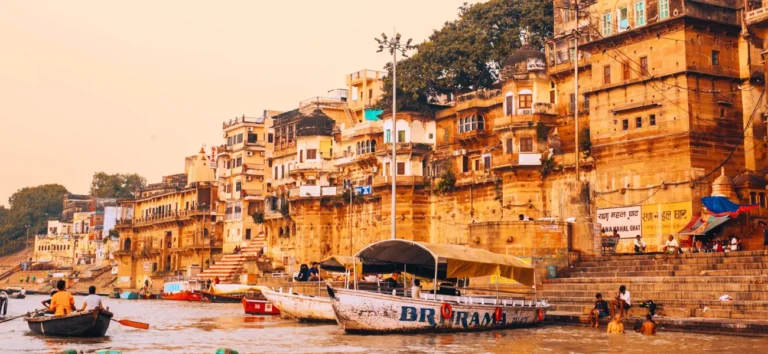
Main Diwali Night (8 November) – Grand Deepdaan at Vishram Ghat
| Detail | Information |
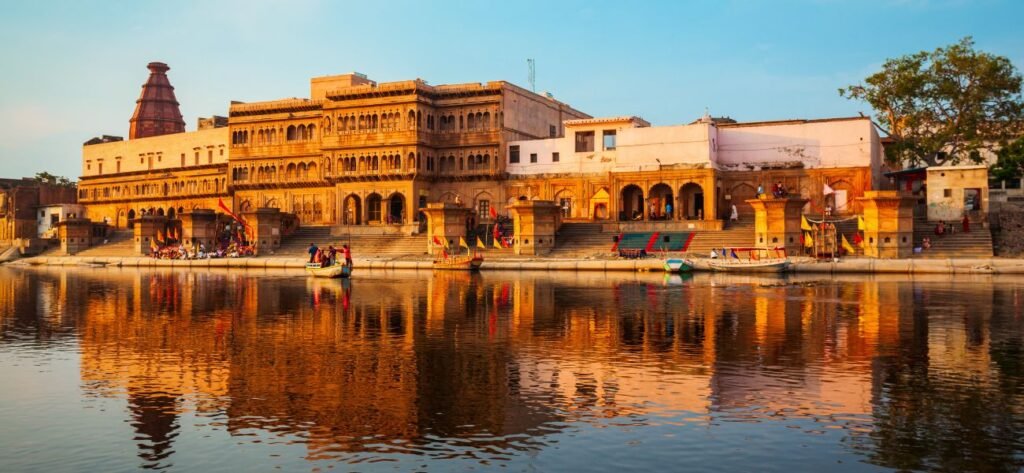
| What happens | The riverbanks – especially Vishram Ghat in Mathura – are lit with thousands of floating earthen lamps (Deepdaan) |
| The visual | Thousands of diyas floating on the Yamuna River; the ancient sandstone ghat illuminated; priests performing the Aarti with large brass lamps |
| When | Evening of 8 November 2026; builds from 5:30 PM; peak illumination at and after the Lakshmi Puja muhurat (5:54 PM) |
| Atmosphere | One of the most atmospheric Diwali experiences in North India; combines the national festival with the specific Braj devotional tradition |
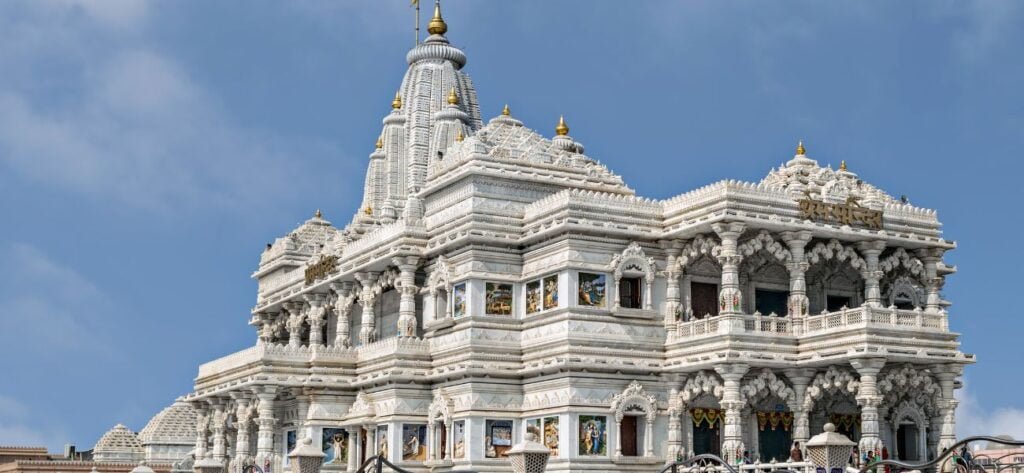
| Vrindavan | Banke Bihari Temple, ISKCON and Prem Mandir are all specially illuminated |
For the complete Mathura circuit and Vishram Ghat guide, see the top 10 places to visit in Mathura. Experience My India sequences every Diwali night visit around the Vishram Ghat Deepdaan. The Same Day Mathura Vrindavan Tour is available for Diwali-night visitors from NCR. WhatsApp +91-7302265809.
Govardhan Puja 2026 in Braj – Tuesday, 10 November
Govardhan Puja (Annakut) on 10 November 2026 is the event that makes the Braj region uniquely extraordinary during Diwali week.
| Detail | Information |
| Date | Tuesday, 10 November 2026 |
| What is Govardhan Puja? | Celebrates Lord Krishna lifting the Govardhan Hill on his little finger for 7 days to shelter the Braj community from Indra’s storm; the act that established Krishna’s superiority over the divine order and his direct protection of devotees |
| Annakut | “Mountain of food” – massive pyramids of vegetarian food, sweets, grains and prepared dishes are offered at temples; devotees receive prasad |
| At Banke Bihari, Vrindavan | The temple constructs a grand Annakut display; tens of thousands of devotees attend |
| At Govardhan Hill itself | The most significant location – the actual Govardhan Hill; the 21 km Govardhan Parikrama is especially auspicious on this day |
| At Mathura temples | All major Mathura temples celebrate with Annakut offerings |
| Scale | One of the largest temple festival days in the Braj calendar – comparable to Janmashtami in terms of crowd scale |
Why Govardhan Puja is especially important in 2026: The tithi gap (9 November) and the resulting two-day separation between main Diwali (8 November) and Govardhan Puja (10 November) creates a unique 5-day Braj Diwali circuit for pilgrims who wish to attend both. Experience My India plans the complete 8-11 November Braj Diwali circuit.
For the Govardhan Parikrama approach from Delhi, see the Delhi to Govardhan distance guide. The Vrindavan tour guide covers the Banke Bihari Annakut context. The 5 Days Mathura Vrindavan Tour covers the complete Diwali-to-Bhai Dooj Braj circuit. Call +91-7302265809.
Bhai Dooj 2026 at Vishram Ghat – Wednesday, 11 November
The final day of Diwali 2026 carries a specific and powerful tradition at Mathura’s Vishram Ghat:
| Detail | Information |
| Date | Wednesday, 11 November 2026 |
| The national tradition | Brothers and sisters exchange tilak (sacred mark on forehead); sisters pray for brothers’ longevity; feasts |
| The Mathura tradition | Brothers and sisters bathe together in the holy Yamuna at Vishram Ghat – a mass gathering unique to Braj |
| Why the Yamuna dip? | The Yamuna is the twin sister of Yama (Lord of Death); a sibling dip on Bhai Dooj in her waters is believed to grant protection from death and misfortune |
| The theological logic | Yama cannot harm those blessed by his twin sister Yamuna; a Bhai Dooj dip invokes this sibling protection |
| Scale | A mass gathering at Vishram Ghat – thousands of sibling pairs bathe together in the Yamuna |
| Atmosphere | Distinctive and deeply devotional; one of the most moving mass-bathing experiences in the Braj calendar |
For the complete Vishram Ghat guide, see the Gayatri Tapobhumi guide which covers the Mathura sacred site context. Experience My India includes the Bhai Dooj Yamuna bathing in the complete Diwali Braj package. The Gokul tourist places guide covers the outer Braj circuit for pilgrims extending their visit. WhatsApp +91-7302265809.
Ground Truth – What Nobody Tells You About Diwali 2026
The tithi gap on 9 November is real and many travel plans won’t account for it. Unlike most Diwali years where Govardhan Puja is the morning immediately after Diwali night, 2026 has a one-day gap. This means pilgrims planning a “Diwali + Govardhan Puja in 2 nights” trip actually need 4 nights (8th, 9th, 10th, plus travel day). Experience My India has structured all 2026 Diwali packages around this specific calendar.
Govardhan Puja at the actual Govardhan Hill is significantly more powerful than at a temple in a city. The Annakut at Banke Bihari Temple in Vrindavan is grand. But the Annakut at the foot of the actual Govardhan Hill – the hill Krishna lifted – is where the event happened. Experience My India schedules groups for the Govardhan Hill Annakut specifically, not just the Vrindavan temple version.
The Bhai Dooj Yamuna bathing at Vishram Ghat is one of the most distinctive and overlooked Braj Diwali experiences. Most travel itineraries for Braj Diwali focus on the 8th (main night) and 10th (Govardhan Puja). Very few include the 11th. The mass sibling Yamuna bathing on Bhai Dooj – with the specific theological logic of Yamuna’s sibling relationship with Yama – is one of the most moving experiences in the Braj calendar.
Accommodation in Mathura and Vrindavan fills 4-6 weeks before Govardhan Puja. Unlike festivals that draw crowds but have adequate hotel supply, the 5-day Diwali-Govardhan circuit in Braj exceeds available rooms quickly. Book by early September 2026. Experience My India pre-books accommodation for all Diwali-period guests. WhatsApp +91-7302265809.
Frequently Asked Questions
Diwali 2026 in India falls on Sunday, 8 November 2026. The main festival – Lakshmi Puja – is observed on this day during the Amavasya Tithi of Kartik Maas. The Amavasya Tithi begins at 11:27 AM on 8 November 2026 and ends at 12:31 PM on 9 November 2026. Diwali falls later than usual in 2026 because of an Adhik Maas (extra lunar month) intercalated between mid-May and mid-June 2026, which shifted the Hindu calendar forward by approximately 18 to 20 days from the usual late-October window. Experience My India. Call +91-7302265809.
The most auspicious Lakshmi Puja muhurat for Diwali 2026 (8 November, New Delhi reference) is: Best muhurat (Vrishabha Lagna): 5:54 PM to 7:50 PM, duration 1 hour 56 minutes. Pradosh Kaal general window: 5:31 PM to 8:09 PM. Pradosh Kaal for Delhi and North India: 6:29 PM to 8:29 PM. Exact timings vary by 5 to 30 minutes for other cities depending on local sunset time. Check Drik Panchang (drikpanchang.com) for your specific city. Worshipping during the Vrishabha Lagna window (5:54 to 7:50 PM) is considered the most precisely auspicious. Experience My India. WhatsApp +91-7302265809.
The 5-day Diwali 2026 calendar: Day 1 Dhanteras on Friday 6 November (buy gold, silver or utensils; worship Dhanvantari and Lakshmi); Day 2 Choti Diwali and Narak Chaturdashi on Saturday 7 November (Krishna’s victory over Narakasura; first diyas lit); Day 3 Main Diwali and Lakshmi Puja on Sunday 8 November (the central night of celebration); Monday 9 November is a tithi gap with no major festival; Day 4 Govardhan Puja and Annakut on Tuesday 10 November (Krishna lifted Govardhan Hill; massive food offerings at temples); Day 5 Bhai Dooj on Wednesday 11 November (sacred sibling bond; Yamuna bathing at Vishram Ghat Mathura). Experience My India. Call +91-7302265809.
Diwali 2026 falls in November because of an Adhik Maas – an extra lunar month inserted into the Hindu calendar between mid-May and mid-June 2026 to realign the lunar and solar calendars. The Hindu lunar year has approximately 354 days versus 365 solar days. Every 2 to 3 years, an extra month is added to prevent the lunar calendar from drifting too far from the seasons. In 2026, this extra month pushes all subsequent festivals – including Diwali – forward by approximately 18 to 20 days, placing Diwali in early November rather than the usual late-October window. Experience My India. WhatsApp +91-7302265809.
Govardhan Puja 2026 falls on Tuesday, 10 November – two days after the main Diwali night due to a unique tithi gap on 9 November. In the Braj region (Mathura, Vrindavan, Govardhan), this is one of the grandest festival days of the year. It commemorates Lord Krishna lifting the Govardhan Hill on his little finger for 7 days to shelter the Braj community from Indra’s rain storm. Temples including Banke Bihari in Vrindavan and shrines at Govardhan Hill construct massive Annakut (mountains of food) offerings. The 21 km Govardhan Parikrama is especially auspicious on this day. Experience My India manages the Govardhan Puja Braj circuit. Call +91-7302265809.
On Diwali night (8 November 2026), Vishram Ghat in Mathura – the most sacred ghat where Krishna rested after defeating Kansa – is lit with thousands of floating earthen lamps (Deepdaan). As darkness falls, priests perform the Yamuna Aarti with large brass lamps and devotees float diyas on the river. The combination of the national Diwali illumination with the specific Braj Yamuna tradition creates one of the most atmospheric Diwali experiences in all of North India. Experience My India sequences the Vishram Ghat Deepdaan visit within the Lakshmi Puja muhurat window (5:54 PM onward). WhatsApp +91-7302265809.
On Bhai Dooj 2026 (Wednesday, 11 November), a mass gathering takes place at Vishram Ghat in Mathura where brothers and sisters bathe together in the sacred Yamuna. The theological significance is specific: the Yamuna River is the twin sister of Yama (Lord of Death). A sibling Yamuna dip on Bhai Dooj – the day specifically celebrating sibling bonds – invokes Yamuna’s protection of her brother Yama’s domain: the belief that those bathed in Yamuna’s waters on this day are shielded from the fear of death. It is one of the most moving and distinctive Braj Diwali experiences. Experience My India. Call +91-7302265809.
Experience My India offers multiple Diwali 2026 Braj packages: Same Day Tour (8 November – Diwali night Deepdaan at Vishram Ghat and Vrindavan illumination) from ₹1,999 per person; 2 Days tour (Diwali night + Govardhan Puja) from ₹2,999; 3 Days tour (Diwali + Govardhan Puja + Bhai Dooj Yamuna bathing) from ₹3,999; 5 Days tour (complete 6 to 11 November Diwali Braj circuit) from ₹7,999. Book by September 2026 – Govardhan Puja period fills accommodation in Mathura-Vrindavan 4 to 6 weeks in advance. WhatsApp +91-7302265809 for current availability and booking.
Recommended products
-
02 Days Mathura Vrindavan Tour
-
03 Days Mathura Vrindavan Tour
Original price was: ₹9,000.00.₹8,000.00Current price is: ₹8,000.00. -
04 Days Agra Mathura Vrindavan Tour
-
5 Days Braj 84 Kosh Yatra
Ready to Celebrate Diwali 2026 in Braj with Experience My India?
Diwali at Vishram Ghat. Govardhan Puja Annakut at Govardhan Hill. Bhai Dooj Yamuna bathing. Three of the most powerful devotional experiences of the Braj calendar – all within 4 days, 6-11 November 2026.
Diwali Braj Packages from ₹1,999 per person · Book by September 2026 · All Diwali events managed
WhatsApp +91-7302265809 – Book Now
Jai Shri Krishna 🙏