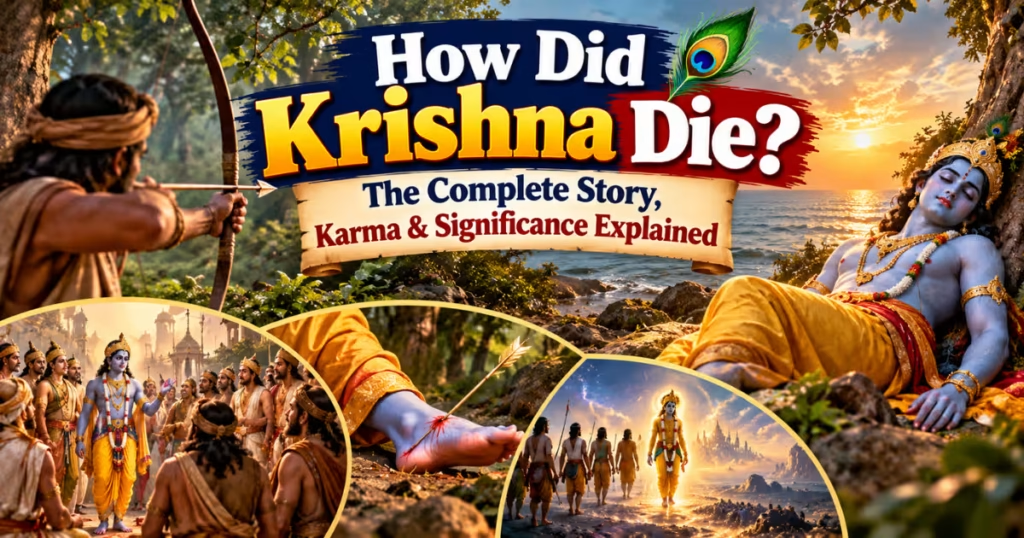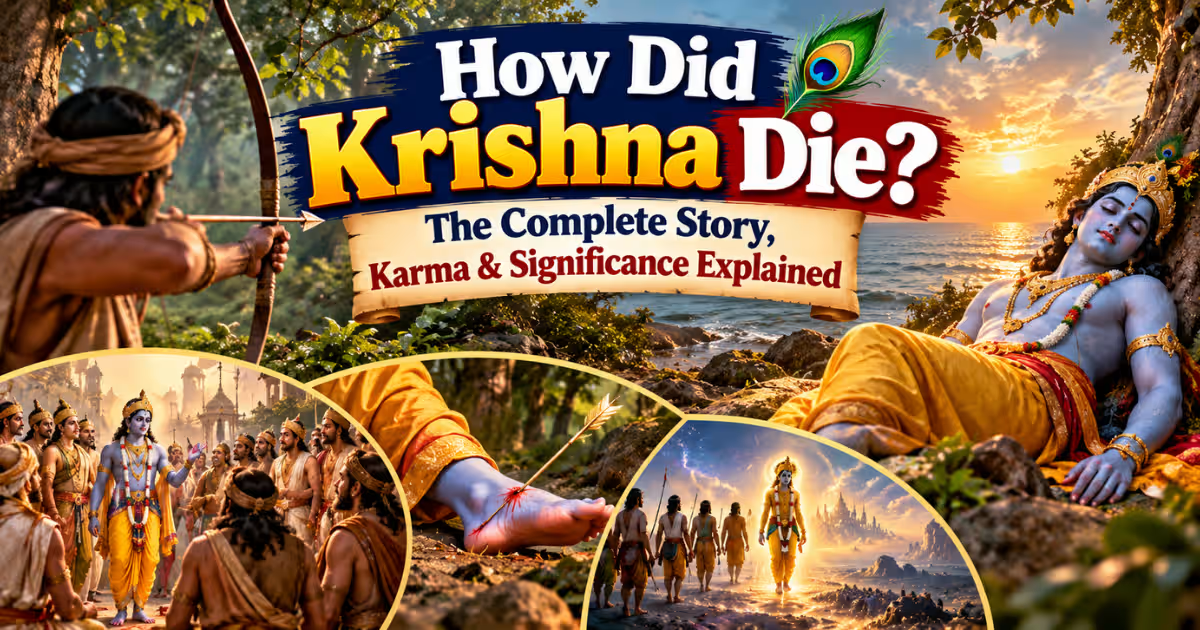
Lord Krishna did not die in the ordinary sense. His departure from the physical world is described in the Mausala Parva of the Mahabharata and the Bhagavata Purana as a tirodhana – a conscious, voluntary withdrawal of his earthly avatar. Resting in meditation (Yoga Samadhi) in the Prabhasa forest, he was struck on the sole of his foot by an arrow shot by a hunter named Jara, who mistook the moving sole for a deer. Krishna comforted Jara, confirmed the event was divinely destined and consciously departed to his eternal spiritual abode. Experience My India. WhatsApp +91-7302265809. See our Mathura Vrindavan tour Package or message WhatsApp +91 7302265809.
A Question That Deserves a Complete Answer
“How did Krishna die?” is one of the most commonly searched questions about Hinduism – and one that carries a significant theological distinction before the story even begins.
In Hindu Vaishnav theology, Lord Krishna did not die. The Supreme Being does not die. What occurred was his tirodhana – a Sanskrit term meaning the voluntary withdrawal or disappearance of the divine form from the earthly plane when the purpose of the avatar is complete. The same being who instructed Arjuna on the immortality of the Atman (“never was there a time when I did not exist, nor you, nor all these kings” – Bhagavad Gita 2.12) does not himself cease to exist.
With that distinction clear, the story of how Lord Krishna’s earthly presence concluded is one of the most theologically rich and humanly resonant narratives in the Mahabharata – involving karma spanning two Yugas, a moment of divine compassion toward a terrified hunter and the close of an entire cosmic age.
I am Gurudutt, born and raised in Braj Bhoomi – the sacred land of Krishna’s childhood – and founder of Experience My India. Our team has guided over 50,000 pilgrims through the sites associated with Krishna’s life and pastimes since 2018. This guide covers the complete scriptural account, the Vali-Jara karmic cycle, the location of the event and the cosmic significance of Krishna’s departure. For those who wish to visit the places where Krishna lived – Vrindavan, Mathura, Govardhan – Experience My India manages the complete Braj circuit. The Same Day Mathura Vrindavan Tour from ₹1,999 is a good starting point. Call +91-7302265809.
What the Scriptures Say
Two primary scriptural sources describe Krishna’s departure from the physical world:
| Scripture | Section | What It Describes |
| Mahabharata | Mausala Parva (Book 16 – “The Book of the Clubs”) | The destruction of the Yadava clan, Balarama’s departure and Krishna’s final moments |
| Bhagavata Purana | Canto 11 (Especially Chapters 30-31) | The complete theological account; Krishna’s voluntary departure; the cosmic significance |
The Mausala Parva is the 16th of the 18 books of the Mahabharata. It is one of the shorter books but covers the events immediately following the Kurukshetra War – the self-destruction of the Yadava clan and Krishna’s subsequent departure from the world.
The Bhagavata Purana’s Canto 11 provides the theologically deeper account – explaining that Krishna’s departure was not a death but a conscious withdrawal, fully within his divine will and knowledge.
The Events Before Krishna’s Departure
To understand how Krishna’s earthly presence concluded, the events that preceded it are essential context:
The Destruction of the Yadava Clan
After the Kurukshetra War, in which the Pandavas defeated the Kauravas, the victorious Pandavas continued to rule. The Yadavas – Krishna’s own clan, the people of Dwaraka – began to deteriorate spiritually and morally. Sage Vishwamitra, Sage Kanwa and Sage Narada visited Dwaraka and some young Yadavas, in a spirit of irreverence, disguised one of their companions (Samba, Krishna’s own son) as a pregnant woman and asked the sages what the “woman” would give birth to.
The sages cursed: the “woman” would give birth to an iron club (musal), which would destroy the entire Yadava clan.
The club was born. Frightened, the Yadavas ground it to powder and scattered the powder into the sea. But the iron filings washed ashore and grew as a type of reed grass called eraka grass on the sea shore – which the Yadavas later used to beat each other to death in a senseless brawl. The self-destruction of the Yadavas was complete.
Balarama’s Departure
Following the destruction of the Yadavas, Krishna’s elder brother Balarama (Sankarshan) sat down beneath a tree in meditation. According to the Bhagavata Purana, a great white serpent (identified with Anantashesha – Balarama’s cosmic identity as the infinite serpent) emerged from his mouth and Balarama consciously departed his physical form, returning to his eternal existence.
Krishna witnessed his brother’s departure. He then went alone into the forest.
For pilgrims visiting the Braj sites connected to Balarama’s earthly pastimes, the Gokul tourist places guide covers the Dauji Temple dedicated to Balarama. Experience My India includes Dauji Temple in the 8 Days Braj 84 Kosh Yatra. Call +91-7302265809.
How Krishna Left the World – The Full Story
After Balarama’s departure, Krishna walked alone into the Prabhasa forest. He sat beneath a pipal tree (ashvattha tree – the same tree under which the Bhagavad Gita was later symbolically associated) and entered deep meditation – Yoga Samadhi.
The Arrow of Jara
Krishna sat in a semi-reclining posture with his right foot resting on his left knee. This posture – the same iconic posture seen in depictions of Krishna resting – meant that the sole of his foot was visible and it moved slightly.
A hunter named Jara was moving through the same forest seeking deer. In the forest light, seeing movement near a tree, he mistook the moving sole of Krishna’s foot – red like a lotus blossom – for the ear of a hiding deer.
Jara shot an arrow. It struck Krishna precisely in the sole of his foot – the one spot on his body, in certain narrative traditions, that was considered vulnerable.
The Compassionate Response
When Jara ran forward and realised what he had done – that he had struck the Lord himself – he fell at Krishna’s feet, weeping in anguish and begging forgiveness.
| Action | Description |
| Jara’s reaction | Fell at Krishna’s feet; wept; begged forgiveness |
| Krishna’s response | Smiled gently; comforted Jara; assured him the event was divinely destined |
| Krishna’s words (substance) | “Do not grieve. This has occurred by my own will and is part of the divine order. I grant you my blessing.” |
| What happened to Jara | Received Krishna’s grace and blessing |
This moment is considered one of the most moving in all of the Mahabharata – the Supreme Being, as he departs the world, uses the occasion to comfort and bless the instrument of his departure. He takes care of the human being who caused the event, ensuring that the hunter does not carry guilt for what was, in fact, a divinely ordained act.
After comforting Jara, Krishna consciously withdrew his vital airs (prana) and departed to his eternal spiritual abode – Vaikuntha / Goloka Vrindavan.
Experience My India explains this narrative to every group visiting Vrindavan – the childhood home of the same Lord who consciously departed from Prabhasa. The 2 Days Mathura Vrindavan Tour gives enough time for a complete Vrindavan circuit with full contextual explanation. WhatsApp +91-7302265809.
Who Was Jara the Hunter?
The name “Jara” in Sanskrit means “old age” or “decay” – carrying a symbolic dimension beyond the literal hunter. But Jara also has a specific karmic identity that forms one of the most profound examples of cosmic justice in the Puranic tradition.
| Detail | Information |
| Name | Jara (Sanskrit: decay; old age) |
| Profession | Hunter |
| Location | Prabhasa forest |
| Previous life | Vali – the monkey-king of Kishkindha in the Ramayana |
| How they connect | The Vali-Jara karmic cycle |
The Karma of Vali and Jara – The Cosmic Justice Connection
This is the most philosophically profound element of Krishna’s departure – a karmic cycle spanning two Yugas and two avatars of Lord Vishnu.
In the Treta Yuga – Rama and Vali
In the Treta Yuga, when Lord Vishnu took the avatar of Rama, there lived a monkey-king named Vali who ruled Kishkindha. Rama had made an alliance with Sugriva (Vali’s brother) and promised to help him regain his kingdom. In the famous episode, Rama killed Vali by shooting an arrow from behind a tree – from a hidden position, while Vali was engaged in single combat with Sugriva.
Before dying, Vali challenged Rama on the ethics of this act: “Why did you kill me from hiding rather than in fair combat?”
Rama acknowledged the unconventional nature of the act but explained the divine necessity of the moment. Vali accepted this and died peacefully, attaining a high state.
In the Dvapara Yuga – Jara and Krishna
Vali was reborn as Jara – the hunter. And Lord Vishnu’s avatar in the Dvapara Yuga was Krishna.
Jara’s arrow, fired from a hidden position while Krishna appeared to be resting, struck the avatar of Vishnu – mirroring exactly what Rama had done to Vali. One arrow from hiding; one avatar of Vishnu struck; the karmic debt balanced.
| Event | Treta Yuga | Dvapara Yuga |
| Avatar | Rama | Krishna |
| Who was struck | Vali | Krishna |
| Who struck | Rama | Jara (Vali reborn) |
| Method | Arrow from hidden position | Arrow from hidden position |
| Outcome | Vali died; received Rama’s grace | Krishna departed; gave Jara his grace |
| Cosmic principle | Karma respects no exception – even divine avatars honour it | Same |
This cycle demonstrates one of the deepest principles in Hindu theology: the law of karma applies without exception – even to the Supreme Being in His incarnated form. Krishna, who could have deflected the arrow or prevented the event entirely, chose not to. He allowed karmic justice to complete its arc.
Experience My India explains this karmic dimension to every pilgrim at Vrindavan’s Braj sites – the same Lord whose departure from the world followed cosmic law spent his childhood playing in the very lanes that pilgrims walk today. The 3 Days Mathura Vrindavan Tour includes full theological context at every site. Call +91-7302265809.
Where Did Krishna Depart? – Bhalka Tirtha
| Detail | Information |
| Location of event | Prabhas Kshetra / Prabhasa forest |
| Modern name | Bhalka Tirtha (also: Bhalka Temple) |
| Geographic location | Veraval, near Somnath, Gujarat, India |
| Temple name | Bhalka Temple |
| What the temple shows | A shrine depicting reclining Krishna next to the kneeling hunter Jara |
| Significance | Marks the exact spot of Krishna’s departure from the earthly plane |
| Nearby pilgrimage | Somnath Jyotirlinga – one of the 12 Jyotirlingas – is adjacent |
The Bhalka Temple is a significant pilgrimage site in Gujarat for devotees who wish to visit the location associated with Krishna’s departure. The shrine of Krishna reclining with the arrow in his foot and Jara kneeling at his side, is one of the most theologically poignant temple iconographies in the Vaishnav tradition.
For Vrindavan pilgrims – who visit the sites of Krishna’s childhood – the Bhalka Tirtha in Gujarat represents the other end of Krishna’s earthly narrative. Experience My India guides the Vrindavan and Mathura circuit (Krishna’s birth and childhood sites) while Bhalka Tirtha (Krishna’s departure site) is in Gujarat. For the 3 Days Mathura Vrindavan Tour from Ahmedabad, Gujarat-based pilgrims can combine both circuits. WhatsApp +91-7302265809.
What Happened After Krishna Left
Three major events followed Krishna’s departure in rapid sequence:
| Event | What Happened | Significance |
| Arjuna’s arrival | Arjuna came to Dwaraka and found Krishna’s wives and subjects grieving; he took them toward Hastinapura | The mortal world registered the absence of divine protection |
| The onset of Kali Yuga | The exact moment of Krishna’s departure from earth marked the beginning of Kali Yuga | Scriptural tradition dates the start of Kali Yuga (3102 BCE by traditional reckoning) to this moment |
| The submergence of Dwaraka | As Krishna had prophesied, the city of Dwaraka was engulfed by the Arabian Sea | Dwaraka – Krishna’s legendary golden city – disappeared beneath the ocean within days of his departure |
The Submergence of Dwaraka
The Mahabharata describes the sea advancing on Dwaraka immediately after Krishna’s departure – street by street, the ocean claimed the city Krishna had built. Archaeological excavations in the Gulf of Khambhat (Gujarat) and near the current Dwaraka temple have discovered submerged structures, supporting the tradition of an ancient city beneath the sea.
The Pandavas’ Departure
Yudhishthira, learning of Krishna’s departure, decided that the time for the Pandavas’ own departure had also come. The five Pandavas and Draupadi performed the Mahaprasthanika – the great journey – walking north toward the Himalayas, systematically leaving their royal lives behind as they walked toward their own conclusion.
For pilgrims who want to understand Krishna’s life in Braj in the context of this complete narrative, the top 25 places to visit in Mathura Vrindavan covers every major site from birth to early pastimes. The Vrindavan tour guide explains the theological significance of each site. Call +91-7302265809.
The Significance – Karma, Kali Yuga & Dwarka
1. The Unyielding Law of Karma
The most profound teaching embedded in Krishna’s departure is this: even the Supreme Being, when taking human form, honours the law of karma. By allowing Jara’s arrow to complete the karmic cycle of the Vali episode, Krishna demonstrated that dharma and karma are not bypassed by divine status – they are upheld by it.
2. The Arrival of Kali Yuga
Scriptural tradition is specific: the moment Krishna’s feet left the earth began Kali Yuga – the current cosmic age characterised by spiritual decline, dharmic weakness and the dominance of materialistic values. This is why, in the traditional Hindu calendar, the year is calculated from the beginning of Kali Yuga (approximately 3102 BCE by Western reckoning).
3. The Return to the Eternal Abode
In Vaishnav theology, Krishna did not die – he returned. His eternal spiritual abode – called Goloka Vrindavan in the Brahma Samhita and Bhagavata Purana – is the transcendental counterpart of the earthly Vrindavan. Pilgrims who visit Vrindavan, Mathura and the Braj circuit are visiting the earthly reflection of this eternal abode. The 5 Days Mathura Vrindavan Tour gives time to absorb this dimension at each site. WhatsApp +91-7302265809.
The Theological Difference Between Death and Tirodhana
| Concept | Ordinary Death | Krishna’s Tirodhana |
| Who it applies to | Mortals with material bodies | The divine avatar voluntarily |
| Cause | Karma, disease, accident, old age | Divine will; avatar’s purpose fulfilled |
| What happens after | Rebirth cycle continues | Return to eternal spiritual abode |
| Consciousness during | Usually not maintained | Full consciousness; Krishna comforts Jara |
| The body | Abandoned | Voluntarily relinquished |
| Sanskrit term | Mrityu (death) | Tirodhana (disappearance / withdrawal) |
Tirodhana literally means “to become invisible” or “to withdraw from sight.” The same term is used for the departure of other divine figures in the Puranas. It specifically distinguishes the voluntary withdrawal of a divine being from the involuntary death of a mortal.
This is why the Bhagavata Purana describes the event not as Krishna being killed but as Krishna departing – using language of yoga and conscious withdrawal, not of victimhood or mortality.
The Braj Connection – Krishna’s Life Before His Departure
The sites of Vrindavan, Mathura, Govardhan and the wider Braj region are where the early chapters of Krishna’s earthly sojourn were written – before the Kurukshetra War, before the Yadava clan’s collapse, before Prabhasa.
| Life Phase | Location | Key Events |
| Birth | Mathura (Krishna Janmabhoomi) | Imprisoned by Kansa; born in prison; carried to Gokul |
| Childhood (0-3 years) | Gokul | Butter-stealing; Putana’s defeat; Kaliya subduing |
| Youth (3-11 years) | Vrindavan | Govardhan lift; Rasa Lila; flute playing; gopi pastimes |
| Adolescence | Mathura (return) | Killed Kansa; freed parents |
| Adulthood | Dwarka → Kurukshetra → Prabhasa | Mahabharata; Bhagavad Gita; Yadava clan; departure |
The pilgrims who visit Vrindavan, Govardhan and Mathura today are visiting the locations of Krishna’s most intimate and joyful earthly pastimes – the period before the Mahabharata era. Experience My India guides the complete Braj circuit with full contextual explanation at each site. The top 10 places to visit in Mathura covers the Mathura sites. The Vrindavan tour guide covers the Vrindavan circuit. The 3 Days Agra Mathura Vrindavan Tour combines the heritage circuit. Call +91-7302265809.
Ground Truth – What Is Often Misunderstood About Krishna’s Departure
After guiding 50,000+ pilgrims through Krishna’s Braj sites since 2018, here is what Experience My India regularly clarifies:
“How did Krishna die?” is a question built on a theological misunderstanding – but it is entirely valid to ask it. The question reflects genuine curiosity. The correct answer is not “Krishna did not die” as a conversation-ending statement, but rather: the narrative of his departure is one of the most profound theological stories in the Hindu tradition and understanding why it happened the way it did requires understanding karma, cosmic time and the nature of divine avatars.
The Vali-Jara karmic connection is the most commonly skipped element in popular accounts. Most retellings describe the hunter’s arrow but omit the full context of why Jara shot from hiding and why Krishna allowed it. The Vali-Rama episode in the Ramayana is the key – without it, Jara seems like a random instrument; with it, he becomes the completion of a karmic arc spanning Yugas.
Vrindavan – where Krishna played as a child – and Prabhasa – where Krishna’s earthly presence concluded – represent the opposite ends of the same divine story. Pilgrims who visit Vrindavan are touching the beginning of that story; the complete narrative includes the departure at Prabhasa. Experience My India connects both ends of the narrative for every group.
The Dwaraka submergence is not mythology – archaeologists have found submerged structures. Multiple archaeological surveys near the current Dwaraka temple and in the Gulf of Khambhat have found submerged stone structures, walls and artefacts consistent with an ancient city. The tradition of Dwaraka’s submergence is one of the Puranic claims that has received partial archaeological corroboration.
Frequently Asked Questions
According to the Mahabharata’s Mausala Parva (Book 16), after the self-destruction of the Yadava clan and Balarama’s departure, Lord Krishna went alone into the Prabhasa forest and entered deep meditation (Yoga Samadhi). While resting beneath a tree, a hunter named Jara mistook the moving sole of Krishna’s foot for a deer and shot an arrow, striking it precisely. When Jara realised his mistake and fell at Krishna’s feet weeping, Krishna comforted him, confirmed the event was divinely ordained, granted him blessing and then consciously withdrew his vital airs and departed to his eternal spiritual abode. Experience My India explains this in full at Braj pilgrimage sites. Call +91-7302265809.
A hunter named Jara shot the arrow that struck Lord Krishna’s foot. However, Vaishnav theology does not frame this as Jara “killing” Krishna – because Krishna was not killed in the sense of being overpowered. Krishna was in full conscious awareness, entered deep meditation voluntarily and chose to allow the event to complete a karmic cycle. Krishna himself comforted Jara, told him the event was destined and divinely willed and granted him grace. Jara was the instrument through which a karmic debt from a previous Yuga was settled, not an assailant who overcame the Supreme Being. Experience My India. WhatsApp +91-7302265809.
Jara the hunter who struck Krishna was the reincarnation of Vali – the monkey-king of Kishkindha in the Ramayana. During the Treta Yuga, Lord Vishnu’s avatar Rama had killed Vali by shooting an arrow from a hidden position behind a tree while Vali was in single combat. In the Dvapara Yuga, Vali was reborn as Jara and he shot an arrow from a hidden position while Krishna appeared to be resting – striking an avatar of Vishnu from behind. This completed the karmic cycle: what Rama had done to Vali, Vali’s reborn self did to Krishna. The cosmic ledger balanced. Experience My India. Call +91-7302265809.
Tirodhana (Sanskrit: “to become invisible” / “to withdraw from sight”) is the theological term used in the Bhagavata Purana and other Puranic texts for the voluntary departure of a divine being from the physical world. It is specifically distinct from mrityu (death), which applies to mortals subject to karma, disease and rebirth. When Krishna entered Yoga Samadhi and departed from the Prabhasa forest, he did so in full consciousness – comforting Jara, completing the divine purpose and returning to his eternal abode. He was not overpowered, not ill and not subject to death in the ordinary sense. Experience My India. WhatsApp +91-7302265809.
Krishna’s departure from the earthly plane occurred at Prabhas Kshetra (the Prabhasa forest), which is today marked by the Bhalka Temple (also called Bhalka Tirtha). The temple is located in Veraval, near Somnath in Gujarat, India. The shrine inside depicts a reclining Krishna with the arrow in his foot and the hunter Jara kneeling in prayer beside him. The nearby Somnath Temple – one of the 12 Jyotirlingas of Lord Shiva – is an important complementary pilgrimage. Experience My India covers the Vrindavan and Mathura Braj circuit (Krishna’s childhood sites), separate from the Gujarat sites. Call +91-7302265809.
As Lord Krishna had prophesied, the city of Dwaraka was swallowed by the Arabian Sea within days of his departure from the world. The Mahabharata describes the ocean advancing street by street, reclaiming the legendary golden city. Traditional dating places this at the start of Kali Yuga, approximately 3102 BCE by the Western calendar. Archaeological surveys near the current Dwaraka temple in Gujarat and in the Gulf of Khambhat have found submerged structures consistent with an ancient city, lending partial support to this tradition. The current Dwarkadhish Temple in Dwaraka, Gujarat, stands at the site. Experience My India. WhatsApp +91-7302265809.
According to scriptural tradition, the precise moment Lord Krishna’s feet left the earth – his tirodhana (conscious departure) at the Prabhasa forest – marked the end of Dvapara Yuga and the beginning of Kali Yuga, the current cosmic age. The traditional Hindu calendar (Vikrama Samvat and others) calculates from this event, placing the start of Kali Yuga at approximately 3102 BCE by the Western calendar. Kali Yuga is characterised in the Puranas by the decline of dharma, rise of materialism and shortened human lifespans. The Bhagavata Purana states that the departure of Krishna from the earthly plane was the signal event inaugurating Kali Yuga. Experience My India. Call +91-7302265809.
Krishna allowed the arrow to strike for three interconnected reasons. First, to honour the law of karma: the hunter Jara was the reincarnation of Vali, who had been killed by Rama (a previous Vishnu avatar) from a hidden position – Jara’s arrow completed the karmic symmetry. Second, because the purpose of his earthly avatar was fulfilled: the Mahabharata war had concluded, the Bhagavad Gita had been delivered, dharma had been restored. Third, as a teaching: by allowing the event, Krishna demonstrated that karma applies without exception – even the Supreme Being, when taking human form, honours cosmic law rather than bypassing it. Experience My India explains this in full at Braj pilgrimage sites. WhatsApp +91-7302265809.
Recommended products
-
02 Days Mathura Vrindavan Tour
-
03 Days Mathura Vrindavan Tour
Original price was: ₹9,000.00.₹8,000.00Current price is: ₹8,000.00. -
04 Days Agra Mathura Vrindavan Tour
-
5 Days Braj 84 Kosh Yatra
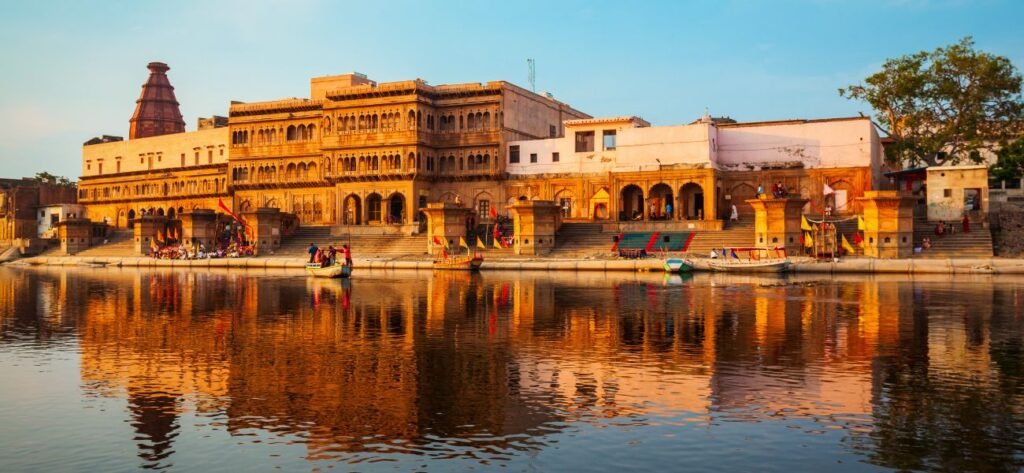
Visit the Sites of Krishna’s Earthly Life with Experience My India
WhatsApp us and receive your complete Braj pilgrimage plan – Krishna Janmabhoomi (birthplace, Mathura), Gokul (early childhood), Vrindavan (youth and divine pastimes), Govardhan (the hill Krishna lifted) and Barsana – all with full contextual explanation from a guide born in Braj.
Braj Packages from ₹1,999 per person · Complete theological context · Born-in-Braj guide
WhatsApp +91-7302265809 – Book Now
Jai Shri Krishna 🙏