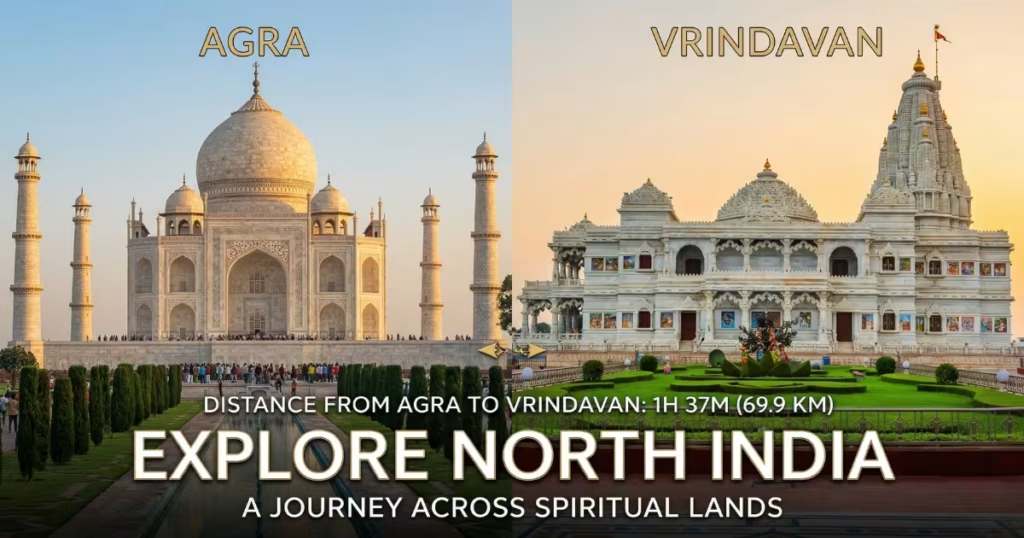
There’s a moment on this route that most people don’t expect. It usually happens somewhere between Agra and Vrindavan. You’ve just seen the Taj Mahal… the marble, the symmetry, the silence that feels almost too perfect. And then, a few hours later, you’re standing in a crowded temple lane in Vrindavan where nothing is symmetrical, nothing is quiet, and yet… it feels just as complete.
That contrast stays with you.
When people plan a Mathura Agra Vrindavan Tour, they often think it’s just about covering three destinations in one go. But once you’re actually on the journey, it starts feeling less like a checklist and more like a shift—from structure to devotion, from stillness to movement.
Why This Route Feels More Than Just a Travel Plan
On paper, it looks simple—Delhi to Agra, then Mathura, then Vrindavan.
But the experience doesn’t move in straight lines.
- Agra feels planned, almost controlled
- Mathura feels intense and rooted
- Vrindavan feels unstructured but deeply alive
And because of this, timing becomes everything.
Most travellers underestimate how different each place feels. They try to follow one fixed schedule, but the reality is… each stop demands a different pace.
That’s where a properly designed Mathura Agra Vrindavan Tour makes a difference. Not by adding more places, but by adjusting how you move through them.
Mathura Agra Vrindavan Tour Package Itinerary – What Actually Works
You’ll find many versions of a Mathura Agra Vrindavan tour package itinerary, but most of them are too tight.
Here’s a flow that actually works on the ground.
Day 1 – Delhi to Agra (Taj Mahal Experience)
- Early morning departure from Delhi
- Reach Agra within 3–4 hours
Now here’s something people often don’t notice.
The Taj Mahal changes depending on the time you visit.
- Morning feels softer, less crowded
- Midday becomes harsh, both in light and crowd
- Evening feels calmer again
So planning your entry time matters more than the visit itself.
- Visit Taj Mahal
- Explore Agra Fort if time allows
- Overnight stay in Agra
That first day feels structured, almost predictable. And that’s not a bad thing.

Day 2 – Agra to Mathura to Vrindavan
This is where the trip slowly shifts.
- Drive from Agra to Mathura (approx. 1.5 hours)
- Visit Krishna Janmabhoomi Temple
The energy here is different. More intense. Less tourist-like.
- Visit Dwarkadhish Temple
- Continue towards Vrindavan
Now, as you enter Vrindavan, the pace changes again.
- Visit Banke Bihari Temple
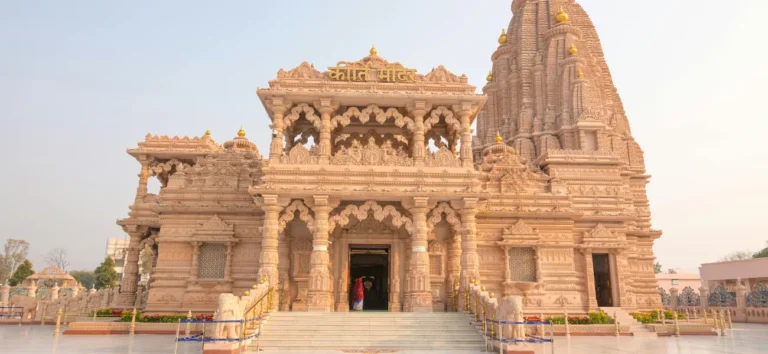
- Evening aarti at Prem Mandir
And honestly, that evening aarti… it’s not something you plan to feel. It just happens.
Agra Mathura Vrindavan Trip from Delhi – Small Things That Change Everything
Most people booking an Agra Mathura Vrindavan trip from Delhi focus on distance and time.
But here’s what actually affects your experience:
- Departure timing from Delhi
- Entry slot at Taj Mahal
- Temple darshan windows
- Traffic near Vrindavan lanes
For example:
If you reach Vrindavan during peak evening rush without planning, you’ll spend more time stuck in lanes than inside temples.
On the other hand, if timing is managed well, everything flows naturally.
This is where experience matters more than itinerary
Mathura Vrindavan Agra Temple and Taj Mahal Tour – The Emotional Shift
Calling it a Mathura Vrindavan Agra temple and Taj Mahal tour sounds complete, but the experience goes deeper than names.
In Agra, you observe.
- You look at details
- You take photos
- You walk slowly around history
But in Vrindavan, you don’t observe.
- You move with the crowd
- You listen to chants without trying
- You stop thinking about “what next”
There’s a point where your role changes from traveller to participant.
And most people don’t even realise when that shift happens.
Where People Usually Miscalculate This Journey
This is something I’ve noticed repeatedly.
People try to treat all three destinations equally.
But they’re not.
- Agra requires planning
- Mathura requires patience
- Vrindavan requires surrender
If you rush Vrindavan like a sightseeing spot, it feels chaotic.
If you slow down, even slightly, it starts making sense.
Temple Darshan – Timing Matters More Than Effort
Many travellers assume that spending more time in line means better darshan.
But that’s not always true.
- Banke Bihari Temple has short darshan intervals
- Krishna Janmabhoomi has security checks that affect flow
- Prem Mandir is best experienced during evening light
So instead of effort, timing becomes the key.
A well-planned Mathura Agra Vrindavan Tour doesn’t reduce effort—it redirects it.
Local Guide Tip:
If you are visiting Banke Bihari Temple, try entering just before the closing window rather than peak opening hours. The crowd reduces slightly, and darshan feels less rushed.
The Role of a Local Guide – More Than Just Information
Most people think guides are for explaining history.
But on this route, a guide quietly handles things you don’t even notice.
- Adjusting temple sequence based on crowd
- Suggesting alternate entry points
- Managing time gaps between darshan
Without a guide, you’ll still visit everything.
But with a guide, the experience feels smoother… almost like things are happening at the right time without effort.
What Makes This Tour Stay With You
It’s not the Taj Mahal photos.
It’s not even the number of temples you visit.
And It’s usually something small.
- A quiet moment inside a noisy temple
- A sudden pause while walking through Vrindavan lanes
- The shift from structured sightseeing to unplanned stillness
These are the moments people remember later.
Not immediately. But after a few days.
Planning Support Partner
Many travellers struggle to balance timing between Taj Mahal entry, temple darshan windows, and road travel delays. That’s where Mathura Vrindavan Tourism supports in a practical way—by adjusting routes based on real-time conditions, helping manage darshan without unnecessary waiting, and keeping the journey flexible instead of rigid. It’s less about adding services and more about removing confusion that usually happens during such multi-destination trips.
Contact Mathura Vrindavan Tourism Today:
Call Us: +91 7300620809
WhatsApp Us: +91 7300620809
Visit Our Website: Mathura Vrindavan Tourism
Email: mathuravrindavantourism.com@gmail.com
Mathura Vrindavan Tourism is a Unit of Experience My India
Experience My India Trip Advisor Review
How to Reach Mathura Agra Vrindavan Tour
🚗 By Car
- Delhi to Agra: Approx. 230 km via Yamuna Expressway
- Agra to Mathura: Around 60 km
- Mathura to Vrindavan: 12–15 km
- Early morning departure helps avoid traffic
- Parking near temples can be limited during peak days
🚆 By Train
- Nearest major station: Mathura Junction
- Agra and Mathura both well-connected by rail
- From Mathura, local taxis or autos available
- Vrindavan accessible within 30 minutes
✈️ By Air
- Nearest airport: Delhi (IGI Airport)
- Agra airport has limited connectivity
- Road journey required after landing
- Private transfer is usually more convenient
FAQs – Mathura Agra Vrindavan Tour
A typical Mathura Agra Vrindavan Tour includes transport from Delhi, hotel stay, Taj Mahal visit, temple darshan in Mathura and Vrindavan, and basic assistance for smooth travel between all locations.
Most travellers prefer a 2-day trip. A well-planned Mathura Agra Vrindavan tour package itinerary helps cover Agra, Mathura, and Vrindavan comfortably without feeling rushed.
Early morning is usually the best time because the crowd is lighter and the weather is more comfortable. Midday visits can feel crowded and tiring.
It is possible, but it often feels rushed. Spending at least one full day allows better temple darshan and a more relaxed experience.
Agra is around 60 km from Mathura and about 75 km from Vrindavan. Travel time usually ranges between 1.5 to 2 hours depending on traffic.
Yes, many travellers choose an Agra Mathura Vrindavan trip from Delhi because all three destinations are well connected by road and can be covered in a short duration.
Timings are fixed but may vary slightly depending on the day and crowd. Some temples also close between darshan sessions, so timing matters a lot.
A guide is not compulsory, but it helps in managing time, understanding temple flow, and avoiding unnecessary waiting during darshan.
Yes, it is suitable for families, including elderly members. However, planning proper rest and avoiding peak crowd hours makes the experience more comfortable.
Wear modest clothes, follow temple rules, and try to visit during less crowded hours. Small timing adjustments can make darshan much smoother.
Conclusion
Some journeys don’t feel complete even after covering everything.
And some… feel complete without you realising why.
This one sits somewhere in between.
You start with a plan—see Taj Mahal, visit temples, and return home. But somewhere along the way, the plan becomes less important.
Maybe it’s the contrast. Maybe it’s the pace. Or maybe it’s just how different places make you feel without explaining anything.
And even after you return, a small part of that feeling stays… quietly, without asking for attention.