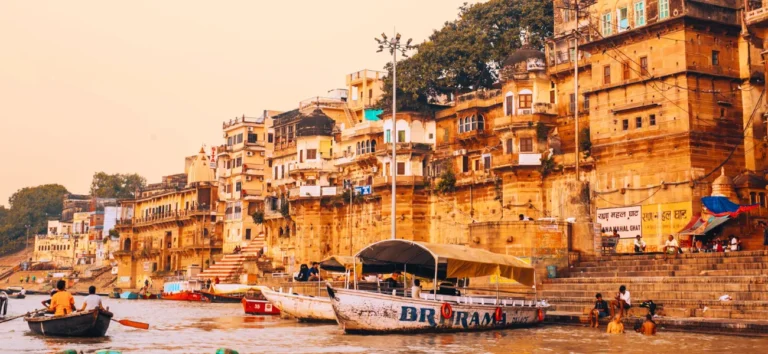
We begin the day quietly, with a short drive from Mathura to Gokul. The distance is small, but the shift is immediate. Noise drops, movement slows, and the place asks you to walk instead of rush. Gokul is not about grand moments. It’s about staying longer than planned at Nand Bhawan, standing without hurry near the Yamuna at Thakurani Ghat, and noticing how locals move through temples as part of daily life, not ritual performance. Raman Reti feels open and unguarded. 84 Khamba almost disappears if you’re not paying attention. By the time you reach Brahmand Ghat or Chintaharan Mahadev, the day has already softened you. Gokul does that. It doesn’t demand belief. It just creates space.
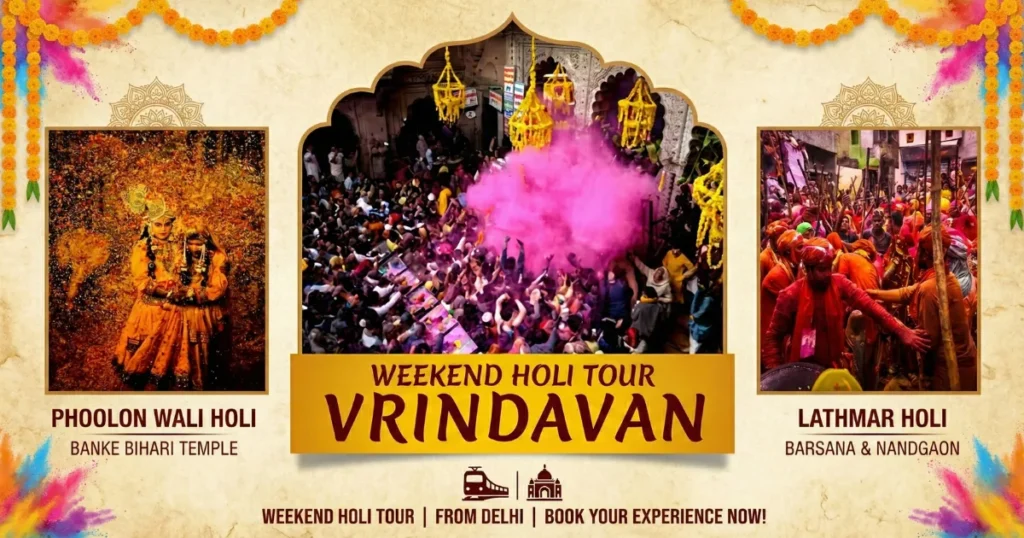
Later, the road takes us toward Vrindavan, and the pace shifts again. Crowds return, lanes narrow, and movement becomes local and practical. E-rickshaws, short walks, waiting without complaint. At Banke Bihari, you don’t plan darshan. You accept it. Nidhivan lowers voices on its own. Madan Mohan feels steady and old, while ISKCON brings structure back into the day. By evening, Prem Mandir lights up, and people sit quietly, watching without needing commentary. When we finally drive back to Mathura, nothing feels unfinished. You’ve covered many places, yes, but more than that, you’ve moved through them at a pace that lets them stay with you.