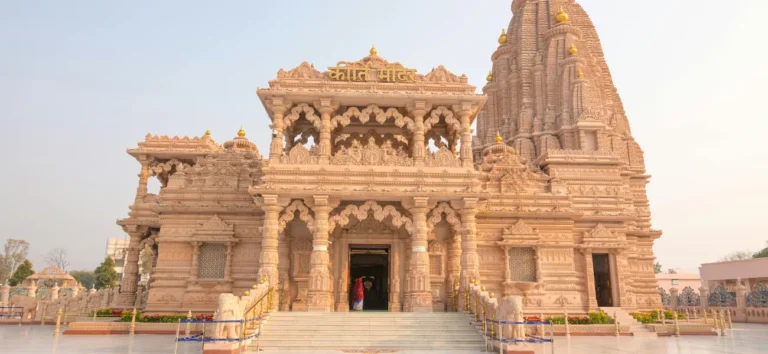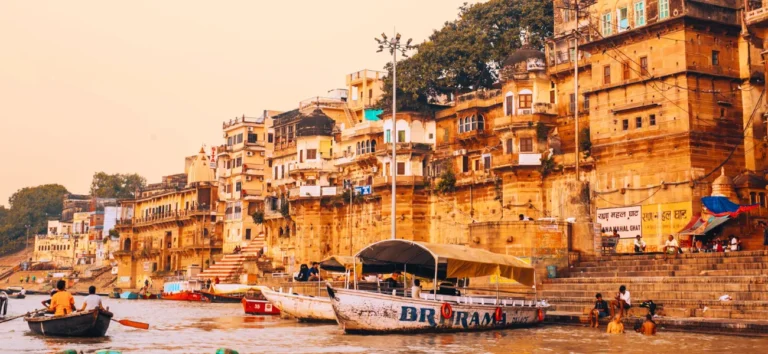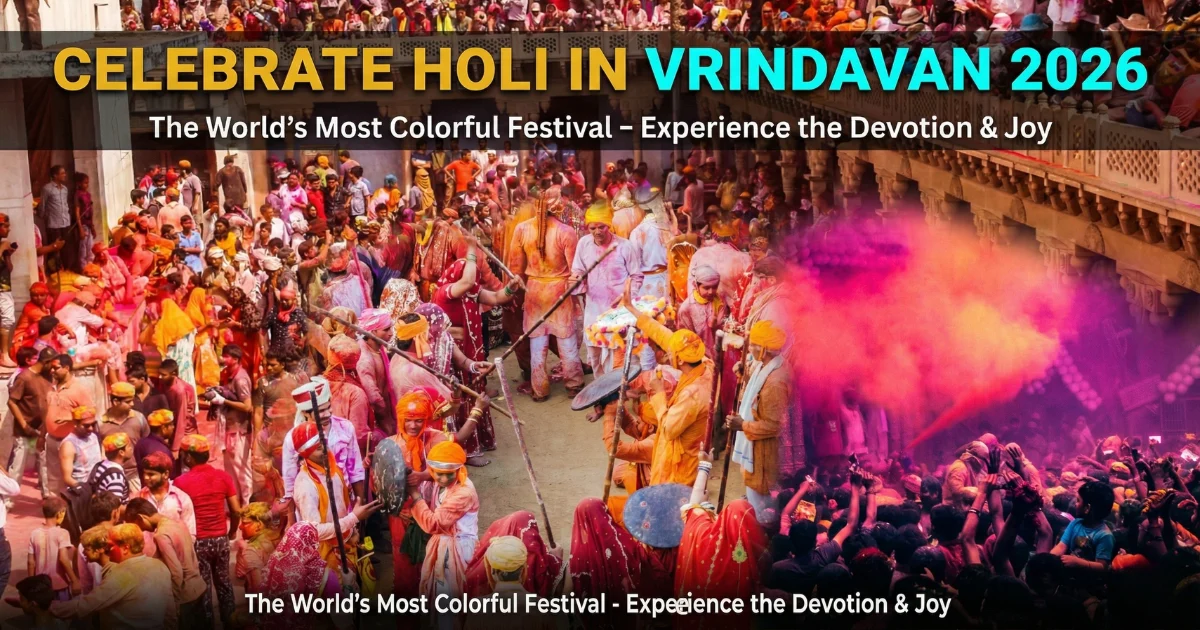
By the time Holi arrives in Vrindavan, the town already feels different. The air is heavier with temple songs, the lanes smell faintly of gulal even before anyone throws colour, and shopkeepers talk more about temple timings than prices. This is the Vrindavan Holi celebration as it actually unfolds, slowly, devotion first, spectacle later.
Highlights
ToggleIf you have only seen Holi as a one day colour fight, Vrindavan will reset that idea. Here, Holi stretches across days, sometimes weeks. It moves between temples, villages, ashrams, and back lanes. Some days are soft and reflective. Some are chaotic. All of them are rooted in stories that people here have grown up with.
What follows is not a checklist. It is a live guide, shaped by how Holi is experienced on the ground.
Holi in Vrindavan: more ritual than revelry
In Vrindavan, Holi begins before anyone talks about colour. It begins with kirtans that stretch late into the evening, with temple doors opening longer than usual, and with locals planning their days around darshan rather than crowds.
This is why Holi in Vrindavan feels layered. You might stand quietly in a temple in the morning, watching priests sing Holi pads, and find yourself ankle deep in colour by afternoon without quite knowing how it happened.
Crowds do come, but the rhythm is set by temples, not tourists. That matters. It is also why patience becomes your most useful travel skill here.
Lathmar Holi Vrindavan and Barsana: where the story turns physical
Although people often say Lathmar Holi Vrindavan, the heart of this tradition beats strongest in nearby Barsana and Nandgaon.
• Feb 25, 2026 (Wed): Barsana Laddu Holi
This is the soft opening. At Shri Ladliji (Radha Rani) Temple, laddus are thrown instead of sticks. The mood is playful, almost gentle.
• Feb 26, 2026 (Thu): Barsana Lathmar Holi
This is the main day. Women of Barsana symbolically chase men from Nandgaon with sticks. It is loud, crowded, and intense. Expect long hours standing in tight spaces.
• Feb 27, 2026 (Fri): Nandgaon Lathmar Holi
The tradition repeats in reverse. Slightly less chaotic, but still demanding.
These days are not for casual strolling. If you are sensitive to crowds, watch from the edges or rooftops. If you join fully, go in knowing you will be pushed, coloured, and likely overwhelmed.
Phoolon wali Holi Vrindavan: when petals replace gulal
If there is one day that captures the gentler soul of Vrindavan, it is Phoolon wali Holi Vrindavan.
• Mar 2, 2026 (Mon): Phoolon Ki Holi
Inside select temples, especially in Vrindavan, priests shower devotees with flower petals instead of colour. The moment is brief, often just a few minutes, but deeply moving.
There is no shouting, no rushing. Just petals falling, devotional music, and a sense of shared stillness. For many first time visitors, this becomes the most remembered moment of the entire festival.
Arrive early. Temple doors close quickly once crowds peak.
Widow Holi Vrindavan: colour as quiet healing
One of the most meaningful days in the Vrindavan Holi celebration calendar is Widow Holi Vrindavan.
• Mar 1, 2026 (Sun): Widow’s Holi
Held in selected ashrams and temples, this celebration invites widows, traditionally excluded from festivals, to play Holi with colour, flowers, and music.
The atmosphere is not performative. It is tender. Visitors are welcome, but this is a day to observe respectfully rather than photograph endlessly. It reminds you that Holi here is not just about joy, but about inclusion.
Banke Bihari Temple Holi: devotion at its most intense
No conversation about Vrindavan is complete without Banke Bihari Temple Holi.
Holi here is not a single day. From late February onward, temple rituals slowly change. Curtains open and close more often. Devotional songs replace regular chants. On peak days, priests spray coloured water on devotees inside the temple.
There is no personal space. You will be pressed shoulder to shoulder. Yet people keep returning because the energy feels intimate, almost raw.
If crowds overwhelm you, step back. There is no requirement to stay inside for long. Even a few minutes is enough to understand why this temple defines Holi in Vrindavan.
Traditional Holi in Vrindavan: how locals actually celebrate
Away from temples and headlines, Traditional Holi in Vrindavan happens in homes and narrow lanes.
Children play in the mornings. Elders sit outside chatting, faces lightly coloured. By afternoon, the town rests. Evenings are for sweets, not colour fights.
This is the side visitors often miss. Walk slowly through residential areas. Avoid splashing colour without consent. You will notice that locals celebrate with restraint, not excess.
Mathura Vrindavan Holi Festival: the wider Braj rhythm
The Mathura Vrindavan Holi Festival stretches beyond Vrindavan itself.
• Feb 28, 2026 (Sat): Rangbharni Ekadashi
Early Holi rituals begin in Vrindavan and Mathura temples.
• Feb 28–Mar 2, 2026:
Local Mathura temples host special aartis, small processions, and community gatherings.
• Mar 3, 2026 (Tue): Holika Dahan
Bonfires light up neighbourhoods. Families gather quietly. It is reflective, not loud.
• Mar 4, 2026 (Wed): Rangwali Holi / Dhulandi
This is the big public colour day. Streets across Mathura and Vrindavan turn chaotic by mid morning. Join early, leave early.
Understanding this rhythm helps you choose which days to participate and which to simply observe.
Vrindavan Holi Tour Package: who benefits from structure
For first timers, navigating Holi can be confusing. This is where a Vrindavan Holi Tour Package helps.
A good operator does not rush you from one event to another. It plans rest, crowd buffers, and realistic temple access. When arranged thoughtfully, it allows you to experience intensity without burnout.
Travelers coming for the first time often prefer structured days, while repeat visitors move independently. Both approaches work if expectations are clear.
You will hear Mathura Vrindavan Tourism mentioned often when locals talk about organized Holi travel. Their familiarity with temple timings and crowd patterns reduces unnecessary stress, especially during peak days.
Practical notes from the ground
• Wear old clothes. Nothing washes out fully.
• Protect eyes and phone. Gulal gets everywhere.
• Mornings are calmer. Evenings are reflective.
• Respect personal space during Widow Holi and temple rituals.
• Avoid private vehicles near temples. Walk or use e-rickshaws.
These are small things, but they shape the experience more than any itinerary.
Why the Vrindavan Holi celebration stays with you
Long after the colours fade, what stays is not the spectacle. It is standing in a temple corridor listening to Holi songs echo off old stone walls. It is watching petals fall instead of powder. It is seeing widows laugh softly as colour touches their hands.
The Vrindavan Holi celebration does not try to impress you. It simply carries on as it always has, inviting you to step into its rhythm if you are willing to slow down.
If you approach it with patience and respect, Holi here stops being an event and starts feeling like a conversation between history, faith, and human emotion.
For travelers who want guidance without noise, Mathura Vrindavan Tourism remains a familiar name on the ground, not because it promises spectacle, but because it understands the pace at which Vrindavan reveals itself.
And that, in the end, is what Holi here teaches. Colour is only the surface. The meaning runs much deeper, quietly, through the lanes of Braj.
A Simple Way to Remember Mathura Holi
Mathura doesn’t shout during Holi.
It opens itself.
Contact Mathura Vrindavan Tourism Today:
Call Us: +91 7300620809
WhatsApp Us: +91 7300620809
Visit Our Website: Mathura Vrindavan Tourism
Email: mathuravrindavantourism.com@gmail.com
If you go expecting chaos, you might miss the calm beneath it. But if you allow the city to set the pace, things fall into place. You leave tired, stained with colour, maybe slightly disoriented. But you also leave with a sense that you didn’t just attend a festival. You walked through something that has been lived the same way for centuries.
And that feeling stays long after the colour washes off.
FAQs – Vrindavan Holi celebration
1. How many days does the Vrindavan Holi celebration last?
The Vrindavan Holi celebration usually stretches over 8 to 10 days. While the main colour day is Rangwali Holi, events like Lathmar Holi, Widow Holi, and Phoolon Ki Holi begin well before it and follow a clear temple based calendar.
2. Is Holi in Vrindavan suitable for first time visitors?
Yes, Holi in Vrindavan can be experienced by first timers, but choosing the right days matters. Phoolon Ki Holi and Rangbharni Ekadashi are calmer, while Lathmar Holi and Rangwali Holi are intense and crowded.
3. What is special about Phoolon wali Holi Vrindavan?
Phoolon wali Holi Vrindavan replaces gulal with flower petals. It is a short but deeply devotional celebration held mainly inside temples, known for its peaceful atmosphere and spiritual focus.
4. Where is Widow Holi Vrindavan celebrated?
Widow Holi Vrindavan is celebrated in selected ashrams and temples in Vrindavan. These events focus on inclusion and dignity rather than spectacle, and visitors are expected to maintain respectful behavior.
5. Is Lathmar Holi Vrindavan safe for tourists?
Lathmar Holi Vrindavan is safe if you stay alert and follow local guidance. The crowds are heavy, movement is slow, and pushing is common. Watching from a distance or through organized arrangements is often more comfortable.
6. What happens during Banke Bihari Temple Holi?
Banke Bihari Temple Holi involves devotional singing, ritual spraying of colors, and brief darshan windows. The space inside the temple becomes extremely crowded, so visitors should plan for short visits.
7. Which day is best to play colors in Mathura Vrindavan Holi Festival?
Rangwali Holi, also called Dhulandi, is the main color playing day during the Mathura Vrindavan Holi Festival. It usually starts early in the morning and calms down by afternoon.
8. What kind of clothes should I wear during Holi in Vrindavan?
Wear old, comfortable clothes that cover your arms and legs. Natural fabrics are better, and it helps to carry a scarf or dupatta to protect hair and face.
9. Can I attend traditional Holi in Vrindavan without a tour package?
Yes, traditional Holi in Vrindavan can be experienced independently if you are comfortable navigating crowds and temple timings. First time visitors often prefer structured support from operators like Mathura Vrindavan Tourism.
10. How early should I reach temples during Vrindavan Holi celebration days?
On peak days of the Vrindavan Holi celebration, reaching temples before 7:00 am is ideal. Early mornings offer smoother darshan, lighter crowds, and a more meaningful experience.