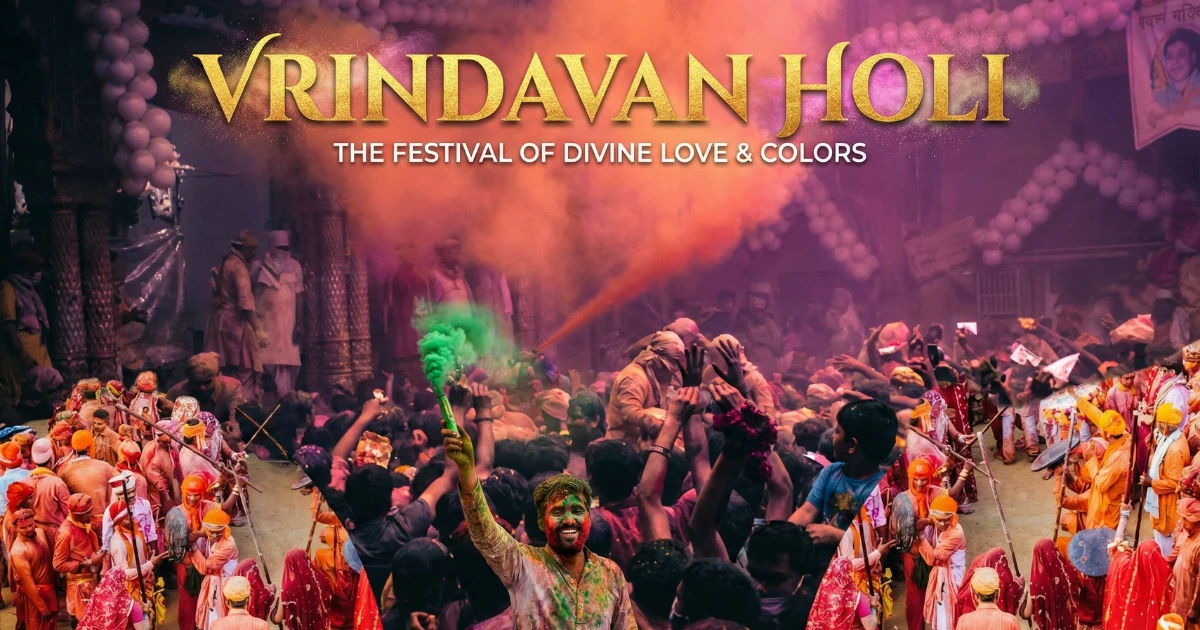
Holi in Vrindavan is not an event you rush into. It arrives slowly, almost quietly, and then stays with you long after the colours fade. By the time the first gulal appears in the temples, you already sense that this is not the kind of Holi most people imagine. Here, in Vrindavan, Holi is less about celebration and more about participation in a living tradition.
Highlights
ToggleThis is Braj Bhoomi. The land where Krishna grew up, where stories are not remembered from books but carried through songs, rituals, and everyday life. A Vrindavan Holi tour is really a journey into that rhythm. It follows temple timings, village customs, and a calendar that has not bent itself to convenience or tourism. That is what makes it feel real.
Why Vrindavan Holi Feels Different from Everywhere Else
If you have seen Holi in big cities, Vrindavan may surprise you. There are crowds here too, but the mood is different. Loud music gives way to bhajans. Chemical colours are replaced by gulal and flowers. Instead of a single explosive day, Holi unfolds over many days, each with its own meaning.
In Vrindavan, Holi is led by temples, not by streets alone. Saints, widows, locals, pilgrims, and travellers stand side by side. Nobody asks where you are from. Everyone is simply part of the moment. Even with thousands of people around, the atmosphere stays devotional.
That is why many visitors who come once return again. Not because it is dramatic, but because it feels honest.
Vrindavan Holi Dates 2026 – Understanding the Flow
One important thing to understand before planning a Vrindavan Holi tour is this: Holi here is not a one-day affair.
In 2026, the main colour day, Rangwali Holi, is expected on 4 March, but the real experience begins much earlier. Ideally, you should plan to be in Braj between 23 February and 4 March 2026.
Some of the key days in Vrindavan include:
- 23 January 2026 ~ Basant Panchami Utsav Banke Bihari Temple (Vrindavan Dham
- 24 February 2026 ~ Phag Invitation (Nandgaon
- 24 February 2026 laddu holi Holi (Barsana Dham)
- 25 February 2026 Lathmar Holi (Barsana Dham)
- 26 February 2026 ~ Lathmar Holi (Nandgaon
- 27 February 2026 ~ phoolon wali holi (Vrindavan) and Mathura Janmabhoom Huranga (Mathura)
- 1 March 2026 Chhadimar Holi (Gokul)
- 4 March 2026 ~ main holi mathura Vrindavan
- 5 March 2026 ~ Dauji Huranga (Baldev)
Each of these days feels different. Missing a few means missing the story Holi is trying to tell here.
What You Actually Experience on a Vrindavan Holi Tour
Phoolon Wali Holi – When Flowers Replace Colour
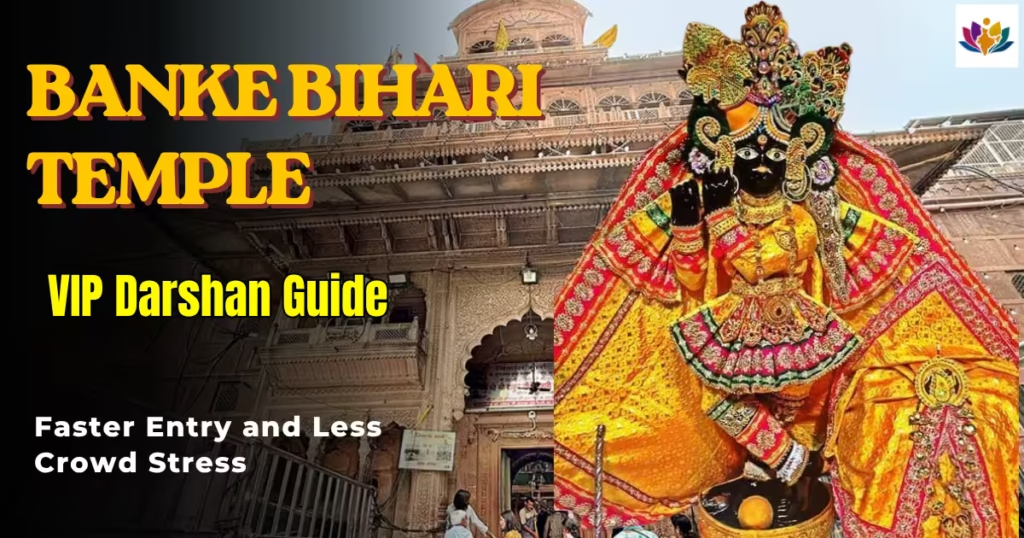
Phoolon Wali Holi is often the moment when visitors truly understand Vrindavan. Inside temples like Banke Bihari Temple, colours step aside and flowers take over. Petals fall gently as kirtans fill the air. There is no rush to throw anything. People look up, smile, and simply stay still for a while.
Families, elderly devotees, and first-time visitors often find this to be the most peaceful Holi experience of their lives.
Widow Holi – A Quiet but Powerful Moment
Widow Holi in Vrindavan is not loud, but it stays with you. Widows, who were once excluded from festivals, now play Holi openly with flowers and colours. There is no performance here, no announcement. Just participation.
For many travellers, this becomes the most emotional day of the entire tour. It reminds you that Vrindavan is not frozen in time. Traditions here breathe, adapt, and heal.
Rangbharni Ekadashi – When Holi Truly Begins
Rangbharni Ekadashi marks the point when Holi officially enters the temples. The deities are offered the first colours. From this day onwards, the mood in Vrindavan changes. Bhajans grow louder, crowds increase, and the anticipation becomes visible.
Being present on this day helps you understand Holi not as a sudden celebration, but as a process.
Dhulandi – The Day the Streets Wake Up
On 4 March 2026, Vrindavan woke up fully to colour. Gulal fills the lanes, water splashes echo through narrow streets, and groups move together singing Holi songs. Even then, the celebration here remains surprisingly grounded, especially in the morning hours.
By afternoon, things begin to slow down. Locals return home. The town exhales.
Safety, Crowds, and Reality on the Ground
Holi in Vrindavan is safe, but it demands awareness.
Crowds near temples can be intense. Morning hours are always calmer than afternoons. Photography inside temples is restricted, and darshan timings can change without notice. Respectful behaviour is not just expected, it is necessary.
Most difficulties visitors face come from poor planning rather than the festival itself.
What to Wear and How to Prepare
Wear old or white cotton clothes. Comfortable walking shoes matter more than people realise. Carry a light scarf or dupatta. Keep valuables to a minimum and protect your phone.
Self-driving during Holi days is best avoided. Vrindavan is best experienced on foot, slowly.
Staying in Vrindavan During Holi
Holi is the peak season. Hotels fill up weeks in advance, especially those close to temples. Traffic restrictions and crowd movement can make even short distances tiring if your stay is poorly located.
This is where planning quietly makes a difference.
A Note on Planning with Local Support
Many travellers choose to plan their Vrindavan Holi tour with local operators who understand Braj rhythms. Mathura Vrindavan Tourism is often approached by visitors who want a calm, well-paced experience rather than a rushed checklist.
The idea is simple. You let someone else handle timings, transport, and logistics, so you can focus on being present.
Closing Thoughts
A Vrindavan Holi tour is not about chasing colour or collecting photographs. It is about standing quietly in a temple courtyard as petals fall. About listening to bhajans without understanding every word, yet feeling them anyway. About realising that Holi here is not something you watch, but something you step into.
If you are planning Holi 2026 and want to experience it in its most grounded, meaningful form, Vrindavan offers exactly that. Not loudly. Not quickly. But honestly.
A Simple Way to Remember Mathura Holi
Mathura doesn’t shout during Holi.
It opens itself.
Contact Mathura Vrindavan Tourism Today:
Call Us: +91 7300620809
WhatsApp Us: +91 7300620809
Visit Our Website: Mathura Vrindavan Tourism
Email: mathuravrindavantourism.com@gmail.com
If you go expecting chaos, you might miss the calm beneath it. But if you allow the city to set the pace, things fall into place. You leave tired, stained with colour, maybe slightly disoriented. But you also leave with a sense that you didn’t just attend a festival. You walked through something that has been lived the same way for centuries.
And that feeling stays long after the colour washes off.
FAQs – Vrindavan Holi Tour 2026
1. Is Vrindavan Holi really different from Holi in other parts of India?
Yes. Holi in Vrindavan is not a one-day colour party. It is a multi-day, temple-led celebration rooted in Krishna’s leelas. Bhajans, flowers, rituals, and community participation take precedence over loud music and commercial colour play.
2. What are the main Holi dates to plan a Vrindavan Holi tour in 2026?
For the full experience, plan your trip between 25 February and 4 March 2026. This period covers Rangbharni Ekadashi, Phoolon Wali Holi, Widow Holi, Holika Dahan, and Dhulandi (main colour day).
3. Which Holi events should I not miss in Vrindavan?
Phoolon Wali Holi at Banke Bihari Temple, Widow Holi, Rangbharni Ekadashi temple rituals, and the morning celebrations on Dhulandi are considered the core Vrindavan Holi experiences.
4. Is Vrindavan Holi safe for first-time visitors and families?
Yes, it is safe if you follow basic precautions. Morning hours are calmer, temple areas are well managed, and respectful behaviour is key. Families and senior travellers usually prefer temple-centred events like Phoolon Wali Holi.
5. What is the best time of day to experience Holi in Vrindavan?
Early morning to late morning, roughly 8 AM to 12 PM, is the best window. Most temple celebrations conclude by noon, and crowds become heavier later in the day.
6. What should I wear during a Vrindavan Holi tour?
Wear old or white cotton clothes, comfortable walking shoes, and carry a light scarf or dupatta. Avoid expensive clothing and accessories. Natural gulal is common, but colours can still stain.
7. Can I take photos or videos during Vrindavan Holi?
Photography is restricted inside major temples, especially during Holi rituals. Outside temple areas, photography is generally allowed, but always follow local instructions and avoid obstructing rituals.
8. Where should I stay during Holi in Vrindavan?
Staying close to temple areas is practical, but hotels fill up quickly during Holi week. Booking accommodation well in advance is strongly advised to avoid long travel times and crowd fatigue.
9. Should I visit Vrindavan Holi independently or through a tour?
Independent travel is possible, but first-time visitors often find organised tours more comfortable. Local planning helps manage timings, crowd movement, transport restrictions, and access to key events.
10. Who should consider booking a Vrindavan Holi tour package?
A guided tour suits families, senior citizens, women travellers, and anyone visiting Braj for the first time. Planning with a local operator like Mathura Vrindavan Tourism allows you to focus on the experience rather than logistics.