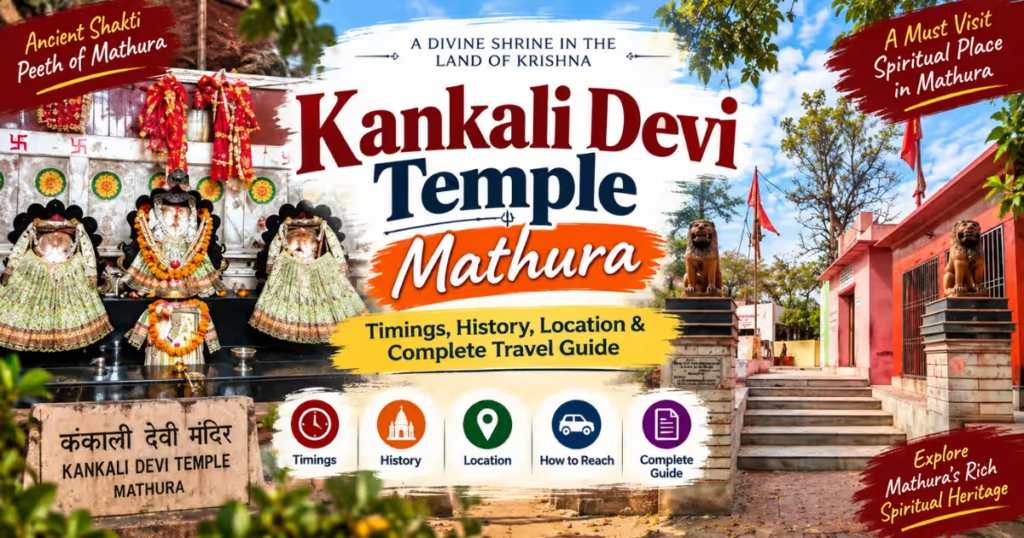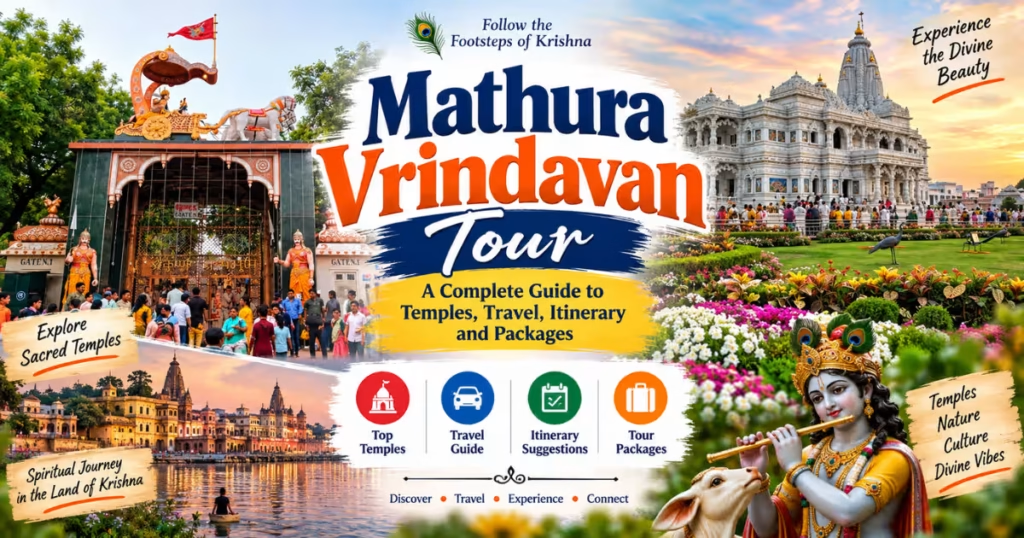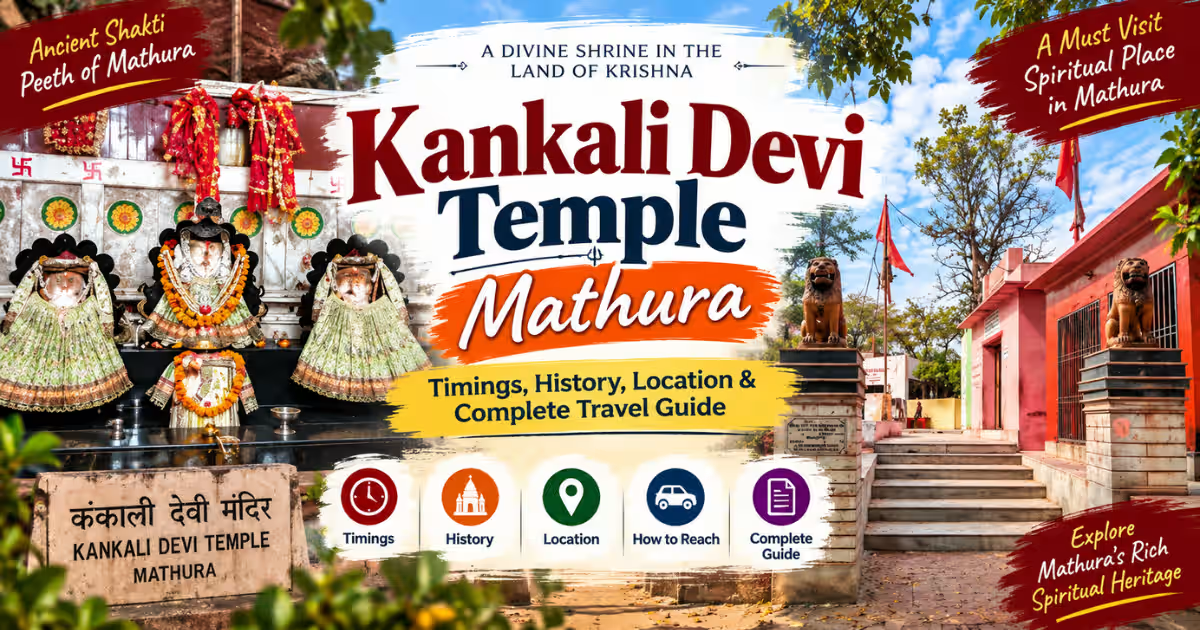
Kankali Devi Temple in Mathura is considered the second most sacred site in Mathura after Krishna Janmabhoomi. Located on Kankali Tila (the ancient sacred mound) near Bhuteshwar Mahadev Temple on Agrasen Nagar Road, Azad Nagar, Mathura – PIN 281001. Open daily 4:00 AM to 9:30 PM. Distance from Mathura Junction: 2 km (8-12 min by auto, ₹50-₹80). The goddess is worshipped as eight-armed Durga (Ashtabhuja). Experience My India includes it in Mathura circuits from ₹1,999. WhatsApp +91-7302265809. See our Mathura Vrindavan tour Package or message WhatsApp +91 7302265809.
Mathura’s Second Most Sacred Site – and One of Its Least Known
Most pilgrims who visit Mathura follow a well-worn circuit: Krishna Janmabhoomi, Dwarkadhish Temple, Vishram Ghat. Very few know that Mathura contains a site considered – by traditional Braj scholarship and the pilgrimage literature – to be the second holiest in the entire city. Kankali Devi Temple stands on Kankali Tila, an ancient sacred mound where the story of Lord Krishna’s birth reaches its culmination through the manifestation of Yogmaya, the divine illusion who took Krishna’s place and declared Kansa’s imminent death.
The site is also one of the most significant archaeological locations in all of Uttar Pradesh – a mound where excavations have revealed Jain and Buddhist relics spanning more than two thousand years, confirming Mathura’s ancient role as a multi-religious centre of art and devotion.
I am Gurudutt, born and raised in Braj Bhoomi and founder of Experience My India. Since 2018, our team has guided over 50,000 pilgrims through the Mathura circuit. Among the top 10 places to visit in Mathura, Kankali Devi Temple is one of the most consistently undervisited – and one of the most theologically layered. This guide covers the complete history, the Yogmaya legend, the three deity forms, the Kankali Tila archaeology and all practical visitor information.
Quick Facts – Kankali Devi Temple Mathura
| Attribute | Details |
| Full name | Kankali Devi Temple (Kankali Devi Mandir) |
| Goddess worshipped | Kankali Devi – form of Goddess Durga / Shakti |
| Form of the deity | Eight-armed (Ashtabhuja) Durga riding a lion |
| Sacred status | Second most sacred site in Mathura after Krishna Janmabhoomi |
| Location | Kankali Tila, Agrasen Nagar Road, near Bhuteshwar Mahadev Temple, Azad Nagar, Mathura, UP |
| PIN code | 281001 |
| Timings | 4:00 AM – 9:30 PM (daily) |
| Entry fee | Free |
| Distance from Mathura Junction | 2 km (8-12 min by auto) |
| Associated legend | Yogmaya’s manifestation on the night of Krishna’s birth |
| Archaeological significance | Kankali Tila – site of rare Jain and Buddhist relics (2,000+ years) |
| Name origin | “Kankali” from “Kansa Kali” – Kansa feared and worshipped her power |
For the complete list of Mathura’s sacred sites with distances and timings, see the top 25 places to visit in Mathura Vrindavan. If you are planning the full Mathura day, the Same Day Mathura Vrindavan Tour from Experience My India includes Kankali Devi Temple when time allows. Call +91-7302265809.
The Legend – Yogmaya, Kansa & the Night of Krishna’s Birth
To understand why Kankali Devi Temple holds such profound significance in Braj tradition, you need to understand the specific event that gave rise to it.
The Night of Krishna’s Birth
On the night of Lord Krishna’s birth in the prison of Mathura, Vasudeva (Krishna’s father) carried the newborn across the flooded Yamuna River to Gokul and placed him safely with Nanda Maharaj and Mata Yashoda. He then brought back the baby girl – Yogmaya, the divine illusion born to Yashoda on the same night – and returned to the prison.
Kansa’s Attempt and Yogmaya’s Declaration
King Kansa – who had imprisoned Vasudeva and Devaki and killed their previous children – learned of the birth and rushed to kill the newborn. When he tried to kill the baby girl by dashing her against a stone, she slipped from his hands, flew into the sky and manifested in her true eight-armed form.
From the sky, she declared: “O Kansa – the one destined to kill you has already been born and is safe. Your death is certain.”
This manifestation – Yogmaya appearing in her true form after Kansa’s attempt to kill her – is the event that Kankali Devi Temple commemorates. The site on Kankali Tila is where tradition holds that this divine event occurred or where the goddess’s power descended to earth in that form.
The Three Forms
According to the Braj tradition preserved in pilgrimage literature, Yogmaya divided herself into three forms at the moment of her manifestation. All three forms are enshrined within the Kankali Devi Temple complex – making the temple not a single-deity shrine but a triune sacred site.
Experience My India explains the full Yogmaya narrative to every group visiting Kankali Devi Temple. The 2 Days Mathura Vrindavan Tour includes a proper visit with contextual explanation. Call +91-7302265809.
The Name “Kankali” – What It Means
The name “Kankali” carries a specific etymological meaning that deepens the significance of the site.
| Term | Meaning | Significance |
| Kansa | The tyrant king of Mathura | The antagonist whose attempted violence provoked the divine manifestation |
| Kali | Fierce form of the goddess; also means “the dark one” | The Shakti who defeated his intention and declared his doom |
| Kansa Kali → Kankali | “The Kali who humbled Kansa” | Even Kansa feared and worshipped this goddess’s power – hence the name |
The derivation “Kansa Kali” → “Kankali” reflects a uniquely Mathura-specific name for the goddess – it is not a pan-India name for Durga but a Braj-specific epithet rooted in the Krishna-birth narrative. This makes Kankali Devi Temple theologically distinct from other Durga temples in North India.
The Three Deity Forms
Inside the Kankali Devi Temple, three distinct forms of the goddess are enshrined – corresponding to the three manifestations of Yogmaya after her declaration in the sky. The primary form worshipped is:
Ashtabhuja Durga – Eight-armed Durga seated on a lion. Each of the eight arms holds a specific divine weapon or emblem associated with Durga’s role as the destroyer of demonic forces.
The eight arms and the lion vehicle are the iconographic signature of Mahishasura Mardini (Durga who slew Mahishasura) – connecting Kankali Devi’s Mathura manifestation to the wider pan-India tradition of Shakti worship while retaining its specific Braj-Krishna narrative origin.
For pilgrims who want to understand the Shakti tradition within the Mathura-Braj circuit, Experience My India provides context during every guided Mathura visit. The 3 Days Mathura Vrindavan Tour includes a Kankali Devi Temple stop on the Mathura old-city day. WhatsApp +91-7302265809.
Kankali Tila – The Archaeological Marvel
Kankali Tila (the mound on which the temple stands) is not only a sacred site – it is one of the most archaeologically significant locations in all of Uttar Pradesh.
What Excavations Have Found
Archaeological excavations of Kankali Tila – conducted by multiple teams including the Archaeological Survey of India – have revealed artefacts spanning over two thousand years:
| Period | Finds |
| Mauryan period (3rd century BCE) | Terracotta figurines, early stone sculptures |
| Shunga period (2nd-1st century BCE) | Jain Tirthankara figures; narrative relief panels |
| Kushan period (1st-3rd century CE) | Buddhist sculptures; Jain reliefs; the most significant discoveries |
| Gupta period (4th-6th century CE) | Later Jain and Hindu images |
The Kushan-period Jain sculptures from Kankali Tila are among the finest in the world and are displayed in the Government Museum Mathura – which holds the world’s largest Mathura School of Art collection. A visit to Kankali Devi Temple and the Government Museum together gives the most complete picture of what Kankali Tila means to Indian history.
Why This Makes the Site Unique
Most Mathura pilgrimage sites are significant within the Vaishnav-Krishna tradition. Kankali Tila is significant across three traditions simultaneously: Jain, Buddhist and Hindu. The mound’s stratigraphic layers document Mathura’s evolution from an ancient Jain pilgrimage city, through its Buddhist phase, to its current centrality in the Krishna-Vaishnav tradition. Experience My India explains this layered history to every group visiting the site. The 5 Days Mathura Vrindavan Tour gives enough time to visit both Kankali Devi Temple and the Government Museum in proper sequence. Call +91-7302265809.
Timings & Visitor Information
| Detail | Information |
| Open days | Daily – 7 days a week, 365 days a year |
| Timings | 4:00 AM – 9:30 PM |
| Afternoon period | Brief midday rest period possible (confirm locally on arrival) |
| Entry fee | Free |
| Best visiting window | Morning (6-10 AM) or evening (5-8 PM) |
| Dress code | Modest – covered shoulders and legs |
| Footwear | Remove before entering the temple compound |
| Prasadam | Available inside the temple; offered at the shrine |
Important timing note: Unlike most Mathura temples which formally close from 11 AM to 3-4 PM, Kankali Devi Temple is listed as open 4 AM to 9:30 PM. A brief midday rest may apply – confirm with the temple priest on arrival if visiting between 12-3 PM.
For all current Mathura and Vrindavan temple timings consolidated in one place, see the Mathura Vrindavan temple timings guide. The 4 Days Agra Mathura Vrindavan Tour includes Kankali Devi Temple on the Mathura city day in the morning circuit. WhatsApp +91-7302265809.
Location, Address & How to Reach
Full address: Kankali Devi Temple, Agrasen Nagar Road, near Bhuteshwar Mahadev Temple, Azad Nagar, Mathura, Uttar Pradesh – PIN 281001
Distance from Key Points
| Starting Point | Distance | Travel Time | Mode & Cost |
| Mathura Junction (railway station) | 2 km | 8-12 min | Auto ₹50-₹80; e-rickshaw ₹30-₹50 |
| Krishna Janmabhoomi | 1.5-2 km | 8-12 min | Auto ₹50-₹80 |
| Vishram Ghat / Dwarkadhish Temple | 2-3 km | 10-15 min | Auto ₹60-₹100 |
| Bhuteshwar Mahadev Temple | Adjacent | 2-5 min walk | Walking |
| Vrindavan | 15 km | 25-35 min | Cab |
| Delhi | 160 km | 2.5-3.5 hrs | Via NH 44 or Yamuna Expressway |
Navigation: From Mathura Junction or the old city temple area, any auto-rickshaw or e-rickshaw driver knows “Kankali Devi Temple” or “Kankali Tila” – no complex directions needed.
For NCR-based pilgrims, the Noida to Vrindavan distance guide covers the Yamuna Expressway route that connects directly to Mathura. From Delhi, see the Delhi to Govardhan distance guide for the NH 44 approach – Mathura is on this route. Experience My India arranges Mathura Junction pickup for all Kankali Devi Temple visits. The 3 Days Agra Mathura Vrindavan Tour includes Kankali Devi Temple in the Mathura Day 2 morning circuit. Call +91-7302265809.
Festival Celebrations at Kankali Devi Temple
Kankali Devi Temple sees its highest pilgrimage activity during the twice-yearly Navratri festivals – the nine-night worship of the goddess Durga.
| Festival | Dates (2026) | Significance at Kankali Devi |
| Chaitra Navratri | March 30 – April 7, 2026 | Spring Navratri; heavy pilgrimage |
| Shardiya Navratri | October 2-10, 2026 | Autumn Navratri; the most significant; coincides with Dussehra |
| Ashtami (Day 8) | During each Navratri | The most auspicious single day; Kanya Pujan; largest crowds |
Navratri practical advice: During Navratri, Kankali Devi Temple draws extremely large crowds – particularly on Ashtami (the 8th day). Arrive before 7 AM for darshan; after 9 AM, queues extend significantly. Experience My India can advise on Navratri timing for every visit. WhatsApp +91-7302265809.
Beyond Navratri, the temple celebrates significant activity on:
- Janmashtami – the night of Krishna’s birth, whose narrative the temple directly commemorates
- Dussehra – symbolising the defeat of demonic forces (Kansa’s downfall connects to this tradition)
- Fridays – Fridays are traditionally significant for Devi worship across North India
Places to Visit Near Kankali Devi Temple
Kankali Devi Temple’s location near Bhuteshwar Mahadev Temple and 2 km from the main Mathura old-city circuit makes it a natural addition to the Mathura day.
| Site | Distance from Kankali Devi | Travel Time | Significance |
| Bhuteshwar Mahadev Temple | Adjacent (50-100 m) | 2 min walk | One of Mathura’s important Shiva temples |
| Krishna Janmabhoomi | 1.5-2 km | 8-12 min | Lord Krishna’s birthplace – first stop on any Mathura circuit |
| Dwarkadhish Temple | 2-3 km | 10-15 min | Major Mathura Vaishnav temple; built 1814 |
| Vishram Ghat | 2-3 km | 10-15 min | Primary Yamuna ghat; Aarti 7 PM |
| Government Museum Mathura | 3-4 km | 12-18 min | Houses Kankali Tila’s own Jain sculptures |
| Gayatri Tapobhumi | 2-3 km toward Vrindavan | 10-15 min | Open 5:30 AM-9 PM; no midday closure |
The combination of Kankali Devi Temple + Bhuteshwar Mahadev + Government Museum gives the most complete picture of Kankali Tila’s significance – the temple shows the living devotional tradition, the museum shows the archaeological heritage of the same site. The Gayatri Tapobhumi guide covers another lesser-visited Mathura sacred site that pairs well. Experience My India sequences all these in the 3 Days Mathura Vrindavan Tour from Bangalore and the 3 Days Mathura Vrindavan Tour from Ahmedabad. Call +91-7302265809.
Best Time to Visit Kankali Devi Temple Mathura
| Season | Weather | Crowd | Verdict |
| October – March | 8°C – 28°C | Moderate | ✅ Best – comfortable for temple + outdoor circuit |
| Shardiya Navratri (Oct 2-10, 2026) | 18°C – 30°C | Very High | ✅ Most sacred – arrive before 7 AM for manageable queue |
| Chaitra Navratri (March-April) | 20°C – 35°C | High | ✅ Second major festival period |
| Janmashtami (August 2026) | 27°C – 35°C | Very High in Mathura | ✅ Theologically connected to the temple’s own legend |
| Summer (April-June) | 35°C – 46°C | Low | ⚠️ Visit before 9 AM or after 5 PM only |
| Monsoon (July-September) | 27°C – 35°C | Low | ⚠️ Temple fine; Kankali Tila mound can be muddy |
October to March is the ideal window. Experience My India plans Kankali Devi visits during Navratri with specific morning timing advice. The 5 Days Mathura Vrindavan Tour from Jaipur includes Kankali Devi Temple in the Mathura Day 2 circuit. WhatsApp +91-7302265809.
Ground Truth – What Nobody Tells You About Kankali Devi Temple
After guiding 50,000+ pilgrims through Mathura since 2018, here is what Experience My India knows about Kankali Devi Temple that most guides skip:
Most Mathura pilgrims have never heard of Kankali Devi Temple despite it being called Mathura’s second holiest site. The standard tourist circuit – Janmabhoomi, Dwarkadhish, Vishram Ghat – completely bypasses it. The reason is purely commercial: the approach lane is narrow, there is no established tourism infrastructure around it and no auto-rickshaw touts direct pilgrims there. Yet the theological significance within the Krishna birth narrative is direct and unambiguous. Experience My India specifically includes it for pilgrims who want the complete Mathura story.
The Government Museum Mathura houses the very sculptures excavated from Kankali Tila. Pilgrims who visit Kankali Devi Temple without visiting the Government Museum afterward are seeing the living devotional site without the archaeological evidence of what made this mound globally significant. The museum’s Jain sculpture collection contains pieces from this exact mound. The two sites are 3-4 km apart – easily combined.
The Bhuteshwar Mahadev Temple is adjacent to Kankali Devi – most visitors who come specifically for Kankali Devi miss it. Bhuteshwar Mahadev is one of the eight primary Mahadeva (Shiva) temples of Mathura, each considered a guardian of the city. It is 50-100 metres from Kankali Devi. Experience My India always includes both in a 45-minute combined visit.
“Kankali” is not a common name for Durga – it is specifically a Mathura-local name rooted in the Kansa narrative. Pilgrims who search online for “Kankali Devi” before visiting sometimes conflate it with other Kankali temples elsewhere in India. The Mathura Kankali Devi is specifically connected to the Yogmaya manifestation on the night of Krishna’s birth – theologically distinct from other Durga manifestations.
Know Before You Visit – Kankali Devi Temple Mathura
- Timings: 4:00 AM – 9:30 PM daily; brief midday rest possible – confirm on arrival
- Entry: Completely free
- Address: Agrasen Nagar Road, near Bhuteshwar Mahadev Temple, Azad Nagar, Mathura, UP – PIN 281001
- Distance from Mathura Junction: 2 km (auto ₹50-₹80, 8-12 min)
- Parking: Limited near the mound – auto-rickshaw or e-rickshaw from Mathura Junction recommended
- Navratri visits: Arrive before 7 AM on Ashtami – queues grow significantly after 9 AM
- Dress code: Modest – covered shoulders and legs; remove footwear at temple entrance
- Combine with: Bhuteshwar Mahadev (adjacent) + Government Museum (3-4 km) for the complete Kankali Tila experience
- Not on standard tourist circuits – specifically request it when booking any Mathura guided tour
- Experience My India includes Kankali Devi Temple on request in all Mathura circuits. WhatsApp +91-7302265809.
Frequently Asked Questions
Kankali Tila in Mathura is famous for two distinct reasons. Spiritually, it is the site of the Kankali Devi Temple – considered Mathura’s second holiest site after Krishna Janmabhoomi – associated with Yogmaya’s manifestation on the night of Krishna’s birth. Archaeologically, it is one of the most important excavation sites in Uttar Pradesh, where rare Jain and Buddhist sculptures spanning over 2,000 years were found. Many of these sculptures are now in the Government Museum Mathura. Experience My India explains both layers of significance during guided visits. Call +91-7302265809.
Yes – Kankali Devi Mandir is located in Mathura on Kankali Tila, Agrasen Nagar Road, near Bhuteshwar Mahadev Temple, Azad Nagar, Mathura, UP (PIN 281001). It is considered the second most sacred site in Mathura after Krishna Janmabhoomi. The temple is open daily from 4:00 AM to 9:30 PM with free entry. It is approximately 2 km from Mathura Junction Railway Station – an 8-12 minute auto-rickshaw ride (₹50-₹80). Experience My India includes it in Mathura guided tours. WhatsApp +91-7302265809.
The precise founding date of the current Kankali Devi Temple structure is not definitively documented in modern records. The site – Kankali Tila – is referenced in ancient Braj pilgrimage literature as the location of Yogmaya’s manifestation, connecting it to the Krishna-birth narrative which is at least 5,000 years old in tradition. The archaeological mound itself has been occupied continuously since at least the 3rd century BCE (Mauryan period). The temple in its current form is considered ancient by Mathura standards. Experience My India provides full historical context during every visit. Call +91-7302265809.
The top 5 temples in Mathura are Krishna Janmabhoomi (the birthplace – most sacred); Dwarkadhish Temple (built 1814, Rajasthani architecture, black marble idol); Kankali Devi Temple (second holiest in Mathura – Yogmaya’s manifestation site); Gita Mandir / Birla Mandir (Bhagavad Gita inscribed on red sandstone pillars); and Vishram Ghat temple complex (Yamuna bank; evening Aarti 7 PM). Beyond these, the outer Mathura circuit includes Govardhan Hill (23 km) and Kusum Sarovar. Experience My India covers all five in the 2-day and 3-day Mathura packages. WhatsApp +91-7302265809.
Kankali Devi Temple commemorates the divine event on the night of Lord Krishna’s birth when King Kansa tried to kill the infant Yogmaya (the divine illusion who had taken Krishna’s place). Yogmaya slipped from Kansa’s hands, flew into the sky, manifested in her true eight-armed form and declared Kansa’s imminent death at Krishna’s hands. She is said to have divided into three forms – all enshrined in this temple. The name “Kankali” comes from “Kansa Kali” – even Kansa feared and worshipped her power. Experience My India explains the full narrative at the site. Call +91-7302265809.
Kankali Devi Temple is approximately 2 km from Mathura Junction Railway Station – an 8-12 minute journey by auto-rickshaw (₹50-₹80) or e-rickshaw (₹30-₹50). From the station, ask the driver for “Kankali Devi Temple” or “Kankali Tila, Azad Nagar” – all local drivers know the location. It is near Bhuteshwar Mahadev Temple on Agrasen Nagar Road. Experience My India arranges Mathura Junction pickup for all pilgrims visiting Kankali Devi Temple as part of the Mathura circuit. WhatsApp +91-7302265809.
Kankali Devi Temple has extended timings – open from 4:00 AM to 9:30 PM daily. This means it is accessible both very early in the morning (for 4 AM aarti attendees) and in the evening up to 9:30 PM. Most other Mathura temples close by 8-8:30 PM in the evening. Kankali Devi’s 9:30 PM closing time makes it one of the later-closing temples in Mathura, accessible for pilgrims who arrive in the city late afternoon or evening. Experience My India plans visits around this flexibility. Call +91-7302265809.
Yes – Kankali Devi Temple is 2 km from Mathura Junction and 1.5-3 km from the main Mathura old-city sites (Janmabhoomi, Dwarkadhish, Vishram Ghat). A recommended sequence: Kankali Devi Temple (morning, 7-8 AM) → Bhuteshwar Mahadev (adjacent, 5 min) → Janmabhoomi (8:30-10 AM, 2 km) → Dwarkadhish Temple → Vishram Ghat evening Aarti (7 PM). The Government Museum Mathura (3-4 km from Kankali Devi) can be added on Tuesday-Saturday (closed Sunday and Monday). Experience My India builds this exact sequence for every Mathura day tour. WhatsApp +91-7302265809.
Recommended products
-
02 Days Mathura Vrindavan Tour
-
03 Days Mathura Vrindavan Tour
Original price was: ₹9,000.00.₹8,000.00Current price is: ₹8,000.00. -
04 Days Agra Mathura Vrindavan Tour
-
5 Days Braj 84 Kosh Yatra
Ready to Visit Kankali Devi Temple Mathura with Experience My India?
WhatsApp us and receive your complete Mathura day plan – Kankali Devi Temple morning, Bhuteshwar Mahadev adjacent, Janmabhoomi, Dwarkadhish, Government Museum and Vishram Ghat evening Aarti – all sequenced correctly around timings and distances.
Mathura Circuit Packages from ₹1,999 per person · AC cab + guide + Kankali Devi + full temple circuit
WhatsApp +91-7302265809 – Book Now
Jai Shri Krishna 🙏