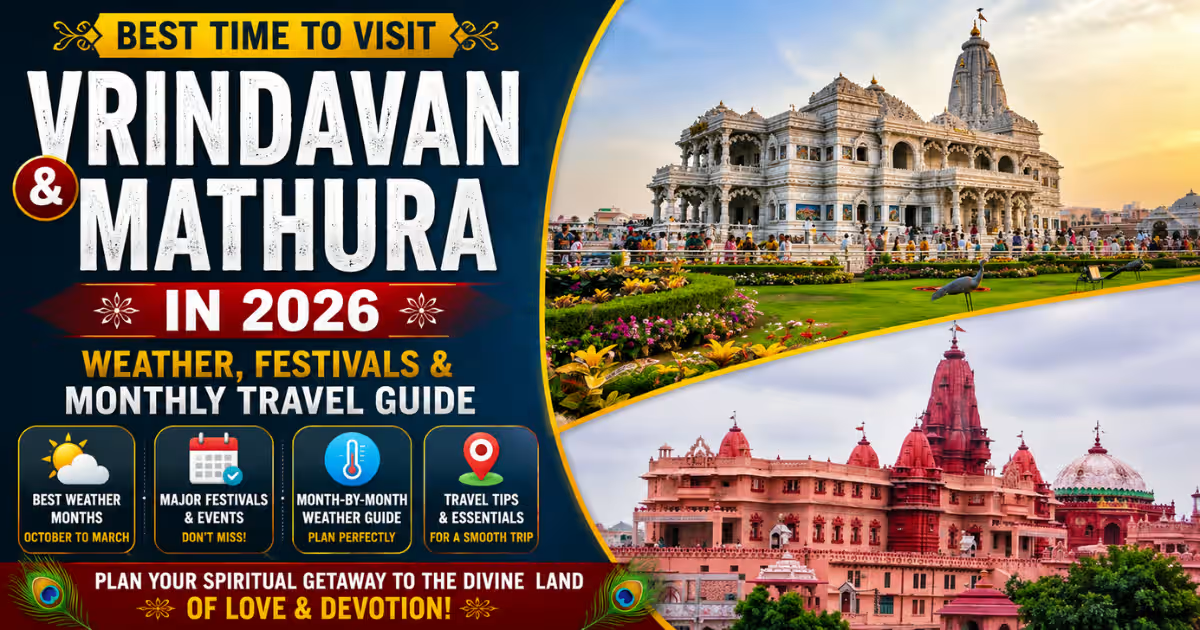
The best time to visit Vrindavan and Mathura is October to March – temperatures 8°C to 28°C, all temples comfortable, major festivals active. Holi (March 2026) and Janmashtami (September 4, 2026) are the peak festival experiences. Kartik month (October-November) is the holiest pilgrimage season. Least crowded: Tuesday to Thursday mornings. Experience My India has guided 50,000+ pilgrims through every season since 2018. Tours from ₹1,999. WhatsApp +91-7302265809.
The right time to visit Vrindavan and Mathura depends entirely on what kind of experience you are seeking. The comfortable October-to-March weather suits temple walkers and first-time pilgrims. Holi in March is one of the most kinetic festivals on earth. Janmashtami in September is the most devotionally intense night of the year. And if you specifically want Vrindavan at its quietest – with manageable queues and unhurried darshan – a Tuesday morning in November is the answer.
I am Gurudutt, born and raised in Braj Bhoomi and the founder of Experience My India. Since 2018, I have guided 50,000+ pilgrims through Vrindavan and Mathura across every season, every major festival and every weather pattern this corridor produces. This guide is built from that direct, on-ground knowledge – not from a weather database.
By the end of this guide you will have a complete month-by-month reference, a 2026 Braj festival calendar with specific dates, crowd-day data from actual observations and season-specific itinerary advice to match your own travel style and purpose.
Quick Verdict – Best Time for Each Type of Traveller
| Traveller Type | Best Time | Key Reason |
| First-time pilgrim / family | October to March | Pleasant weather, all temples fully open, manageable crowds |
| Senior citizen group | November to February | Mildest temperatures, post-Kartik month crowds settling |
| Holi experience | March 14-18, 2026 | Lathmar Holi Barsana (March 14), Vrindavan Holi (March 17-18) |
| Janmashtami | September 3-4, 2026 | Most intense devotional night of the year |
| Govardhan Parikrama | October to February | Comfortable walking weather for 21 km circuit |
| Budget travel (lowest cost) | May to June | Very low crowds, lowest hotel rates – but extreme heat |
| Monsoon devotional | July to August | Shravan month atmosphere, Nidhivan green season |
| Least crowded darshan | Tuesday-Thursday, November-February | 10-20 minute queues at most major temples |
Experience My India builds every Braj itinerary around the exact season and festival calendar. View the 2-Day Mathura Vrindavan Tour
Month-by-Month Guide: Vrindavan & Mathura 2026
| Month | Temperature Range | Crowd Level | Key Events | Visit Verdict |
| January | 8°C-20°C | Moderate | Makar Sankranti, winter fog | ✅ Good – comfortable, manageable |
| February | 10°C-25°C | Moderate | Mahashivaratri (Feb 26) | ✅ Good – pleasant weather |
| March | 15°C-32°C | Very High | Lathmar Holi (Mar 14), Vrindavan Holi (Mar 17-18) | ✅ Peak festival season – book ahead |
| April | 22°C-38°C | Low | – | ⚠️ Heat building, morning visits only |
| May | 28°C-44°C | Very Low | – | ⚠️ Extreme heat – budget trips only |
| June | 30°C-44°C | Very Low | – | ⚠️ Hottest month – not recommended |
| July | 28°C-38°C | Low-Moderate | Shravan begins (Mondays devotional) | ✅ Shravan atmosphere, morning only |
| August | 27°C-36°C | Very High | Janmashtami (Sept 4 falls late Aug/Sept) | ✅ For Janmashtami devotees – plan 2 months ahead |
| September | 26°C-34°C | Very High | Janmashtami (Sept 4, 2026), Radhashtami | ✅ Most devotionally intense month |
| October | 18°C-30°C | High | Kartik month begins, Sharad Purnima, Govardhan Puja (Oct 21) | ✅ Best season start – all events |
| November | 12°C-26°C | Moderate | Kartik Purnima, Dev Deepawali | ✅ Best overall month – ideal weather |
| December | 8°C-22°C | Moderate | Winter atmosphere, quiet pilgrimage | ✅ Excellent – cold mornings, peaceful |
Winter Season (October-March) – The Recommended Window
Winter is the undisputed best season for visiting Vrindavan and Mathura – and within the winter season, November, December, January and early February offer the most consistently comfortable conditions.
Temperature range: 8°C to 28°C across the season (coldest in December-January, warmest in March)
Why winter works for Braj pilgrimage:
- All Vrindavan temples and Mathura temples are fully open during standard hours
- The 21 km Govardhan Parikrama is comfortable on foot – the flat Braj terrain at 10°C to 20°C is ideal walking weather
- Temple queues at Banke Bihari, Dwarkadhish and Krishna Janmabhoomi are at their most manageable in November and early December
- Morning boat rides on the Yamuna at Keshi Ghat and Vishram Ghat are pleasant in the 15°C to 20°C morning temperature
What to pack for winter Vrindavan:
- November to January: Light-to-medium woolens for mornings (5:00-8:00 AM), removable layers for midday (20°C+)
- December fog advisory: The Dec 20 to Jan 10 period can see heavy morning fog in Braj – affecting driving visibility and occasionally delaying travel. Plan departures after 8:00 AM during this window.
November specific recommendation: November is Experience My India’s single most recommended month for first-time visitors. Kartik month ends in early November, leaving the region in a post-festival spiritual glow without the extreme crowd levels of Kartik month itself. Hotel rates are mid-range, queues are 15 to 30 minutes at major temples and weather is ideal.
View the 3-Day Mathura Vrindavan Govardhan Package – best in winter →
Summer Season (April-June) – Hot but Budget-Friendly
Summer in Vrindavan and Mathura runs from April through June, with temperatures peaking above 44°C in May and June. This is the most physically challenging season – and the one where Experience My India recommends the most careful planning.
Temperature range: 22°C to 44°C+ (May-June peak)
The case for a summer visit:
- Hotel rates are 30 to 50% lower than winter peak
- Temple queues are dramatically shorter – Banke Bihari in May sees 5 to 10 minute queues on weekday mornings
- Vrindavan’s lane atmosphere is quieter and more intimate without the large pilgrimage groups
- Budget travellers and those who specifically want uncrowded darshan find summer genuinely rewarding – if they accept the heat constraint
The heat constraint is real:
- Between approximately 10:00 AM and 5:00 PM, outdoor walking in Vrindavan and Mathura in May-June is physically demanding. All temple darshan should be completed before 9:30-10:00 AM.
- Govardhan Parikrama is not recommended in summer – the exposed 21 km route in 40°C+ is genuinely dangerous
- Carry water constantly – dehydration is a real risk for pilgrims walking between temples
Summer timing strategy: Depart accommodation between 5:30 AM and 6:00 AM. Complete all major darshan by 9:30 AM. Return to hotel for rest. Evening programme (Keshi Ghat Yamuna Aarti, Prem Mandir light show) after 5:30 PM. Experience My India’s summer itineraries are structured entirely around this morning primacy. View the Same Day Mathura Vrindavan Tour Package
Monsoon Season (July-September) – Kartik & Janmashtami
The monsoon season covers three months with significantly different characters – July is the quietest; August-September sees the most intense pilgrim activity of the entire year.
Temperature range: 26°C to 38°C | Humidity: High | Rainfall: Moderate to Heavy
July – Shravan begins: Shravan month (approximately July to August in 2026) is the most sacred month in Shaiva tradition – and Vrindavan’s temples see elevated attendance on every Monday (Somvar). The monsoon Vrindavan is visually distinctive: the Yamuna runs fuller, Nidhivan’s trees are deepest green and the sacred grove atmosphere is at its most lush. For pilgrims who appreciate monsoon atmosphere and are comfortable with humidity and rain, July is an underrated Vrindavan visit month.
August and September – Janmashtami and Radhashtami: Janmashtami 2026 falls on September 4 – and the preceding week sees Vrindavan and Mathura at their highest-ever annual attendance. ISKCON Vrindavan, Banke Bihari and the entire Braj corridor operate at maximum capacity from September 1 to 5.
For Janmashtami visitors:
- Book accommodation 2 to 3 months in advance
- Arrive in Vrindavan at least one day before September 4 to avoid highway congestion
- The midnight celebration at ISKCON Vrindavan (12:00 AM, September 4) is the most attended single moment
- Experience My India’s Janmashtami packages are limited – WhatsApp +91-7302265809 immediately if September 4 falls within your travel window
Radhashtami (approximately September 12-13, 2026): Barsana’s Radha Rani Temple extends hours and draws large pilgrimage numbers for Radha’s birthday – one of the most spiritually significant events of the Braj calendar.
2026 Festival Calendar: Braj Holi, Janmashtami, Govardhan Puja & More
| Festival | 2026 Date | Location | What Happens | Booking Lead Time |
| Mahashivaratri | February 26, 2026 | Mathura, Vrindavan | Extended temple hours; Kashi Vishwanath parallels in Braj | 2 weeks |
| Lathmar Holi – Barsana | March 14, 2026 (approx) | Barsana | Women of Barsana play Holi with lathis | 6-8 weeks |
| Lathmar Holi – Nandgaon | March 15, 2026 (approx) | Nandgaon | Roles reversed – Barsana women in Nandgaon | 6-8 weeks |
| Phoolon wali Holi | March 16, 2026 (approx) | ISKCON Vrindavan | Holi played with flowers – beautiful, gentler | 4 weeks |
| Vrindavan Holi (Purnima) | March 17-18, 2026 | Banke Bihari area, Vrindavan | Most energetic Holi in Vrindavan | 4 weeks |
| Ram Navami | March 30, 2026 | Ayodhya, Mathura | Extended darshan, Ram-centric celebrations | 2 weeks |
| Guru Purnima | July 21, 2026 | All Braj | Moderate surge at all temples | 1 week |
| Shravan month | July 20 – August 18, 2026 (approx) | All Braj | Mondays see highest Shravan attendance | Ongoing |
| Janmashtami | September 4, 2026 | Mathura, Vrindavan | Most attended single-night event in Braj | 8-12 weeks |
| Radhashtami | September 12-13, 2026 (approx) | Barsana, Vrindavan | Radha’s birthday – extended temple programme | 4 weeks |
| Kartik month | October 2 – November 1, 2026 (approx) | All Braj | Holiest pilgrimage month of the year | 4-6 weeks |
| Sharad Purnima | October 2, 2026 (approx) | Vrindavan | Moonlit night – Raas Leela celebrations | 3 weeks |
| Govardhan Puja / Annakut | October 21, 2026 | Govardhan, Mathura | Chhappan Bhog at all major temples | 4 weeks |
| Diwali | October 20, 2026 | All Braj | Illuminated ghats, extended temple hours | 3 weeks |
| Dev Deepawali | November 5, 2026 | Varanasi, Mathura Ghats | Earthen lamps at the Yamuna ghats | 3 weeks |
Developer / publisher note: All dates marked “approx” are based on the 2026 Hindu Panchang as estimated in June 2026. Verify against the official Panchang before publication. WhatsApp +91-7302265809 for date confirmation from Experience My India’s local Braj team.
Book Your Mathura Vrindavan Tour Package
Which Day of the Week is Least Crowded in Vrindavan?
This is one of the most practically useful pieces of planning information – and one most guides omit entirely.
| Day | Crowd Level at Banke Bihari (9:00 AM) | Queue Time Estimate | Notes |
| Monday | High | 30-45 min | Shravan Mondays (July-Aug): 60-90 min |
| Tuesday | Very High | 45-75 min | Sacred to Hanuman – local Braj devotees surge |
| Wednesday | Low-Moderate | 10-20 min | Best overall weekday for quiet darshan |
| Thursday | Low-Moderate | 10-20 min | Often the quietest single day of the week |
| Friday | Moderate | 20-35 min | Building toward weekend |
| Saturday | High | 30-60 min | Weekend pilgrims and families |
| Sunday | Very High | 45-75 min | Highest tourist + local attendance of the week |
The clear answer: Wednesday and Thursday mornings (7:45-9:30 AM) consistently offer the lightest queues at Banke Bihari, ISKCON and Dwarkadhish. Avoid Tuesday (Hanuman sacred day draws local Braj attendance) and Sunday (tourist and family peak). Tuesday-Saturday combination weeks are the most challenging for darshan planning.
Experience My India schedules all first-time pilgrim groups for Wednesday or Thursday morning darshan windows wherever the travel dates allow. WhatsApp +91-7302265809.
Season-by-Season Itinerary Advice
October to March (Recommended):
- Start at 6:00 AM with Keshi Ghat sunrise
- Complete Banke Bihari, Nidhivan and ISKCON by 11:30 AM (before closure)
- Rest midday; Prem Mandir and Keshi Ghat aarti in the evening
- Govardhan Parikrama best done as a full separate day in this season
April to June (Summer):
- Start at 5:30 AM – complete all darshan by 9:30 AM
- Temple programme only; Govardhan Parikrama not recommended
- Evening programme from 5:30 PM: Yamuna boat ride, Prem Mandir light show
- Budget savings: 30-50% lower hotel rates and minimal queue time
July to September (Monsoon / Janmashtami):
- Carry rain gear – all outdoor temple lane walks are rain-exposed
- Govardhan Parikrama possible in October but paths can be wet in September
- For Janmashtami: arrive September 2-3; depart September 5-6
- Shravan Mondays: arrive before 8:00 AM at Banke Bihari for manageable queue
Ground Truth – What Nobody Tells You
November is consistently better than October for first-time visitors. Kartik month (ending early November) brings enormous crowds to Vrindavan’s ghats and temple lanes. The last week of Kartik is peak-within-peak. Arriving in mid-November captures the post-Kartik spiritual atmosphere with significantly lower crowd intensity – and still benefits from the excellent November weather.
The December fog window is real and under-discussed. Between approximately December 20 and January 10, Braj experiences dense morning fog – particularly along the Yamuna river valley. Road visibility can drop significantly. Flights to Agra and trains between Mathura and Delhi are more frequently delayed during this period. Experience My India advises all December-January groups to plan road departures after 8:30 AM.
Holi in Vrindavan is a multi-day event, not a single day. The festival sequence runs from Lathmar Holi in Barsana (March 14) through Phoolon wali Holi at ISKCON (March 16) through the main Vrindavan Holi on Purnima (March 17-18). Most visitors plan for one day – and miss the specific event they actually wanted to see. Experience My India’s Holi packages cover the correct event for each pilgrim’s interest.
Janmashtami 2026 falls on September 4 – a Friday. This is significant: a Friday Janmashtami means the preceding Thursday will have one of the largest pre-Janmashtami darshan surges in Braj. Accommodation in Vrindavan and Mathura should be secured by June. Experience My India’s September 4 packages are already filling. WhatsApp +91-7302265809 immediately.
Budget travel in summer is genuinely viable – but requires discipline. Hotel rates in May and June in Vrindavan drop to 35-50% of winter peak rates. The temples are quieter than any other time of year. If you can complete all darshan before 9:30 AM and stay indoors during the midday hours, a May or June Vrindavan visit is a legitimate and rewarding choice for the right traveller.
FAQ – Best Time to Visit Vrindavan and Mathura
November is the single best month for a first-time visit to Mathura and Vrindavan. Temperature ranges from 12°C to 26°C – comfortable for walking between temples, performing the Govardhan Parikrama and attending evening aartis at Keshi Ghat and Vishram Ghat. The post-Kartik month crowd has settled, reducing queue times at Banke Bihari and Krishna Janmabhoomi to 10 to 25 minutes on weekday mornings. Experience My India’s most in-demand tour month. WhatsApp +91-7302265809 for November availability.
For Mathura and Vrindavan city temples alone, 2 full days is the standard: Day 1 Vrindavan (Banke Bihari, ISKCON, Nidhivan, Keshi Ghat) + Day 2 Mathura (Dwarkadhish, Krishna Janmabhoomi, Vishram Ghat Yamuna Aarti). For the complete Braj circuit including Govardhan, Barsana and Radha Kund, 3 days minimum is needed. Experience My India offers 1-day (₹1,999), 2-day (₹3,999) and 3-day (₹5,999) packages to match your available time. WhatsApp +91-7302265809.
Wednesday and Thursday mornings (7:45 AM to 9:30 AM) are consistently the least crowded days for darshan at Banke Bihari, ISKCON and Dwarkadhish. Avoid Tuesday (sacred to Hanuman – local Braj devotees surge), Sunday (highest tourist and family attendance of the week) and Saturday (building weekend crowd). On a quiet Wednesday morning in November, the Banke Bihari queue takes 10 to 20 minutes. Experience My India plans all first-time pilgrim group darshan for Wednesday or Thursday morning slots where dates allow. WhatsApp +91-7302265809.
For most pilgrims, start in Vrindavan – then move to Mathura. The Vrindavan temple sequence (Banke Bihari, ISKCON, Nidhivan in the morning, Keshi Ghat aarti in the evening) is tighter and more time-sensitive than Mathura. Completing Vrindavan first ensures the morning temple windows are used correctly. Then move to Mathura for the Dwarkadhish morning darshan and Vishram Ghat evening aarti. Experience My India follows this sequence – Vrindavan first, Mathura second – in all standard Braj itineraries.
Yes – for the right traveller. May and June bring the lowest crowds of the year (5 to 10 minute queues at Banke Bihari on weekday mornings), hotel rates 30 to 50% below winter peak and a genuinely intimate temple atmosphere. The constraint is the heat: all darshan must be completed before 9:30 AM, Govardhan Parikrama is not practical and midday outdoor movement is not advisable. Experience My India’s summer itineraries are specifically structured around the 5:30 AM departure and 9:30 AM completion window. WhatsApp +91-7302265809.
Yes – particularly for devotional pilgrims who appreciate the Shravan month atmosphere and the Janmashtami season. The Yamuna runs fuller, Nidhivan and Govardhan’s forests are at their most lush and the air has the particular quality of Braj in the rainy season that regular visitors describe as unlike any other time. The practical challenges are humidity, wet temple lanes and the Janmashtami period’s extreme crowd levels. Experience My India manages monsoon visits with weather-appropriate routing and covered transport. WhatsApp +91-7302265809.
Vrindavan Holi falls on the Phalgun Purnima – approximately March 17-18, 2026. The Braj Holi sequence begins earlier: Lathmar Holi at Barsana on approximately March 14, 2026 and Nandgaon on March 15, 2026, followed by Phoolon wali (flower) Holi at ISKCON Vrindavan on approximately March 16. Experience My India’s Braj Holi Package covers all three events in sequence. Limited slots available – WhatsApp +91-7302265809. All Holi 2026 dates should be verified against the official Panchang before publication.
Janmashtami 2026 falls on September 4, 2026 (a Friday). ISKCON Vrindavan and Banke Bihari Temple host the midnight Janmashtami celebrations – with the peak moment at 12:00 AM on September 4-5. Pre-Janmashtami darshan at all Vrindavan temples peaks on September 1 to 3. Nand Utsav follows on September 5. Experience My India’s Janmashtami packages are extremely limited – accommodation in Vrindavan for September 3-5 is typically sold out by June. WhatsApp +91-7302265809 immediately.
Recommended products
-
02 Days Mathura Vrindavan Tour
-
03 Days Mathura Vrindavan Tour
Original price was: ₹9,000.00.₹8,000.00Current price is: ₹8,000.00. -
04 Days Agra Mathura Vrindavan Tour
-
5 Days Braj 84 Kosh Yatra
CONCLUSION
The best time to visit Vrindavan and Mathura is the time that matches what you are actually seeking – the comfortable November walks, the explosive Holi crowds, the devotional intensity of Janmashtami midnight, or the quiet Wednesday morning when the queue at Banke Bihari takes 12 minutes and the curtain opens for you in something close to silence.
Experience My India plans for the specific experience you want – not a generic tour for any season.
Mathura Vrindavan tours from ₹1,999. Rated 4.5★ by 204+ pilgrims.
WhatsApp +91-7302265809 – Book Now
Jai Shri Krishna 🙏