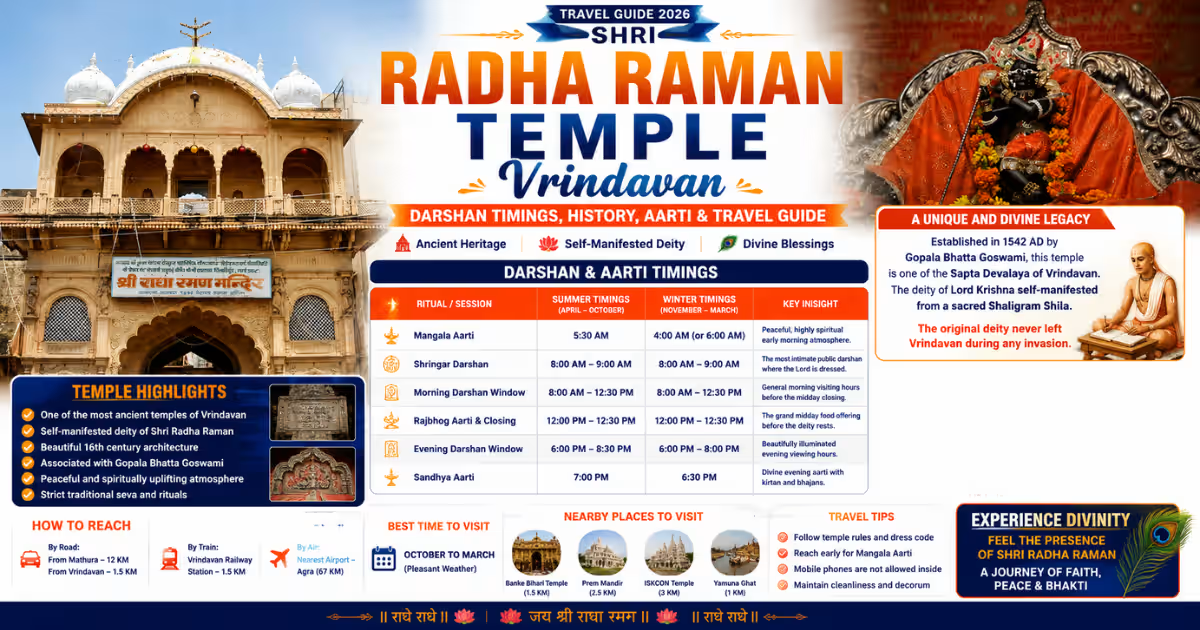
Shri Radha Raman Temple in Vrindavan, established in 1542 AD by Gopala Bhatta Goswami, houses a deity self-manifested from a Shaligram stone. Darshan timings: 8:00 AM-12:30 PM and 6:00-8:30 PM (summer); slightly earlier closing in winter. Six daily rituals include Mangala, Shringar and Sandhya Aarti. Entry is completely free – no VIP ticket exists. Experience My India includes Radha Raman Temple in every Vrindavan tour from ₹1,999 per person. WhatsApp +91-7302265809.
The Temple Where the Deity Never Left Vrindavan
Among all the temples in Vrindavan, Shri Radha Raman Temple holds a distinction that even most repeat visitors to Braj are unaware of. While invading forces forced several major Vrindavan deities to be relocated for safety during centuries of upheaval, the original deity of Radha Raman never left the town. It has stood in continuous worship at the same spot in Seva Kunj for nearly five centuries.
This is one of the Sapta Devalaya – the seven ancient and most revered temples of Vrindavan – and unlike many of Braj’s grander, more visited temples, Radha Raman retains an atmosphere that feels genuinely unchanged by time. The deity itself is unlike any other in Vrindavan: it self-manifested from a round Shaligram stone, with no human hand involved in its carving.
I am Gurudutt, born and raised in Braj Bhoomi and founder of Experience My India. Since 2018, our team has guided over 50,000 pilgrims through Vrindavan – and Radha Raman Temple is one we recommend without exception to anyone wanting a quieter, more historically grounded darshan experience. By the end of this guide you will know the exact seasonal timings, the complete history, the festival calendar and the precise hour that gives you the best possible darshan.
About Shri Radha Raman Temple Vrindavan
| Detail | Information |
| Full name | Shri Radha Raman Temple (Radha Raman Mandir) |
| Established | 1542 AD |
| Founder | Gopala Bhatta Goswami |
| Status | One of the Sapta Devalaya – the seven original ancient temples of Vrindavan |
| Deity | Radha Raman – self-manifested from a Shaligram Shila (sacred stone) |
| Location | Seva Kunj area, Old Vrindavan, near Keshi Ghat |
| Entry fee | Free – no ticket, no VIP system |
| Distinction | The original deity has never left Vrindavan, even during periods of invasion |
“Radha Raman” translates to “the lover of Radha.” Unusually, there is no separate physical idol of Radha beside the deity – instead, a gold crown placed to His left represents Her eternal, inseparable presence. This symbolic representation is unique among Vrindavan’s major temples and is one of the details Experience My India’s guides explain in context during every visit. Call +91-7302265809 to book a guided darshan. View Our 2 Days Mathura Vrindavan Tour Package
Darshan & Aarti Timings 2026 – Shri Radha Raman Temple
The temple follows a structured daily routine of six rituals, shifting slightly between summer and winter. This is the most-searched practical information for any Vrindavan pilgrim planning their visit.
Complete Seasonal Timings Table
| Ritual / Session | Summer Timings (April-October) | Winter Timings (November-March) | Key Insight |
| Mangala Aarti | 5:30 AM | 4:00 AM or 6:00 AM (varies) | Peaceful, highly spiritual pre-dawn atmosphere |
| Shringar Darshan | 8:00 AM – 9:00 AM | 8:00 AM – 9:00 AM | The most intimate public darshan – deity freshly dressed |
| Morning Darshan Window | 8:00 AM – 12:30 PM | 8:00 AM – 12:30 PM | General visiting hours before midday closing |
| Rajbhog Aarti & Closing | 12:00 PM – 12:30 PM | 12:00 PM – 12:30 PM | Grand midday food offering before the deity rests |
| Evening Darshan Window | 6:00 PM – 8:30 PM | 6:00 PM – 8:00 PM | Beautifully illuminated evening viewing hours |
| Sandhya Aarti | 7:00 PM | 6:30 PM | The most attended and accessible public evening ritual |
Important notes:
- Timings shift slightly during Janmashtami, Radhashtami and Ekadashi – always confirm the day’s exact schedule on arrival
- There is no entry fee and no VIP ticket system of any kind – darshan is completely free and open to all
- The temple closes completely between approximately 12:30 PM and 6:00 PM for the deity’s midday rest – arriving in this window means finding the sanctum closed
Experience My India confirms the exact day’s timing for every guided group before departure. WhatsApp +91-7302265809 for the current schedule.
History – The Self-Manifestation Story
Gopala Bhatta Goswami and the Round Stone
Shri Radha Raman Temple’s origin story is among the most distinctive in all of Braj. Gopala Bhatta Goswami, one of the six principal Goswamis of the Gaudiya Vaishnav tradition who settled in Vrindavan in the 16th century, held a small collection of Shaligram Shilas – sacred stones from the Gandaki River associated with Lord Vishnu.
According to temple tradition, Gopala Bhatta Goswami felt an intense devotional desire to physically dress and decorate one particular round Shaligram stone the way other Goswamis dressed their carved deities. Lacking the carved form that decoration traditionally requires, his longing went unanswered for some time.
Then, on the night of the full moon in the month of Vaishakh (April/May) in 1542 AD, the stone is said to have transformed overnight – taking on the form of Krishna, complete with a distinct, gentle smile, without any human hand carving it. This self-manifested form became Radha Raman and the temple built to house it has stood at the same site in Seva Kunj ever since.
Why This Temple’s History Is Unique
| Historical Fact | Significance |
| Established | 1542 AD – nearly 500 years of continuous worship |
| Founder | Gopala Bhatta Goswami – one of the six Goswamis of Vrindavan |
| Deity origin | Self-manifested from a Shaligram stone – not carved |
| Survival through invasions | The original deity was never relocated, unlike several other major Vrindavan deities moved to Rajasthan for safety during historical invasions |
| Sapta Devalaya status | One of the seven original ancient temples of Vrindavan |
This unbroken continuity – the same deity, in the same location, for nearly 500 years – is what gives Radha Raman Temple its distinctive devotional weight among experienced Braj pilgrims. Many travelers who have visited Vrindavan multiple times say they come to value this temple more with each return visit, even though it draws smaller crowds than Banke Bihari or Prem Mandir.
The Eternal Flame – Nearly 500 Years Unbroken
One of the most remarkable living traditions at Radha Raman Temple is largely unknown outside dedicated Vaishnav circles. The temple kitchen houses a fire that has been kept continuously burning since the temple’s establishment in 1542 – nearly 500 years without interruption.
| Detail | Information |
| Purpose | Used exclusively to prepare the daily Bhog (sacred food offering) for the deity |
| Duration | Continuously burning since 1542 AD |
| Significance | A living, unbroken link to the temple’s founding generation |
| Access | Not generally open for visitor viewing – maintained by temple sevayats (caretakers) |
This detail is rarely mentioned in standard tourist guides, but it is one of the facts that experienced Braj guides share to give visitors a deeper appreciation of what they are witnessing. Experience My India’s guides include this story in every Radha Raman Temple visit. Call +91-7302265809 to book a guided darshan with full historical context.
🙏 Want the Complete Vrindavan Temple Circuit? Experience My India includes Radha Raman Temple alongside Banke Bihari, ISKCON, Prem Mandir and Nidhivan in every guided Vrindavan tour – timed correctly around darshan windows. Vrindavan Tour Package from ₹1,999 per person · AC cab, guide included WhatsApp +91-7302265809
Major Festivals & Events – Radha Raman Temple 2026
For pilgrims who want to witness the temple at its most vibrant, these are the key annual celebrations:
| Festival | Approx Timing | What Happens |
| Prakata Divas | May/June 2026 | The deity’s appearance day – commemorated with a Maha Abhishek using a 500-litre milk bath |
| Chandan Yatra | May/June 2026 | A 21-day summer ritual where the entire deity is covered in cooling sandalwood paste |
| Jhulan Yatra | August 2026 | The swing festival – the deity is placed on intricately decorated golden swings during monsoon |
| Janmashtami | August 2026 | Krishna’s birthday – temple timings shift; significant crowd increase |
| Radhashtami | August/September 2026 | Radha’s birthday – special significance given the temple’s name and dedication |
| Ekadashi (monthly) | Twice monthly | Timings may shift slightly; increased devotee attendance |
Prakata Divas is particularly worth planning around for devoted pilgrims – the 500-litre milk bath (Maha Abhishek) is a ritual seen at very few other Vrindavan temples at this scale. Experience My India can plan a Vrindavan visit timed specifically around these festival dates. Call +91-7302265809 for current 2026 dates, which vary by the lunar calendar.
How to Reach Radha Raman Temple Vrindavan
The temple sits in the Seva Kunj area of Old Vrindavan, near Keshi Ghat – in the heart of the old temple lanes.
By Train
| Detail | Information |
| Nearest major railhead | Mathura Junction – approximately 15 km away |
| Mathura Junction to Vrindavan | Auto-rickshaw, ₹200-₹300, approximately 25-35 minutes |
| Local Vrindavan station | A smaller local station exists approximately 2 km from the temple |
By Air
| Detail | Information |
| Nearest airport | Indira Gandhi International Airport (DEL), Delhi – approximately 147 km |
| Recommended route | Pre-booked taxi via Yamuna Expressway |
| Travel time | Approximately 2.5-3.5 hours by cab |
Local Commute Inside Vrindavan
Vehicles are heavily restricted inside Old Vrindavan’s narrow lanes. You must drop off at the multi-level parking boundaries on the outskirts and take an e-rickshaw or walk the final stretch through Loi Bazaar to reach the temple.
| Local Transport | Cost | Notes |
| E-rickshaw (single ride) | ₹20 – ₹30 | From parking boundary to temple lane |
| E-rickshaw (full day hire) | ₹200 – ₹350 | Covers Radha Raman + other Vrindavan temples |
| Walking from Banke Bihari | 10-15 minutes | Through Loi Bazaar lanes |
Experience My India’s drivers know exactly where to park and manage the e-rickshaw handover for the final approach. Call +91-7302265809 for a complete pickup-to-darshan plan.
Book Your Mathura Vrindavan Tour Package
The “Pro Window” – Best Time for Radha Raman Darshan
This is the single most valuable piece of practical advice in this guide and it is genuinely missed by most tourist itineraries.
Plan your visit between 8:00 AM and 9:00 AM.
This is the Shringar Darshan window – when the deity has just been freshly dressed and decorated for the day. At this hour:
- The crowd is meaningfully smaller than the late-morning rush
- You get an intimate, unhurried, close-up view of the deity
- The temple’s quiet atmosphere is at its most pronounced
- You can also visit nearby Keshi Ghat immediately afterward while the morning is still cool
Most standard Vrindavan tour itineraries route pilgrims to Banke Bihari first and arrive at Radha Raman as an afternoon afterthought – by which point the temple has closed for its midday rest (12:30 PM-6:00 PM). Planning your morning specifically around the 8:00-9:00 AM Shringar Darshan window at Radha Raman is something most tourist guides completely miss.
Experience My India builds this exact window into our Vrindavan morning circuit. Call +91-7302265809 to plan your darshan timing.
Things to Do Near Radha Raman Temple
The temple’s location in Seva Kunj near Keshi Ghat puts you close to some of Vrindavan’s most significant nearby sites.
| Place | Distance from Radha Raman Temple | What to Do |
| Keshi Ghat | ~300 metres | 17th-century Yamuna ghat; sunrise visit or evening Yamuna Aarti (~6:30 PM) |
| Seva Kunj | Adjacent | Sacred grove associated with Krishna and Radha’s Raas Leela |
| Nidhivan | ~500 metres | The mysterious sacred grove; visit before 11:00 AM only |
| Banke Bihari Temple | ~1 km | 10-15 minute walk through Loi Bazaar |
| Loi Bazaar | Along the walking route | Shopping for brass idols, Tulsi malas, Braj chunaris |
Suggested half-day sequence: Radha Raman Temple (8:00-9:00 AM Shringar Darshan) → Seva Kunj walk (9:15-9:30 AM) → Keshi Ghat (9:30-10:00 AM) → Nidhivan (10:15-11:00 AM, before the closure) → Loi Bazaar shopping (11:00 AM-12:00 PM) → lunch before the midday temple closures.
Experience My India structures this exact morning sequence for every Vrindavan tour group. Call +91-7302265809 to book a guided morning circuit.
VIP Darshan at Radha Raman Temple – The Honest Truth
There is no entry fee and no VIP ticket system at Radha Raman Temple, or indeed at most major Vrindavan temples. Darshan is completely free and open to everyone equally.
| Darshan Type | Available? | Cost | Notes |
| General darshan, Radha Raman Temple | Yes – daily | Free | Open to all, no booking required |
| “VIP darshan” tickets | Not official | – | No such system exists at this temple |
| ISKCON Vrindavan special puja participation | Yes | ₹251-₹1,001 donation-based | A different temple with a structured donation system for specific pujas |
| Touts offering “priority access” outside the temple | Not official | Variable | Decline – there is no legitimate priority system to purchase |
If anyone near the temple offers a paid “VIP darshan” or “special access” ticket, this is not an authorised arrangement. Experience My India guides every group through the genuine, free darshan process. Call +91-7302265809 if you have questions about any offer you have received near a Vrindavan temple.
Ground Truth – What Nobody Tells You About Radha Raman Temple
After guiding 50,000+ pilgrims through Vrindavan since 2018, here is what Experience My India knows that most travel blogs will not say:
The temple’s afternoon closure (12:30 PM-6:00 PM) is longer than most Vrindavan temples. While Banke Bihari reopens around 5:30 PM, Radha Raman’s evening session does not begin until 6:00 PM. Pilgrims who plan a tight afternoon schedule sometimes arrive at 5:00 PM expecting an open temple and find it still closed.
Mangala Aarti timing genuinely varies – sometimes 4:00 AM, sometimes 6:00 AM. Unlike the more standardised summer/winter pattern at other temples, Radha Raman’s earliest morning aarti timing has some day-to-day variation based on the temple’s internal ritual calendar. If the Mangala Aarti specifically is your priority, confirm the exact time with the temple or your guide the evening before.
This temple draws a noticeably different crowd than Banke Bihari. Many of the pilgrims at Radha Raman are experienced Vaishnav scholars, long-term Vrindavan residents and repeat Braj travelers – not first-time tourists. The atmosphere is quieter and more contemplative as a direct result. First-time visitors sometimes find this less “exciting” than Banke Bihari’s intense energy, but most come to appreciate it as a deeper experience on reflection.
Photography restrictions are strictly enforced in the inner courtyard – more so than at some other Vrindavan temples. Keep your phone tucked away or on silent mode the moment you enter the inner courtyard area. Temple staff actively monitor this.
The lanes around the temple have some of Vrindavan’s most persistent monkeys. The Seva Kunj approach lanes are densely populated with macaques accustomed to tourists. Secure eyeglasses, sunglasses, hats and any visible food in a closed bag before approaching – this area requires more caution than the main Banke Bihari lanes.
Know Before You Visit – Radha Raman Temple
- Plan for 8:00-9:00 AM (Shringar Darshan) – the single best window for an unhurried, close-up darshan
- The temple closes 12:30 PM-6:00 PM – longer than several other Vrindavan temples; do not plan a late-afternoon visit
- Entry is completely free – no ticket, no VIP system; decline any “special access” offer near the temple
- Photography and phone use are strictly prohibited in the inner courtyard – keep devices away or silenced
- Dress modestly – no shorts, sleeveless tops, or short dresses; traditional Indian clothing is strongly recommended
- Monkeys are particularly active in the Seva Kunj lanes – secure glasses, hats and food in a closed bag
- Vehicles cannot reach the temple directly – park at the multi-level boundary and walk or e-rickshaw the final stretch through Loi Bazaar
- Combine with Keshi Ghat and Nidhivan – all within a 5-10 minute walk, ideal for one morning circuit
- Experience My India briefs every guest on all of this before the visit. WhatsApp +91-7302265809.
Frequently Asked Questions – Shri Radha Raman Temple Vrindavan
A complete Radha Raman Temple visit takes 30 to 45 minutes – including darshan, a few minutes to appreciate the temple’s history and architecture and time to walk the inner courtyard respectfully. If you visit during the 8:00-9:00 AM Shringar Darshan window (the recommended time), allow 45 minutes given the slightly higher attendance at this popular session. Experience My India includes Radha Raman in a structured morning circuit with Keshi Ghat and Nidhivan. Call +91-7302265809.
General darshan hours are 8:00 AM to 12:30 PM and 6:00 PM to 8:30 PM in summer (April-October), with the evening session closing slightly earlier at 8:00 PM in winter (November-March). The Shringar Darshan (8:00-9:00 AM) is the most intimate session, when the deity has just been freshly dressed. The temple closes completely between 12:30 PM and 6:00 PM. Experience My India confirms the exact day’s timing for every guided visit. WhatsApp +91-7302265809.
There is no VIP darshan ticket system at Radha Raman Temple – entry is completely free for all visitors, with no booking or fee required. Most major Vrindavan temples, including Banke Bihari and Prem Mandir, also operate free general darshan without an official VIP system. ISKCON Vrindavan has a separate donation-based structure for specific puja participation (₹251-₹1,001). Anyone offering a paid “VIP darshan” near Radha Raman Temple is not authorised. Experience My India guides every group through the genuine free darshan process. Call +91-7302265809.
Radha Raman Temple opens for Mangala Aarti around 5:30 AM in summer (timing can vary 4:00-6:00 AM) and follows with morning darshan from 8:00 AM to 12:30 PM. It closes for the deity’s midday rest from 12:30 PM until 6:00 PM, then reopens for evening darshan until 8:30 PM in summer or 8:00 PM in winter. Sandhya Aarti is at 7:00 PM (summer) or 6:30 PM (winter). Experience My India confirms current timings before every guided visit. WhatsApp +91-7302265809.
Radha Raman Temple was established in 1542 AD by Gopala Bhatta Goswami, one of the six principal Goswamis of the Gaudiya Vaishnav tradition. The deity self-manifested from a round Shaligram stone after Gopala Bhatta Goswami’s intense devotional longing to dress and decorate it as other Goswamis did their carved deities. Unlike several other major Vrindavan deities relocated during historical invasions, the original Radha Raman deity has never left Vrindavan in nearly 500 years. Experience My India’s guides share the complete history during every visit. Call +91-7302265809.
“Radha Raman” means “the lover of Radha.” While there is no separate physical idol of Radha beside the deity, a gold crown placed to His left represents Her eternal, inseparable presence – a uniquely symbolic representation rather than a literal statue. This is one of the distinctive devotional features of this temple compared to other Vrindavan shrines that depict Radha and Krishna together. Experience My India’s guides explain this symbolism in context during the temple visit. WhatsApp +91-7302265809.
Radha Raman Temple is approximately 15 km from Mathura Junction, the nearest major railhead. An auto-rickshaw from Mathura Junction to Vrindavan costs ₹200-₹300, taking 25-35 minutes. Once in Vrindavan, the temple sits in Seva Kunj near Keshi Ghat – vehicles must park at the outskirts and the final stretch is covered on foot or by e-rickshaw through Loi Bazaar. Experience My India arranges direct station pickup and guided walking to the temple. Call +91-7302265809.
The best time is between 8:00 AM and 9:00 AM – the Shringar Darshan window, when the deity has just been freshly dressed and the crowd is meaningfully smaller than later in the morning. This hour also allows you to visit nearby Keshi Ghat and Nidhivan immediately afterward while the morning remains cool. Most standard tourist itineraries miss this window entirely. Experience My India builds every Vrindavan morning circuit around this exact timing. WhatsApp +91-7302265809.
Recommended products
-
02 Days Mathura Vrindavan Tour
-
03 Days Mathura Vrindavan Tour
Original price was: ₹9,000.00.₹8,000.00Current price is: ₹8,000.00. -
5 Days Braj 84 Kosh Yatra
-
Best Same Day Mathura Vrindavan Tour
Ready to Plan Your Vrindavan Yatra with Experience My India?
WhatsApp us and receive your personalised Vrindavan itinerary within 30 minutes – Radha Raman Temple in the Shringar Darshan window, Keshi Ghat, Nidhivan, Banke Bihari and Prem Mandir all timed correctly in one guided day.
Packages from ₹1,999 per person · All inclusive
WhatsApp +91-7302265809 – Book Now
Jai Shri Krishna 🙏